Table of Contents
Trending Home Decor Colors 2026: Your Complete Room-by-Room Guide
By Laura Bennett | Updated July 2026
This article contains affiliate links. We may earn a commission if you purchase through our links, at no extra cost to you. Home Office Setup Ideas for Small Space 2026: 15 Practical L
If you’ve been staring at your walls wondering whether it’s finally time for a refresh, 2026 is the year to act. The color trends this year feel different from the past decade of cool grays and white-on-whites. Think of it as collective permission to finally paint your kitchen that rich terracotta you’ve been considering for three years, or to commit to those moody blues you’ve seen all over design magazines but were too cautious to try at home. Ultimate Living Room Makeover Guide Under $500: Avoid The…
The global home decor market was valued at $682 billion in 2023 and is projected to reach $838 billion by 2028, according to Allied Market Research. Color psychology is a major driver of consumer purchase decisions, and research consistently shows that wall color is the single highest-impact, lowest-cost way to transform how a space feels. This guide covers 2026’s best color choices room by room, with practical advice for every budget. Japandi Interior Design 2026: 12 Budget-Friendly Ideas
What Is the Big Color Story of 2026?
The dominant 2026 color story centers on what designers are calling “grounded warmth”: earthy tones that feel neither trendy nor dated, with enough depth to give a room real character. It’s a significant departure from the cool minimalism that dominated the past decade. DIY Wall Decor Ideas Bedroom Easy: 25+ Budget-Friendly Proje
According to Sherwin-Williams’ 2026 Color Forecast, the overarching theme is “Rooted,” a palette drawing from natural clay, dried botanicals, weathered stone, and warm wood. The Pantone Color Institute named a deep burgundy-adjacent tone (Pantone 19-1557, “Aged Wine”) as a key influencer color for interiors this year, reflecting broader cultural appetites for richness and tradition over sterility.
The practical implication: warm naturals are taking over across every room in the house. Terracotta, sage green, dusty olive, moody blues, and deep jewel tones are the colors that design-forward homeowners and renters are reaching for in 2026. Cool grays and stark whites aren’t gone, but they’re no longer the default choice.
What Colors Work Best for Living Rooms in 2026?
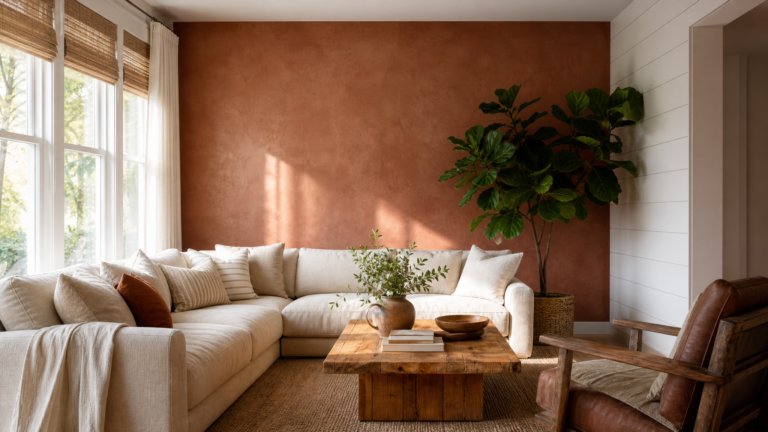
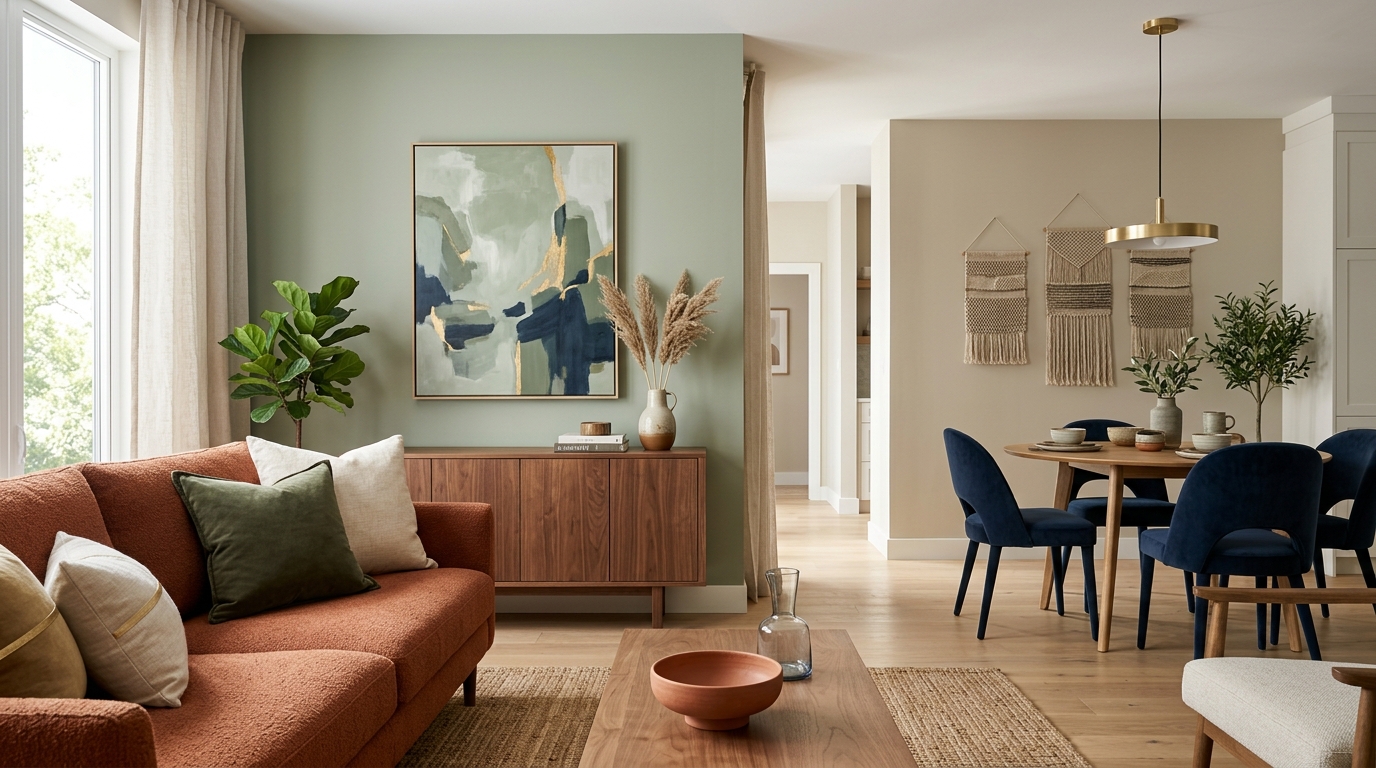
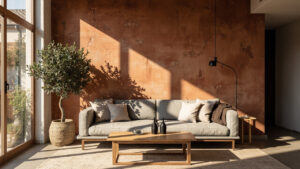
Your living room is where 2026 color trends really get to shine. The big story is the transition from warm whites and light beiges to genuinely committed earthy tones: terracotta, raw sienna, warm clay, and burnt amber.
These colors work because they respond beautifully to natural light, shifting from warm gold in morning sun to deep amber in evening lamplight. They also pair exceptionally well with natural materials: rattan furniture, linen upholstery, warm wood tones, and woven textiles.
Top picks for living room walls in 2026:
- Benjamin Moore “Adobe Dust” (2174-30): A warm, muted terracotta that reads as sophisticated rather than Southwestern. Pairs beautifully with cream and off-white trim.
- Sherwin-Williams “Cavern Clay” (SW 7701): Bolder and more saturated. Best in rooms with natural light to prevent it from feeling heavy.
- Farrow and Ball “Red Earth” (64): The investment option that genuinely transforms a room. Matte finish is recommended.
Budget tip: Don’t repaint the entire room if budget is a concern. An accent wall behind your main sofa in a deep terracotta, with the remaining walls in a complementary warm white like Benjamin Moore “White Dove” or “Chantilly Lace,” creates maximum impact at minimum cost. A single accent wall uses approximately one gallon of paint, usually under $50.
You can find quality interior paint and supplies at Home Depot or browse furniture that complements these palettes on Wayfair.
Which Kitchen Colors Are Trending in 2026?
While white kitchens aren’t going anywhere, the most exciting kitchen color of 2026 is sage green in its many forms. From pale, silvery sage to deeper, almost gray-green hues, this family of colors brings organic calm to what’s often the hardest-working room in the house.
What makes sage green so enduring as a kitchen color is its neutrality. It reads neither warm nor cool, working with warm wood tones, brass hardware, white subway tile, and darker stone countertops equally well.
Great sage and olive options to explore:
- Annie Sloan “Chateau Grey”: A classic for good reason. Dusty, French, effortlessly chic. Works particularly well on kitchen cabinets.
- Behr “Dusty Miller” (T18-13): An affordable option that punches well above its price point. Available at Home Depot.
- Farrow and Ball “Mizzle” (266): A complex, chameleon green that shifts significantly in different lights. Beautiful in kitchens with natural light.
The kitchen cabinet repaint is the highest-ROI DIY project in home decor. A professional paint job on standard kitchen cabinets runs $1,200-3,500, while a DIY approach with proper prep (deglosser, primer, oil-based cabinet paint) costs $200-400 in materials and delivers comparable results with two weekends of effort.
A small but important note: Wirecutter’s paint buying guides consistently recommend testing paint samples on your actual walls before committing, especially for kitchen colors where natural and artificial light interact strongly throughout the day.
What Bedroom Colors Support Better Sleep in 2026?
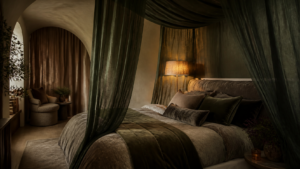
The bedroom color conversation in 2026 is deeply influenced by sleep science. The finding that warm, low-saturation colors create more psychologically restful environments than crisp whites or bright colors has gained significant traction among designers and homeowners alike.
The palette that’s emerging feels almost spa-like: dusky blue-greens, soft chalky lavenders, warm greiges, and dusty mauves. Pantone’s extended forecast for 2026 home interiors includes a desaturated periwinkle-lavender family that reads as both sophisticated and deeply calming. (source: U.S. Department of Energy home tips)
2026 bedroom color picks:
- Benjamin Moore “Boothbay Gray” (HC-165): A stunning blue-gray with just enough depth to feel like a room you actually want to retreat to. The 2026 update pairs it with warm wood nightstands and terracotta accents rather than the cool gray-on-gray look of the past decade.
- Sherwin-Williams “Dustblu” (SW 9151): A muted cornflower blue with excellent coverage. Two coats for full depth.
- Ressource (French paint brand) “Gris Souris”: For design enthusiasts willing to order online. An extraordinary dusty mouse-gray with lavender undertones that only reveals itself in different lighting conditions.
Budget tip: For bedrooms, consider painting only the ceiling in your chosen deep or saturated color, keeping the walls white or near-white. A color-drenched ceiling (painting it a deeper tone than the walls) is one of the most dramatically effective design approaches of 2026 and uses less than half the paint of full-wall coverage. (source: EPA indoor air quality)
What Colors Work Best for Bathrooms in 2026?
The bathroom has become the place designers take their boldest risks, and in 2026 that means deep, saturated, almost luxurious colors that make even a small bathroom feel like an experience rather than a utility room.
Deep hunter green, navy, forest green, and even dramatic near-black are dominating bathroom inspiration boards. These shades work in bathrooms because: bathrooms are typically smaller, so dark colors feel enclosing rather than oppressive; good bathroom lighting balances saturation; and white fixtures (sink, toilet, tub) provide natural contrast that prevents the color from feeling overwhelming.
Bold bathroom picks for 2026:
- Sherwin-Williams “Rookwood Dark Green” (SW 2809): Almost olive-dark, with incredible depth. Stunning paired with brushed gold hardware.
- Benjamin Moore “Black Forest Green” (2047-10): Deeply saturated, jewel-adjacent. The definition of a designer bathroom color without the designer price tag.
- Farrow and Ball “Railings” (31): A near-black navy that photographs beautifully and makes white subway tile look extraordinarily crisp.
One practical consideration: in bathrooms with limited ventilation, darker colors can make moisture marks more visible. A semi-gloss finish (rather than matte) in bathrooms is both practical and easier to clean.
What Home Office Colors Support Focus and Creativity?
As home working has matured from an emergency arrangement to a permanent lifestyle reality, home office setup guide color psychology has gotten serious attention from designers. The 2026 consensus: avoid pure white (too clinical, too reflective on screens), avoid aggressive saturations (too stimulating for long work sessions), and embrace medium-toned naturals that support both focus and creativity.
The most recommended home office colors for 2026:
- Warm whites with yellow undertones (Benjamin Moore “Cream” OC-96 or Sherwin-Williams “Antique White” SW 6119): Warmer than pure white, softer on the eyes during screen time.
- Sage and muted green: Green has the most extensive body of research linking it to improved focus and reduced eye strain in work environments. It’s the most evidence-backed color choice for home offices.
- Soft terracotta or warm clay: For creative professionals who find pure neutrals too sterile. This palette stimulates without overwhelming.
Research from the University of Texas at Austin found that rooms with red or orange tones increased energy and creativity in short-duration tasks, while blue-green tones supported sustained concentration over longer work periods. This maps directly to the 2026 palette recommendations above.
What Are Budget-Friendly Ways to Bring 2026 Color Trends Home?
You don’t need a full repaint or a renovation budget to bring 2026’s color story into your home. There are practical, affordable ways to incorporate trending colors at almost any spending level.
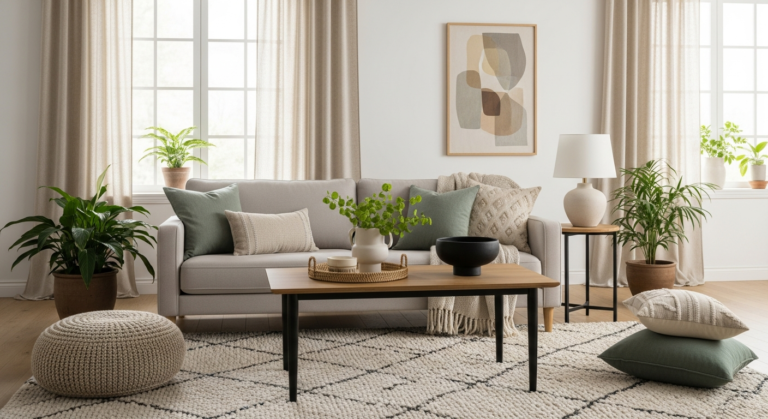
Throw pillows and cushion covers ($20-60): The fastest single-item color update. A set of terracotta or sage cushions on a neutral sofa immediately references the 2026 palette.
Vases and ceramics ($15-80): Earthy-toned ceramics in terracotta, sage, and raw clay are everywhere in home stores right now and age beautifully over time.
Curtain panels ($30-120 per pair): Switching from white or beige curtains to a warm dusty sage or soft blush dramatically shifts a room’s feeling.
An accent wall in chalk paint ($40-80 total): Chalk paint (brands: Annie Sloan, Rust-Oleum Chalked) doesn’t require primer, goes on in one or two coats, and can be sealed with wax for durability. The fastest path from bare wall to beautiful.
Painted furniture ($25-60 in materials): An old dresser, side table, or bookcase gets new life in forest green or terracotta. Furniture painting requires minimal equipment and delivers outsized visual impact.
You can browse a wide range of on-trend throw pillows, curtains, and decor objects on Amazon for easy delivery and returns.
How Do You Choose Between Warm and Cool Tones for Your Home?
Choosing between warm and cool colors comes down to your existing fixed elements: flooring, countertops, and furniture. These don’t change easily, so your wall colors need to work with them rather than against them.
If your fixed elements have warm undertones (honey wood, brown stone, cream upholstery), warm wall colors (terracotta, sage green, warm white) will create harmony. Cool colors in the same space will feel disconnected.
If your fixed elements are cool (gray stone, espresso wood, white/silver fixtures), cooler colors (dusty blue, lavender, cool green) will work better. Warm colors like terracotta can clash with cool-toned floors and countertops.
When in doubt: sage green bridges both warm and cool palettes and is the most forgiving trending color of 2026. It reads differently depending on the light and the surrounding materials, which makes it the safest commitment to a trend color.
A practical tool: most major paint brands offer peel-and-stick paint sample swatches for $3-5 each. Live with a swatch on your wall for three days across different lighting conditions (morning, afternoon, evening, artificial light) before buying a full gallon.
What Are Common Color Mistakes to Avoid in 2026?
Even with a clear sense of what colors you want, a few common mistakes consistently undermine the results. Here’s what to watch out for based on feedback from design communities including Reddit’s r/interiordesign and Apartment Therapy’s reader renovations.
Choosing a color that’s too safe: The biggest mistake most homeowners make with color is choosing something so neutral it barely registers. The color story of 2026 is an invitation to commit. Terracotta that actually looks like terracotta. Sage green with real depth. Navy that means business.
Ignoring the undertones: A paint chip in the store looks nothing like that color on a full wall under your specific light conditions. Always test first.
Painting just the walls without considering trim: White trim with the wrong white can clash with earthy wall colors. When using warm wall tones, choose cream or warm white trim rather than stark cool white.
Going too dark in a room with no natural light: Dark colors work in naturally lit spaces because daylight softens them. In windowless or north-facing rooms, even colors that look manageable in a well-lit showroom can feel oppressive at home.
Paint is the most reversible design decision you can make: a $50 gallon and a weekend afternoon can completely transform how a room feels. With the warm, grounded palette that 2026 is offering, there’s never been a better time to stop overthinking and start painting.
FAQ: Home Decor Colors 2026
What is the most popular home decor color for 2026?
The dominant trend for 2026 home decor centers on warm earthy tones: terracotta, clay, sage green, and deep dusty blues. Terracotta and sage green are the most universally popular choices across living rooms and kitchens, while deep jewel tones (forest green, navy) dominate in bathrooms and accent walls.
Are gray walls going out of style in 2026?
Cool grays are declining in popularity, but warm gray tones (those with brown, beige, or purple undertones) remain relevant. The shift is away from stark, cool gray toward greige (gray-beige), warm taupe, and light earthy neutrals. Pure cool gray feels dated in 2026 compared to these warmer alternatives.
What paint colors are best for small rooms in 2026?
Contrary to old advice to always use white in small rooms, designers in 2026 often recommend committing to one deep color across walls, ceiling, and trim for small spaces. This technique, called color drenching, creates depth that visually expands the room. For a light approach, warm whites with yellow undertones read as more spacious than cool neutrals.
What color should I paint my kitchen cabinets in 2026?
Sage green and dusty olive are the strongest kitchen cabinet trends for 2026. Deep navy and forest green remain popular for bold statement kitchens. If resale value matters to you, sage green is the safest choice: it photographs beautifully, appeals broadly, and pairs with any countertop material.
How do I choose between warm and cool tones for my home?
Start with your largest fixed elements: flooring, countertops, and furniture. If these have warm undertones, warm wall colors will create harmony. If your fixed elements are cool, cooler colors will work better. When in doubt, sage green bridges both warm and cool palettes and is the most forgiving trending color of 2026.
How do I test a paint color before committing to a full room?
Most major paint brands offer peel-and-stick paint sample swatches for $3-5 each. Apply the swatch to your actual wall and observe it over three days in different lighting conditions (morning light, afternoon, evening, artificial light at night). Never choose a color based only on a chip in the store under fluorescent lighting.
Get the 4casahome digest
Honest reviews and no-hype guides — straight to your inbox. No spam, unsubscribe anytime.
Some links in our articles are affiliate links. See our full Affiliate Disclosure for details.
Related Articles
Written and tested by our editorial team
4CasaHome Editorial Team
Interior Design & Smart Home Experts
All product reviews are based on hands-on testing in real home environments. Smart home content is verified by our CEDIA-certified integrator. Meet our team.