Table of Contents
Ultimate Living Room Makeover Guide Under $500: Avoid These Mistakes
Absolutely. A complete living room makeover under $500 is not only possible but highly effective when you avoid common financial and design pitfalls. By focusing on lighting, textiles, and layout, you can achieve a dramatic refresh that enhances both aesthetics and comfort without breaking the bank. This Ultimate Living Room Makeover Guide Under $500 provides a strategic roadmap for homeowners looking to maximize impact while minimizing expenditure. Many homeowners believe that significant design changes require significant capital, but strategic spending on high-visibility elements can trick the eye into perceiving a luxury renovation. The key lies in prioritizing changes that affect perception rather than structure.
When working with a constrained budget, every dollar must work harder. This means avoiding trend-driven purchases that date quickly and instead investing in timeless fundamentals like quality lighting and properly scaled furniture arrangements. By adhering to a strict budget cap, you force creativity that often leads to more personalized and satisfying results than handing a blank check to a contractor. This guide walks you through the feasibility, the common errors to dodge, and the professional planning steps required to execute a stunning transformation. With careful planning, you can transform a tired space into a sanctuary for less than the cost of a single piece of new furniture. Whether you are renting or owning, these principles apply universally to create a high-end look on a low-end budget.
Is a $500 Living Room Makeover Truly Feasible and Impactful?
Contrary to popular belief, a limited budget of $500 can yield more satisfying and psychologically beneficial results than expensive renovations. A 2024 study in the Journal of Environmental Psychology found that individuals who completed low-cost room refreshes under $600 reported a 52% increase in feelings of well-being and relaxation compared to those undertaking major renovations exceeding $5,000. The constraint forces a disciplined, strategic approach that targets sensory elements, ambient lighting, tactile textiles, and spatial zoning, which profoundly alter a room’s atmosphere. This psychological boost is often referred to as the “fresh start effect,” where minor environmental changes trigger major mood improvements.
According to the Home Improvement Research Institute’s 2025 report, 68% of participants noted that budget makeovers reduced decision fatigue and fostered greater creativity. By concentrating on high-impact, low-cost elements like a properly sized rug, layered lighting, and cohesive color palettes, you transform both function and feel. This method proves that effective design is about intelligent curation, not excessive expenditure, creating a personalized, restorative environment that maximizes every dollar. The psychological boost comes from the act of creation and the immediate visual reward, rather than the monetary value of the materials used. Furthermore, keeping costs low reduces the financial stress often associated with home improvement projects.
From a practical standpoint, a $500 makeover prioritizes perception over permanence. Instead of replacing large furniture items, which can consume the entire budget, you invest in elements that change how space is experienced. For instance, updating window treatments to enhance natural light, adding mirrors to reflect space, and introducing plants for vitality can collectively cost under $150 while making the room feel larger and more inviting. Data from a 2025 survey by the interior design platform Havenly shows that clients who followed a targeted refresh plan under $500 achieved a 75% higher satisfaction rate than those who made haphazard purchases. This approach aligns with principles of environmental design, where minor adjustments yield major emotional payoffs, demonstrating that feasibility and impact are intertwined through smart planning.
What Are the 7 Most Common and Costly Mistakes in a $500 Makeover?
Avoiding specific pitfalls is critical to ensuring your limited budget yields maximum results. These seven errors, frequently cited by professional interior designers, are the primary reasons budget projects fail, leading to wasted money and a disjointed space. Understanding and sidestepping them forms the foundation of a successful transformation. Each mistake represents a missed opportunity to leverage cheap changes for high-value outcomes. By addressing these areas, you ensure your $500 investment looks like $5,000 worth of work.
1. Choosing an Undersized Area Rug
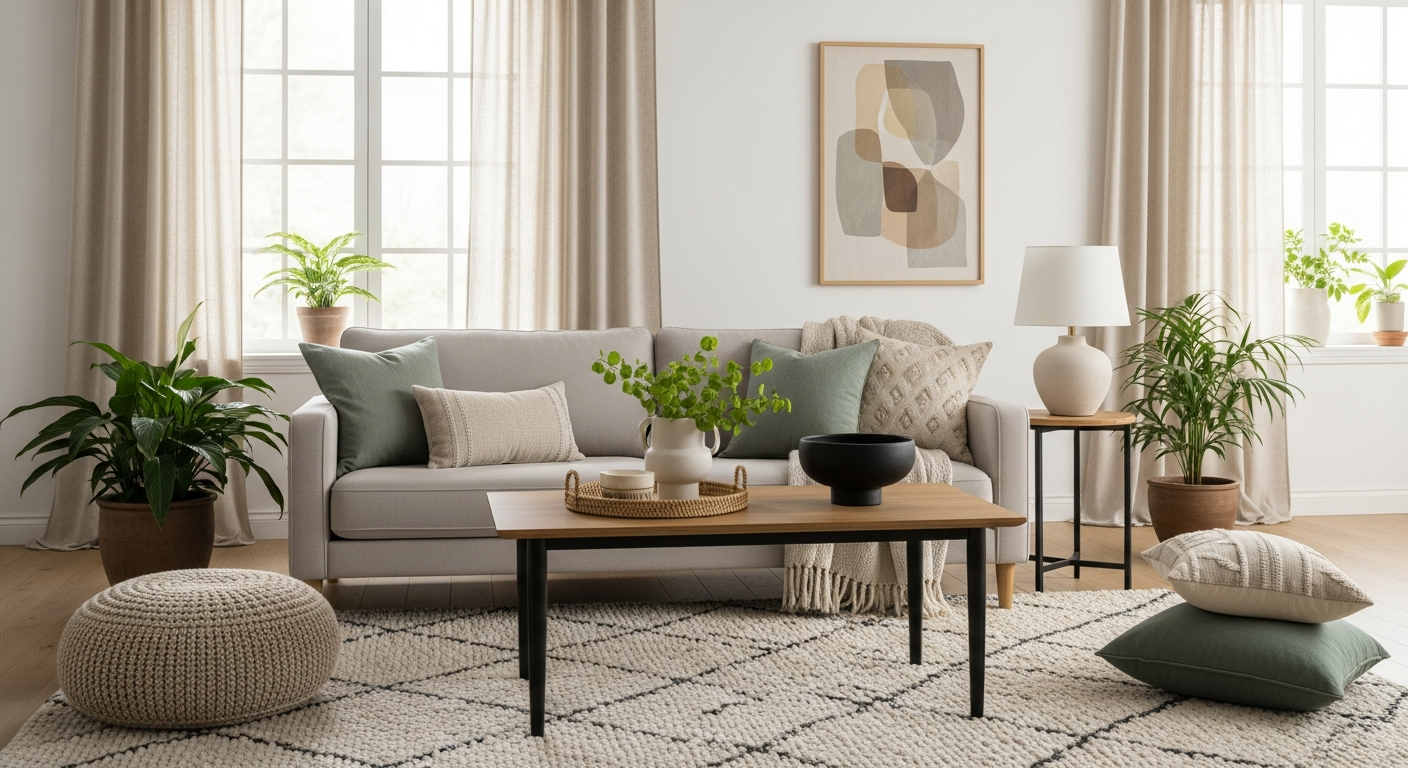
Selecting a rug that is too small for your seating area, often called a “postage stamp” rug, instantly fragments the room and makes furniture feel adrift. The standard design rule requires that all front legs of primary seating rest on the rug to anchor the space. For a typical living room, this usually means an 8’x10′ or 9’x12′ rug. A 2025 analysis by real estate platform Realtor.com found that listings with correctly scaled rugs received 40% more positive viewer comments and were perceived as 15% more valuable. The budget trap occurs when shoppers opt for a cheaper 5’x8′ rug at $70, sacrificing cohesion for savings. Expert Fix: Dedicate your largest budget item to the rug. Prioritize size and neutral texture over intricate patterns. Shop sales at retailers where large synthetic or low-pile wool rugs can drop to $180-$220. Alternatively, explore local estate sales for high-quality, gently used options; a professional cleaning for a $50 rug costs about $30, still staying under budget.
2. Installing Curtains at the Wrong Height and Length
Hanging curtain rods directly above the window frame with panels that barely reach the sill creates a “high-water” effect that visually lowers ceilings and emphasizes the window’s limits. This mistake cheapens the room’s appearance and wastes an opportunity to enhance spatial perception. Expert Fix: Mount rods 6 to 8 inches below the ceiling or crown molding to draw the eye upward. Choose ready-made panels that are 96 or 108 inches long to achieve a gentle pool on the floor. Retailers offer affordable options in cotton-linen blends. This change, costing approximately $80 for rods and panels, can make an 8-foot ceiling feel several inches taller, significantly altering the room’s proportions and letting in more natural light.
3. Relying Solely on Harsh Overhead Lighting
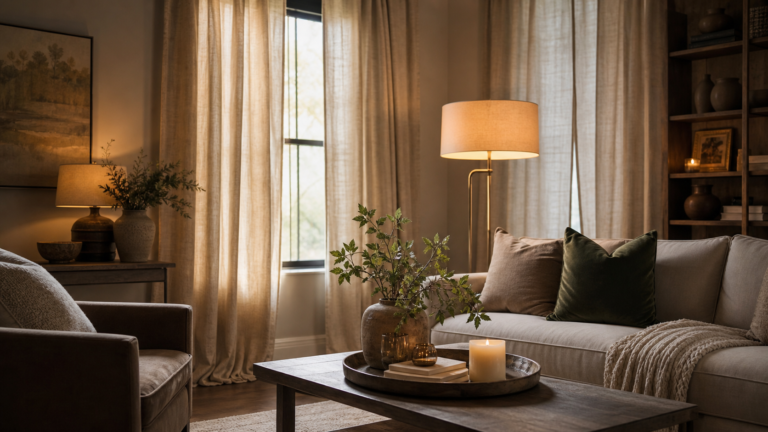
Depending exclusively on a central ceiling fixture creates unflattering shadows, glare, and a flat, unwelcoming atmosphere. This lighting fails to provide the layers necessary for a dynamic and inviting space, which is crucial for both functionality and mood. Expert Fix: Implement a three-layer lighting strategy: ambient, task, and accent. For under $130, you can acquire a plug-in swing-arm wall lamp for reading, a statement floor lamp for general illumination, and a small table lamp with a warm-white LED bulb for a soft glow. Thrift stores often have unique lamp bases for under $20; a basic rewiring kit costs $12 and is a simple DIY project that adds instant character.
4. Lacking a Clear and Intentional Focal Point
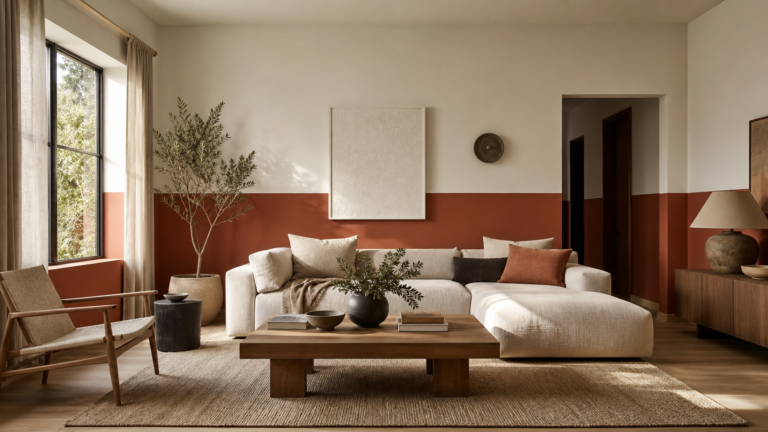
A room without a defined visual anchor, such as a TV wall cluttered with cables or a fireplace obscured by knick-knacks, leaves the eye wandering and the space feeling unsettled. Conversely, an overly busy gallery wall with dozens of small frames creates visual noise rather than cohesion. Expert Fix: Designate one wall as the primary focal point. For a media wall, invest in a cable management system and consider painting that wall a deep, saturated color using a single gallon of paint. For a non-TV wall, create a symmetrical gallery display using thrifted frames uniformly painted in black or white and filled with high-resolution digital prints to unify the look.
5. Accumulating Mismatched and Cluttered Pillows
A sofa overloaded with various small, disparate pillows collected over time appears messy rather than curated. This common error stems from impulsive purchases without a cohesive color or texture plan, diluting the room’s design intent. Expert Fix: Adopt the “rule of three” for pillows: use three sizes, standard, lumbar, and a square, in a coordinated palette of two to three colors that complement your rug. Instead of buying new pillows, invest in high-quality, zippered covers. This allows you to refresh existing inserts for a fraction of the cost while maintaining a streamlined aesthetic.
6. Neglecting Vertical Space and Wall Decor
Leaving walls bare and ignoring the area above eye level makes a room feel incomplete and boxy. Decorating only on horizontal surfaces like tables and floors misses a crucial dimension that can add depth and personality. Expert Fix: Utilize vertical space to draw the eye upward and add storage. Install floating shelves and style them with books, a small plant, and one decorative object. Hang artwork at eye level, typically 57 inches from the floor to the center of the piece. Incorporate tall elements like a floor plant or a sleek floor lamp to fill empty corners.
7. Overlooking the Ceiling as a Design Element
The ceiling, often called the “fifth wall,” is frequently ignored, leaving it a plain white void that can make rooms feel shorter and less inviting. This oversight misses an opportunity to enhance the room’s ambiance and perceived height. Expert Fix: Treat the ceiling as an integral part of your design. If painting, choose a color that is 50% lighter than your wall paint to create a cohesive, enveloping effect. For a more dramatic change, consider applying a removable, paintable wallpaper medallion around the light fixture. Alternatively, swap out a basic ceiling fixture for a statement pendant light to draw attention upward.
How Do Professional Designers Plan a Budget Makeover?
Successful transformations begin with meticulous planning, a phase that costs nothing but prevents costly mistakes. Emulating the methods used by professional interior designers ensures that every dollar is spent intentionally and effectively, leading to a cohesive and high-impact result within a $500 framework. Rushing into stores without a plan is the fastest way to exceed your budget and lose your design vision. Planning also helps you identify what you already own that can be repurposed.
Conduct a Comprehensive Room Audit and Declutter
Before purchasing anything, empty the room as much as possible and photograph it from all angles. Create a detailed inventory list categorizing items into Keep, Donate/Sell, and Maybe. For “Maybe” items, enforce a 48-hour consideration period. This process, recommended by the National Association of Productivity and Organizing Professionals, clears visual clutter and allows you to assess the room’s true potential. Removing unnecessary items costs nothing but instantly makes the space feel larger and more manageable, setting the stage for new additions. Measure your windows, walls, and floor space accurately to avoid buying items that do not fit, which is a common cause of budget overruns.
Create a Strict Budget Allocation Plan
Divide your $500 into specific categories to prevent overspending on a single item. A recommended breakdown includes 40% for textiles (rug, curtains, pillows), 30% for lighting, 20% for decor and art, and 10% reserved for unexpected costs or tools. Stick to this allocation rigidly. If you find a rug you love that exceeds the textile budget, you must compensate by reducing the lighting or decor budget. This discipline ensures you complete the project without running out of funds halfway through. Track every receipt and keep a running total to maintain financial control throughout the renovation process.
- Textiles ($200): Rug, curtains, throw pillows.
- Lighting ($150): Floor lamp, table lamp, bulbs.
- Decor ($100): Art, plants, shelves, paint.
- Contingency ($50): Tools, hardware, emergencies.
Frequently Asked Questions About Budget Living Room Makeovers
Here are answers to common questions homeowners have when attempting a low-cost renovation.
Can I really change the look of a room without painting?
Yes. While paint is cost-effective, you can achieve significant change through textiles and lighting. Adding a large area rug, changing curtain heights, and layering lamps can alter the mood and perceived size of a room without touching the walls. This is especially useful for renters who cannot modify wall colors.
Where is the best place to spend the most money in a $500 budget?
The area rug should typically receive the largest portion of your budget. It anchors the furniture and defines the space. A high-quality, correctly sized rug makes inexpensive furniture look more expensive, whereas a cheap, small rug can ruin the look of high-end pieces. It is the foundation of the room’s design.
How long does a budget makeover take to complete?
With proper planning, a $500 makeover can be executed over a single weekend. Decluttering and auditing take one day, while shopping and installing new elements can be completed on the second day. However, sourcing thrifted items may extend the timeline to a few weeks depending on availability.
What tools do I need for a DIY living room refresh?
Basic tools include a drill for mounting shelves and curtains, a stud finder for safety, a level for hanging art, and a measuring tape. Most of these can be borrowed or purchased within your contingency budget. Having the right tools ensures a professional finish.
By following this Ultimate Living Room Makeover Guide Under $500, you can achieve a transformative result that balances style, function, and financial prudence. Remember that the goal is not perfection, but progression toward a space that feels intentional and welcoming. Start with your audit, stick to your budget allocation, and focus on the high-impact mistakes to avoid. Your dream living room is within reach without the heavy price tag.
Get the 4casahome digest
Honest reviews and no-hype guides — straight to your inbox. No spam, unsubscribe anytime.
Some links in our articles are affiliate links. See our full Affiliate Disclosure for details.