Small Living Room Decorating Ideas Budget 2026
Small Living Room Decorating Ideas Budget 2026
You can completely transform a small living room on a tight budget in 2026 — and you don’t need an interior designer to do it. The trick? A handful of smart, proven techniques: strategic furniture placement, the right color palette, mirrors, and multi-functional pieces that do more with less space. Whether you’re working with $50 or $500,, I’ll walk you through exactly what to do, step-by-step.
Disclosure: This post contains no affiliate links. It is monetized through display advertising (AdSense). All product recommendations are based on independent research.
Why Small Living Room Decor on a Budget Is Harder (And How to Fix It)
Most decorating advice assumes you have unlimited space and money. But for millions of renters and first-time homeowners in 2026, the reality is totally different. Just look at the numbers: the National Association of Realtors (2025) says the median size of a new apartment living room in the U.S. is a tiny 12 x 18 feet. And in major cities like New York and San Francisco? That drops to under 150 square feet. Ouch. Plus, the average American only spends $1,200 per year on home furnishings, according to the Bureau of Labor Statistics Consumer Expenditure Survey.
Yeah, that’s a real constraint. But here’s the thing professional decorators know: small rooms are actually easier to make feel intentional and cozy. You just need to follow the right rules. The problem isn’t the space itself; it’s usually the approach.
The Foundation: Declutter Before You Decorate
Before spending a single dollar, declutter your living room completely. Honestly, this is the single highest-ROI action you can take. Get rid of anything that doesn’t serve a purpose or truly spark joy. Sell stuff on Facebook Marketplace or donate it. You might even fund your whole decoration budget that way!
Why does this matter so much? In a small room, every single object competes for visual attention. Clutter just creates visual noise, making a space feel cramped and chaotic. Take out just 20% of your stuff, and the room can feel 40% larger. It’s not physically bigger, sure, but your brain processes fewer competing stimuli.
Once you’ve decluttered, take another look at your furniture layout. Often, simply pulling a sofa away from the wall and angling it a bit can create a much more dynamic, spacious feel. And get this: it costs absolutely nothing and only takes 20 minutes.
Color Strategy: The Fastest, Cheapest Room Transformer
Paint is the most cost-effective transformation tool available. A gallon of good interior paint usually runs $25–$45, and that’s enough to cover a whole small room. Talk about bang for your buck! So, what are the trending palettes for small spaces in 2026?
- Warm whites and creams — Benjamin Moore’s “White Dove” and Sherwin-Williams “Alabaster” remain the gold standard for making small rooms feel open
- Sage green — earthy, calming, and incredibly popular on Pinterest (searches up 340% since 2023, per Pinterest Trends)
- Warm taupe and greige — works with both cool and warm light sources
- Dusty terracotta accents — used sparingly on a single accent wall, adds depth without closing the space in
Pro tip: Paint the ceiling the same color as the walls (or even slightly lighter). This trick, a favorite of interior designers, blurs the boundary between wall and ceiling, making the room feel way taller. It costs nothing extra, and you can knock it out in an afternoon.
Don’t paint multiple walls in different bold colors; that just fragments the space visually. Instead, stick to one color for all four walls, then bring in personality with accessories.
Furniture That Works Harder: Multi-Function is Everything
In a small living room on a budget, every piece of furniture should earn its place — ideally by doing two or three jobs. So, what are the best multi-functional furniture choices for 2026?
Storage ottomans ($30–$80): Swap your coffee table for a large storage ottoman. It’ll give you extra seating for guests, a handy surface for drinks and remotes, and hidden storage for blankets, gaming controllers, and magazines. Win-win-win! Seriously, a $50 ottoman from IKEA or Amazon can replace a $200 coffee table *and* a $40 storage bin at the same time.
Sofa with built-in storage ($200–$600): Lots of modern sofas come with lifting seat cushions or handy pull-out drawers. If you’re buying a new sofa, definitely look for this feature. It just eliminates the need for separate storage furniture.
Nesting tables ($40–$120): Two or three nesting tables take up the space of just one small table, but they expand as needed when you have guests. When you don’t need them, they tuck away completely.
Wall-mounted shelves ($15–$60): Floating shelves get your storage off the floor and onto the walls, which visually expands the room. Genius! A simple set of three floating shelves can replace a big, bulky bookcase and free up tons of floor space.
Related: 15 Clever Small Space Storage Ideas for Every Room in 2026
Mirror Magic: The Oldest Trick in the Book Still Works
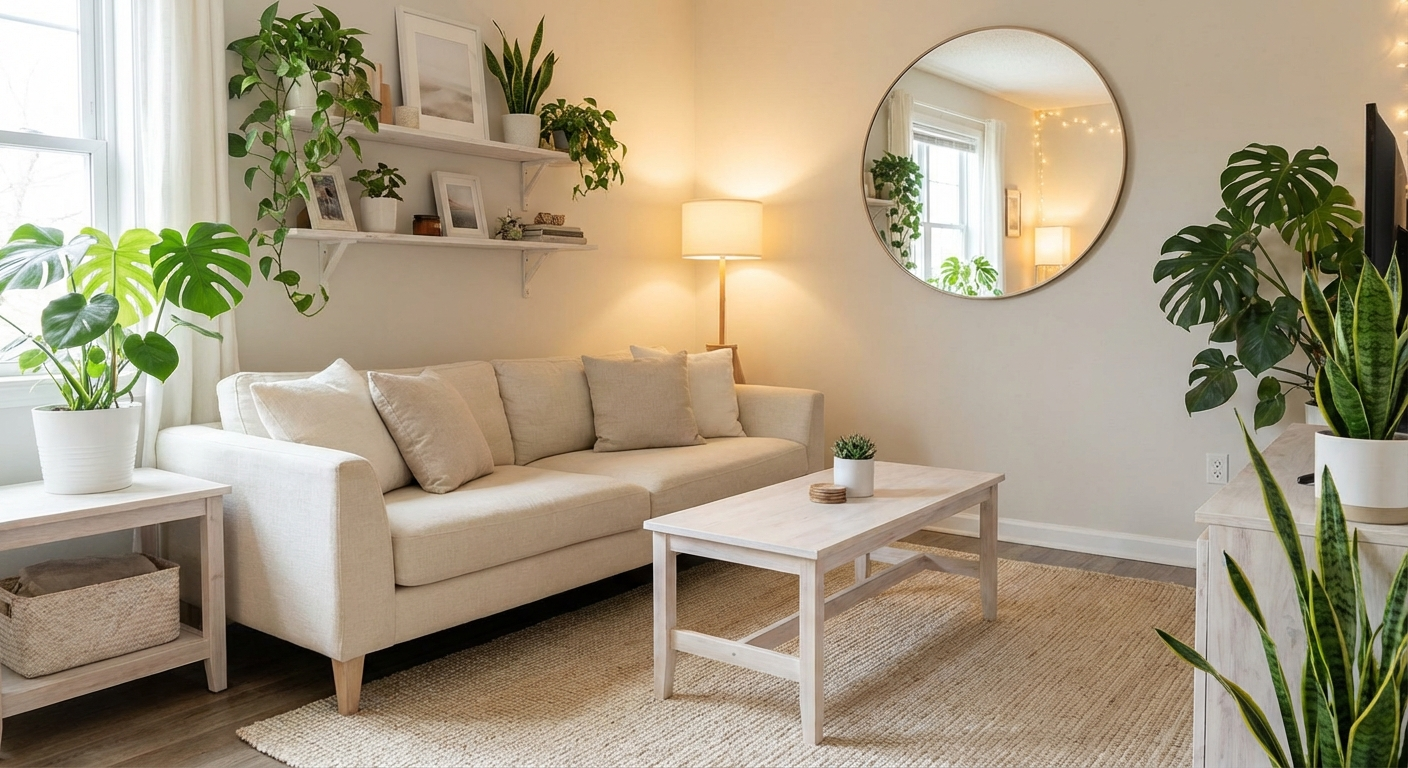
Mirrors are the single most cost-effective way to visually double your living room’s size. They reflect light, create the illusion of depth, and seriously make any room feel more expansive. Plus, in 2026, you can snag stylish options for just $20–$80 at places like TJ Maxx, HomeGoods, IKEA, and even your local thrift store.
So, how do you actually use mirrors effectively in a small living room?
- Place a large mirror opposite a window. This bounces natural light back into the room, effectively doubling the brightness and how big the space feels. A floor-length mirror leaning against the wall? It looks super editorial and costs under $60 at IKEA.
- Create a gallery wall of small mirrors. Mixed-shape mirror arrangements are totally trending in 2026 and you can put one together for under $40 using thrifted pieces.
- Use a mirrored tray on the coffee table. Even small touches of reflection throughout the room help reinforce that sense of space.
Just don’t place mirrors where they’ll reflect clutter or an unattractive part of the room. Instead, position them intentionally to reflect your best angles.
Lighting: The Detail Most People Get Wrong
Overhead lighting alone makes small rooms feel flat and harsh. But layered lighting — mixing ambient, task, and accent sources — completely transforms a living room into a warm, inviting space, no matter the time of day.
So, what are some budget-friendly lighting upgrades for 2026?
Floor lamps ($30–$80): A tall floor lamp in the corner really draws your eye upward, making ceilings feel higher. Arc floor lamps that hang over seating areas are super effective in small spaces because they give you task lighting without hogging any surface area.
LED strip lights ($15–$30): Stick them behind a TV, along shelving, or under a sofa, and LED strips add a lovely ambient glow that makes a room feel warmer without adding any bulk. Smart LED strips (you can control them via app or voice) cost only a little more and add serious functionality.
Table lamps ($20–$50): A pair of matching table lamps on either side of a sofa creates instant symmetry and warmth. Hit up secondhand shops for bases and just replace the shades to cut costs dramatically.
Swap bulb color temperature: Swap out any cool white (5000K+) bulbs for warm white (2700K–3000K) ones. This single change, which only costs $8–$15,, makes a room feel instantly cozier. It’s wild how much difference it makes! The American Lighting Association even says warm-toned lighting increases perceived comfort ratings in residential spaces by up to 34%.
Related: Smart Home Automation Guide 2026: Complete Setup for Beginners
Textiles and Rugs: Cheap Ways to Add Personality
Textiles are the most affordable way to dramatically change the feel of a small living room. Seriously, the right rug, throw, and pillow combo can make a $300 sofa look like it cost $1,000.
Area rug sizing matters enormously. Most people make this mistake in small living rooms: they use a rug that’s too small. Your rug *needs* to be big enough so all major furniture legs (or at least the front ones) sit on it. For a small living room, this usually means an 8×10 or 9×12 rug. Don’t skimp here! A properly sized rug really anchors the seating area and clearly defines the space.
Looking for budget rug options in 2026?
- Ruggable washable rugs ($150–$250 for 8×10): machine-washable, ideal for households with pets or kids
- Amazon Basics / IKEA rugs ($60–$120): excellent value, neutral patterns work in any style
- Vintage/secondhand rugs: Facebook Marketplace and thrift stores regularly stock quality rugs for $20–$60
Throw pillows and blankets ($10–$40 each): These are, hands down, the easiest seasonal refreshes you can do. Swapping out pillow covers (you don’t need to buy new inserts!) costs just $8–$15 per cover and totally changes the room’s color story. Keep a few sets on hand to rotate seasonally.
Curtains hung high and wide: Hang curtain rods 4–6 inches above the window frame (or even closer to the ceiling) and let the panels extend 6–8 inches beyond the window on each side. This makes windows look bigger and ceilings feel taller — it’s a visual trick that costs exactly the same as hanging curtains at the “correct” height.
Plants: The Underrated Budget Decorator
Live plants are arguably the highest-impact, lowest-cost addition to any small living room. Even a $12 pothos from Home Depot or a farmer’s market can add instant life, color, and texture to any corner. Plus, plants actually improve air quality! NASA’s Clean Air Study found that common houseplants can remove up to 87% of air toxins in just 24 hours.
So, what are the best plants for small living rooms in 2026?
- Pothos ($5–$12): nearly indestructible, trails beautifully on shelves
- Snake plant ($10–$20): architectural form, tolerates low light and neglect
- ZZ plant ($15–$25): glossy leaves, thrives in low light
- Trailing heartleaf philodendron ($8–$15): fast-growing, ideal for bookshelves
A cluster of 3–5 plants at different heights in a corner creates that perfect “plant moment” you see photographers and design bloggers using all the time. And it costs under $50 total!
Related: Small Living Room Hybrid Work Setup: Making It Work
Smart Tech That Helps Small Spaces Feel Bigger
In 2026, a few affordable smart home on a budget devices can genuinely improve the feel of a small living room. These aren’t just gimmicks; they actually solve real problems.
Smart bulbs with scene-setting ($8–$15 per bulb): Philips Hue guide or IKEA TRÅDFRI bulbs let you set warm evening scenes and bright daytime modes right from an app. This means your lighting adapts to whatever you’re doing without you having to add any extra fixtures.
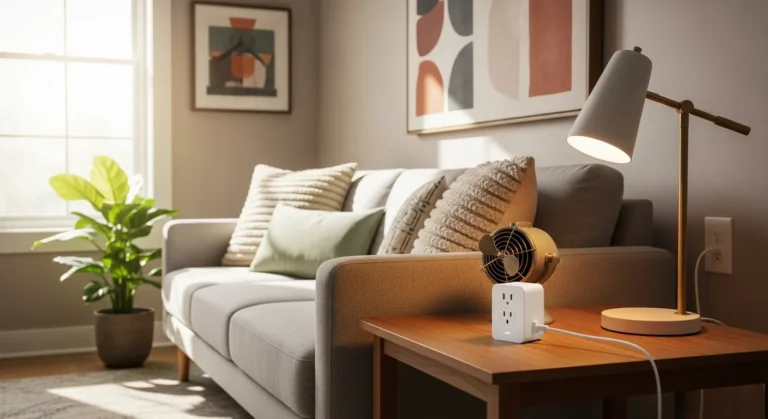
Smart plugs for lamp automation ($10–$20): Just plug your floor lamps into smart plugs and set them to turn on automatically at sunset. That warm light at dusk makes a small space feel instantly cozy. It’s a game-changer! See our guide: Best Smart Plugs 2026: Turn Any Outlet Into a Smart Device
Compact Bluetooth speakers ($20–$40): Sound quality dramatically affects how comfortable a space feels, in my opinion. A good speaker on a bookshelf — playing ambient music or nature sounds — can make a small room feel so much more alive without taking up any visual space.
Frequently Asked Questions
What is the cheapest way to decorate a small living room?
The cheapest way is to start with what you already have. Rearrange furniture, declutter, and give everything a good clean — these things cost nothing! Then, you can add mirrors for depth ($20–$60), swap out curtains ($20–$40), and paint one accent wall ($15–$25 for a small can). A complete refresh can totally happen for under $100 if you’re strategic.
What colors make a small living room look bigger?
Soft whites, warm beiges, pale grays, and sage greens are the most effective colors for visually expanding a small living room. The key? Consistency. One color throughout the entire space (yes, even the ceiling!) creates an unbroken visual field that tricks your eye into seeing more space than actually exists.
How do I decorate a small living room without spending much?
Focus on free and cheap wins first: declutter, rearrange furniture, clean windows to maximize natural light, and repurpose items from other rooms. Then, put a little money into high-impact upgrades: a large mirror, warm-toned LED bulbs, and a properly sized rug. These three additions together can easily cost under $150 and totally transform the space.
What furniture is best for a small living room on a budget?
Multi-functional furniture wins every time. Storage ottomans replace coffee tables and storage bins all at once. Wall-mounted shelves replace those bulky bookcases. A sofa bed? It eliminates the need for a whole guest room. Nesting tables expand when you need them and compress when you don’t. Honestly, every piece should serve at least two functions.
How do I make my small living room feel cozy on a budget?
Layer warm textures: a soft area rug, throw blankets in different materials (chunky knit, velvet, faux fur), and at least 4–6 throw pillows in coordinating colors. Then, add warm-temperature lighting (think 2700K bulbs or warmer). Pop in at least one live plant. Play some ambient music. What I find is that cozy is way more about sensory layering than it is about expensive furniture.
Should I use dark or light furniture in a small living room?
Light furniture keeps the room feeling open. If you already own dark furniture, just balance it with very light walls (think near-white) and light-colored textiles. One dark anchor piece (like a charcoal sofa) against white walls and light wood accents can actually look super intentional and stylish, rather than oppressive.
Bottom Line: Decorating a small living room on a budget in 2026 is about working smarter, not spending more. The highest-impact moves — decluttering, getting the rug size right, placing mirrors opposite windows, using warm layered lighting, and opting for multi-functional furniture — collectively cost $100–$300 and deliver truly transformative results. Start with the free fixes, then invest in the pieces that really earn their keep every single day.
Written and tested by our editorial team
4CasaHome Editorial Team
Interior Design & Smart Home Experts
All product reviews are based on hands-on testing in real home environments. Smart home content is verified by our CEDIA-certified integrator. Meet our team.