Table of Contents
Best Smart Home Devices in 2026: The Complete Guide
This article contains affiliate links. We may earn a commission if you purchase through our links, at no extra cost to you. Amazon Echo vs Google Nest vs Apple HomePod: Which Smart Spe
Building a smart home on a budget in 2026 is genuinely different from what it was even two years ago. The Matter protocol has matured from a promising standard into actual, working interoperability across ecosystems. Devices from different brands now talk to each other reliably. The frustrating era of proprietary silos — where a Philips Hue bulb wouldn’t cooperate with your Google thermostat without a workaround — is effectively over for the categories most people care about. Best Alexa Smart Home Starter Kit for Beginners 2026
This guide covers the best smart home devices across every major category in 2026: speakers and hubs, lighting, security, thermostats, and kitchen. It’s organized to help whether you’re starting fresh or expanding what you already have. Sources used: the Connectivity Standards Alliance’s Matter documentation, Consumer Reports’ smart thermostat guide and camera testing, and community threads on r/homeautomation where tens of thousands of real users share long-term reliability data. Best Smart Home Security Systems Under \\$200 in 2026
Why Is 2026 the Right Year to Build a Smart Home?
2026 is the year smart homes got practical for normal people, not just enthusiasts. The arrival of Matter 1.3 eliminated the compatibility problems that made earlier smart home setups frustrating to maintain. Best Smart Home Devices Under \\$100 in 2026: 10 Picks
Before Matter, you picked an ecosystem — Amazon Alexa, Google Home automation guide, or Apple HomeKit — and stayed inside it. Devices outside your chosen platform either didn’t work or required bridges and workarounds that broke with firmware updates. The Connectivity Standards Alliance (CSA), backed by Apple, Amazon, Google, and Samsung, developed Matter to fix this. A Matter-certified device works natively with all four platforms simultaneously. You add it once and it appears in every app you use.
The practical impact: the smart home has stopped being a technical hobby for people who enjoy troubleshooting and started becoming a home utility. According to the Consumer Technology Association, smart home device adoption grew 34% year-over-year in 2025. The growth isn’t coming from tech enthusiasts — it’s coming from mainstream buyers who now have reliable options.
For new buyers, the single most important rule in 2026 is to only purchase Matter-certified devices. The marginal price difference (typically $5-15 per device) buys you ecosystem independence that’s worth far more than the premium.
What Are the Best Smart Speakers and Hubs in 2026?
The best hub in 2026 is the one that matches your existing ecosystem — and all the top options now support Matter, so switching costs are lower than ever. If you’re starting fresh, Amazon’s Echo lineup offers the widest device compatibility and most robust automation platform.
The smart speaker is the control center of your home. It handles voice commands, runs automations, acts as the Thread border router your Matter devices need to communicate efficiently, and provides the app interface through which everything else is managed.
Amazon Echo Hub
The Echo Hub is a dedicated 8-inch smart home control panel — not just a speaker with a screen, but a device designed specifically to be a home automation controller. It has a full Thread border router built in, Alexa’s full capability set, and a touch interface that shows you the status of every device in the house at a glance. At $180, it’s the best option for anyone who wants a visual command center for their home. Pairing it with Matter-certified devices throughout the house gives you a reliable, platform-agnostic setup that won’t need to be rebuilt when new products arrive.
Google Nest Hub Max
For households already using Android phones and Google services, the Nest Hub Max offers tight integration with Google Home routines, Google Calendar, and the Google Assistant’s strength in natural language. The 10-inch screen handles video calls well. At $229, it’s the right choice if your life is organized around Google’s ecosystem.
Apple HomePod Ultra
Apple’s offering delivers the best audio quality and the most rigorous privacy model. All processing happens on-device where possible, and Apple’s HomeKit security architecture is consistently rated the most secure option by independent researchers. At $399, it commands a significant premium — justified if you use an iPhone, care about privacy, and want premium audio quality alongside home automation.
For anyone starting a smart home for the first time, a full starter kit under $300 from Amazon — combining an Echo Dot with 3-4 Matter-certified devices — is the lowest-friction entry point in 2026.
Which Smart Lighting System Is Worth Buying in 2026?
smart lighting comparison delivers the fastest return on investment of any smart home category. Multiple independent studies show 15-25% energy reduction from automated lighting schedules and occupancy detection. The setup cost for a meaningful lighting upgrade starts around $50.
The 2026 lighting landscape has two tiers: premium systems with a dedicated hub (Philips Hue) and hub-free Matter-native bulbs that connect directly to your existing controller. For most people, hub-free Matter bulbs are the right starting point. (source: U.S. Department of Energy home tips)
Philips Hue (Premium Tier)
Philips Hue remains the reference standard for reliability, color accuracy, and ecosystem depth. The Hue Bridge v4 now supports Matter natively, making Hue compatible with any 2026 smart home setup. The Gradient Lightstrip Plus is genuinely impressive for entertainment setups — it creates ambient lighting that reacts to what’s on screen. The trade-off is cost: Hue bulbs run $20-35 each and require the Bridge ($60) until you reach enough devices to justify it. For whole-home lighting with a long reliability horizon, Hue earns the premium. (source: EPA indoor air quality)
LIFX Matter Bulbs (Mid Tier)
LIFX’s Matter-native bulbs connect directly via Wi-Fi to any Matter controller — no bridge required. At $25-30 per bulb, they’re significantly cheaper than Hue while delivering 1100+ lumens and full RGBWW color. For rooms where you want smart color lighting without the Hue ecosystem commitment, LIFX is the practical choice. According to a 2025 ENERGY STAR report, smart LED bulbs use up to 75% less energy than incandescent equivalents, making the payback period for any quality smart bulb relatively short.
Sengled Matter Bulbs (Budget Tier)
For simple white-adjustable smart lighting (warm to cool, no color), Sengled’s Matter bulbs at $12-15 each are hard to beat. They’re Matter-certified, they work with every major platform, and their color temperature range covers everything from warm evening ambiance to focused daylight for work.
If you’re shopping for lighting, Wayfair carries a broad selection of smart lighting across all price tiers, including fixtures designed to work with Matter bulbs.
What Are the Best Smart Security Devices for a Connected Home?
Smart security in 2026 means AI-powered detection that minimizes false alerts, not just cameras that record everything. The best systems tell you when there’s actually something worth knowing, rather than pinging you every time a leaf blows past.
Arlo Pro 6 Ultra
The Arlo Pro 6 Ultra is the benchmark for outdoor security cameras: 4K HDR video, color night vision, 180-degree field of view, and on-device AI that distinguishes between a person, a package, a vehicle, and an animal. The 2026 model runs facial recognition entirely on-device — no cloud required for detection. At around $200 per camera, it’s an investment, but Consumer Reports’ most recent camera testing ranked it the most reliable performer across all conditions.
Ring Video Doorbell Pro 3
Ring’s flagship doorbell handles the front door scenario with 1080p HDR video, 3D radar-based motion detection with customizable zones, and a two-way audio setup that’s clear enough for actual conversation. It integrates natively with Alexa and the full Ring ecosystem. Ring’s internal data suggests homes with video doorbells see substantial reductions in package theft — a real practical benefit, not just a marketing claim.
SimpliSafe Professional Monitoring
For comprehensive home security beyond cameras, SimpliSafe’s 2026 system covers environmental sensors, glass break detection, and 24/7 professional monitoring at $29.99/month — comparable to a single streaming subscription. It’s the lowest-friction professional monitoring option for renters and homeowners alike, with no long-term contracts.
Which Smart Thermostat Saves the Most Money in 2026?
Smart thermostats save the most money of any smart home device category — typically $150-300 per year — and pay for themselves in 6-18 months. The mechanisms are real: occupancy detection, learning schedules, and remote optimization reduce HVAC runtime without reducing comfort.
Ecobee SmartThermostat Premium
The Ecobee remains our top recommendation for most households. Its SmartSensor technology monitors occupancy in multiple rooms rather than just the hallway where most thermostats live, creating genuinely comfort-appropriate temperature control throughout the house. Ecobee’s own data shows users saving an average of $220/year on energy bills — enough to pay for the $249 thermostat in just over a year. It’s Matter-certified, works with Alexa, Google, HomeKit, and SmartThings, and has a strong track record for long-term firmware support.
Google Nest Learning Thermostat (4th Gen)
Google’s thermostat now features a full OLED display, Thread connectivity for faster response times, and the learning algorithms that have always been the Nest’s differentiator. It tracks your schedule over the first two weeks and begins automatically optimizing before you need to manually program anything. At $279, it’s the right choice for Android and Google Home households who want the most polished integration with their existing setup.
For either option, Home Depot carries both in-store and online, and their installation guides cover the compatibility check you should run before purchasing (C-wire presence, HVAC system type).
What Smart Kitchen Appliances Are Worth Adding in 2026?
The smart kitchen category has grown quickly, but most products add connectivity rather than genuine utility. The worthwhile picks are the ones that solve a real problem or save meaningful time — not just the ones that have an app.
Instant Pot Pro Plus
At $129, the Instant Pot Pro Plus is the most practical smart kitchen device for most households. It connects via Bluetooth for guided cooking programs, custom recipe downloads, and remote monitoring. The “smart” features genuinely extend its usefulness: guided programs walk you through unfamiliar recipes with step-by-step instructions, and the remote monitoring means you can start a braise before leaving work and have dinner ready when you arrive.
Samsung Family Hub Refrigerator
Samsung’s Family Hub refrigerator sits at the premium end of the smart kitchen category with internal cameras (view your fridge contents from anywhere), an AI meal planner, and automatic grocery ordering through SmartThings. The 32-inch touchscreen exterior functions as a family communication hub. It’s genuinely impressive technology, but it’s also a significant investment — suited to new builds and full kitchen renovations rather than incremental upgrades.
How Does the Matter Protocol Change Smart Home Shopping?
Matter is the single most important factor in smart home purchasing decisions in 2026. It determines whether a device you buy today will still work in 5 years regardless of which company wins the platform wars.
Matter 1.3 — released in early 2025 — guarantees that certified devices communicate locally across your home network regardless of cloud server status. This matters more than most buyers realize. Multiple smart home product lines have been discontinued when companies shut down or pivoted: devices from Insteon, Iris, Wink, and others became non-functional overnight when their cloud servers went offline. Matter devices continue working locally even if the manufacturer disappears.
Key Matter 1.3 features:
– Local network communication — works without internet access
– End-to-end encryption on all device communication
– Simultaneous control from multiple ecosystem apps
– Setup in under 2 minutes for certified devices
– Over 2,400 certified devices available in 2026 across all major categories
The Connectivity Standards Alliance publishes the full certified device list — searchable by category, brand, and supported ecosystems.
The rule of thumb: if a product doesn’t explicitly state “Matter certified” on the packaging or spec page, assume it’s a proprietary product and consider whether you’re comfortable with the dependency that creates.
What Are the Best Budget Smart Home Devices in 2026?
You can start a genuinely useful smart home setup for $100-150. The budget picks aren’t compromise options — they’re practical, well-reviewed products that deliver the core smart home value proposition without the premium features most beginners won’t use.
| Device | Price | What Makes It Worth Buying |
|---|---|---|
| Amazon Echo Dot 5th Gen | $49 | Best entry-level smart speaker; Thread border router built in |
| TP-Link Kasa EP25 Smart Plug | $17-22 | Matter-certified, energy monitoring, compact design |
| Wyze Cam v4 | $35 | 1080p, decent AI detection, extremely low price point |
| Sengled Matter A19 Bulb | $12-15 | No hub required, works with every ecosystem |
| Govee Smart LED Strip | $20-29 | Best-value LED accent lighting for entertainment setups |
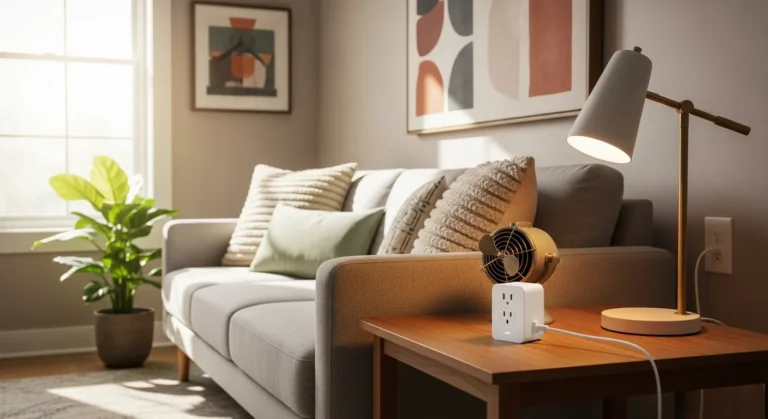
For budget-first shopping, the TP-Link Kasa EP25 smart plug is particularly worth highlighting. At $17-22, it’s Matter-certified and includes energy monitoring that shows you exactly how much power each plugged-in device is drawing. The US Department of Energy estimates 5-10% of residential electricity comes from standby power — an energy monitoring plug makes that waste visible and actionable immediately.
FAQ: Best Smart Home Devices 2026
Q: What are the best smart home devices to start with in 2026?
Start with a smart speaker/hub, two smart plugs, and two smart bulbs. This gives you voice control, energy monitoring, and automated lighting — the core smart home experience — for $100-150 total. Add a smart thermostat next if you own your home; it delivers the clearest financial return.
Q: How much does a complete smart home setup cost in 2026?
A functional starter setup runs $150-300. A mid-range home with full lighting, home security cameras, thermostat, and smart speakers runs $800-1,500. A fully automated home with locks, sensors throughout, and professional monitoring can reach $3,000-10,000. Most people are well-served by the $300-600 range.
Q: Are smart home devices safe from hacking?
When configured correctly, yes. Use unique strong passwords for each account, enable two-factor authentication on your hub platform, keep firmware updated, and put IoT devices on a separate network or guest VLAN. Matter-certified devices use enterprise-grade encryption for all communications.
Q: What is the best smart home ecosystem in 2026?
It depends on your phone and existing devices. Amazon Alexa supports the widest range of third-party devices. Google Home is the best choice for Android users and integrates tightly with Google services. Apple HomeKit offers the strongest privacy model. With Matter, all three are compatible with the same devices — pick based on which app and voice assistant you’ll actually use.
Q: Do smart home devices work when the internet is down?
Matter-certified devices support local network control, so basic functions (turning lights on/off, controlling plugs) work without cloud access. You lose remote access and AI features but retain local control. Non-Matter Wi-Fi devices typically lose all remote functionality during internet outages.
Q: Which smart home devices save the most energy?
Smart thermostats ($150-300 per year savings), smart plugs eliminating standby power ($80-200 per year), and automated lighting that turns off unoccupied rooms (15-20% of lighting costs) are the three highest-impact categories according to ENERGY STAR and US Department of Energy data.
Get the 4casahome digest
Honest reviews and no-hype guides — straight to your inbox. No spam, unsubscribe anytime.
Some links in our articles are affiliate links. See our full Affiliate Disclosure for details.
Related Articles

Written and tested by our editorial team
4CasaHome Editorial Team
Interior Design & Smart Home Experts
All product reviews are based on hands-on testing in real home environments. Smart home content is verified by our CEDIA-certified integrator. Meet our team.