Best Presence Sensors for Home Automation 2026: The Complete Buying Guide
Last updated: March 16, 2026 | By Daniel Reeves
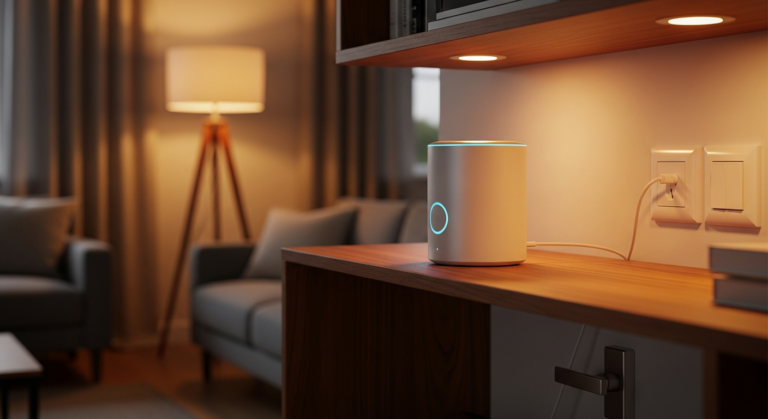
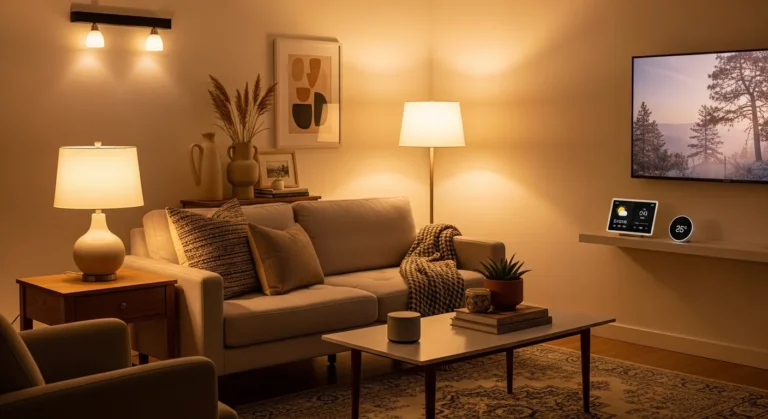
I used to have the most annoying smart home problem: the living room lights kept turning off while my wife was reading on the couch. Our old PIR motion sensor couldn’t tell the difference between “person sitting still” and “empty room.” After testing eleven different sensors over six months, I finally fixed it — and learned a lot along the way.
The shift from basic motion detection to true presence sensing is the single biggest upgrade you can make to a smart home in 2026. This guide covers every sensor worth considering, from the $15 budget pick to the premium $82.99 whole-room tracker — so you can stop guessing and start automating correctly.
What to Look For in a Presence Sensor
Before you buy, there are five things that determine whether a sensor will actually work for your home:
1. Radar Technology: mmWave vs. PIR
PIR sensors detect infrared heat from movement. They’re cheap and power-efficient, but they fail the second you stop moving — your lights go dark while you’re still in the room. mmWave (millimeter wave) radar emits 60GHz or 24GHz radio pulses that detect even micro-movements like breathing or shifting in your seat. For true presence detection (not just motion detection), you want mmWave.
Some newer sensors pair both technologies: PIR wakes the device up first, then mmWave confirms you’re still there. This hybrid approach is how the Aqara FP300 achieves 3-year battery life without sacrificing accuracy.
2. Protocol: Zigbee, Thread, Wi-Fi, or Bluetooth
This matters more than most buyers realize, especially for whole-home setups. Zigbee sensors are cheap and widely compatible, but some Tuya-based Zigbee models spam your network with constant data packets — three or more can destabilize an entire Zigbee mesh. Thread (the protocol behind Matter) handles scale far better and is the smarter choice if you’re planning 8+ sensors. Wi-Fi sensors like the Aqara FP2 work great in small numbers but strain your router at scale.
3. Detection Range and Coverage Area
Budget 5.8GHz sensors cover about 4 meters at a 100° angle — enough for a bedroom or small office. Premium 24GHz sensors like the DIY DFRobot C4001 reach 25 meters for motion and 16 meters for static presence. For living rooms and open-plan spaces, look for sensors rated for at least 6m range and a 120°+ angle.
4. Pet Immunity
This is the most under-discussed spec in buying guides. mmWave radar detects everything that moves — including your 30-pound dog napping on the couch. If you have pets, look for sensors with configurable sensitivity zones, height-based detection limits, or AI-based human recognition (the Aqara FP2 is the best option here).
5. Wired vs. Wireless
Wired sensors (USB-C or PoE) give you zero battery anxiety and zero-latency detection. Wireless sensors offer flexible placement without running cables. The right choice depends on your home — if you can hide a USB-C cable behind furniture or in the ceiling, wired is always cleaner. If you’re renting or hate cable management, wireless is the practical answer.
Top 5 Presence Sensors for Home Automation 2026
| Sensor | Price | Protocol | Range | Battery | Best For |
|---|---|---|---|---|---|
| Aqara FP2 | $82.99 | Wi-Fi | 40m² / 5 people | Wired (USB-C) | Best overall, multi-zone tracking |
| Aqara FP300 | $49.99 | Zigbee / Thread | 5m / 1 zone | 3 yrs (2x CR2450) | Best wireless, long battery life |
| Sonoff SNZB-06P | $15 | Zigbee | 4m / 100° | CR2477 (included) | Best budget, small rooms |
| Meross MS605 | $35.99 | Matter / Thread | 5m | 3 yrs (1x CR123A) | Best for Matter ecosystems |
| Apollo MSR-2 | ~$30 | Wi-Fi (ESPHome) | 6m / 120° | Wired (USB-C) | Best for Home Assistant tinkerers |
Detailed Reviews
1. Aqara FP2 — Best Overall ($82.99)
The Aqara FP2 is the most capable presence sensor you can buy right now without going full DIY. It uses 60GHz mmWave radar to monitor up to 40 square meters (430 sq ft) and can track the precise position of up to 5 different people simultaneously — meaning it knows you’re on the couch and your partner is at the desk, and can automate lighting or temperature per zone accordingly.
The big differentiator is the zone mapping feature: you can divide a room into up to 30 distinct automation zones directly in the Aqara app. Label your sofa as one zone, your bed as another, your desk as a third — and set completely different automations for each. The lights over the TV dim to 30% when you sit on the couch, while the desk lamp turns on only when you’re actually at your desk. No other sensor at this price point does this.
For households with pets, the FP2 offers the best AI-based filtering on the market. It won’t perfectly ignore every large dog, but it’s substantially better than raw mmWave sensors that treat every moving thing equally.
Limitations: It requires constant USB-C power and connects via Wi-Fi (2.4GHz only). That means cable management and a potential strain on your router if you’re buying 10+ units. Works with Apple HomeKit, Alexa, Google Home automation guide, and Home Assistant directly via Matter bridge.
2. Aqara FP300 — Best Wireless ($49.99)
If you want mmWave accuracy without running cables, the FP300 is the answer in 2026. It uses the Possumic RS6130 60GHz chip with EFSENS™ ultra-low-power technology — a clever design where a PIR sensor acts as a “gatekeeper,” waking the power-hungry mmWave radar only when it detects initial heat movement. The result is extraordinary battery efficiency: up to 3 years on two CR2450 coin cells (Zigbee) or 2 years on Thread.
You get accurate static presence detection for spaces up to about 5 meters, which covers most bedrooms, home offices, and bathrooms comfortably. It supports both Zigbee and Thread, making it forward-compatible with Matter setups. The Aqara Home app lets you set detection sensitivity and a few basic zones, though nothing as sophisticated as the FP2’s 30-zone mapping.
One honest limitation: medium-to-large pets (dogs over 25 lbs) can trigger it. The FP300 doesn’t have the FP2’s AI human-recognition. Adjust the radar angle upward if pets are a problem — mounting it at ceiling height pointing slightly downward reduces ground-level false triggers significantly.
3. Sonoff SNZB-06P — Best Budget ($15)
At $15, the Sonoff SNZB-06P punches far above its price class. It uses a 5.8GHz radar to detect static presence up to 4 meters at a 100° angle — perfectly sized for a bedroom, bathroom, or small home office setup guide. Connects via Zigbee and works with Zigbee2MQTT, ZHA, Home Assistant, Alexa, and Google Home.
There’s no zone mapping, no multi-person tracking, and no fancy features. But for “turn the light on when I walk in and keep it on while I’m sitting at my desk” — it works reliably. For anyone new to smart home presence sensing who doesn’t want to commit $80+ before knowing if they’ll like it, start here.
Important note: Don’t deploy three or more of these Zigbee sensors on the same coordinator without checking your mesh capacity. Budget Zigbee sensors (Sonoff included) send data more frequently than premium models and can congest a mesh at scale.
4. Meross MS605 — Best for Matter Ecosystems ($35.99)
The Meross MS605 is the cleanest option if your smart home is built around Matter or you’re planning to future-proof your setup. It runs natively on Matter over Thread, which means it pairs directly with Apple Home, Google Home, SmartThings, and Amazon Alexa without any third-party bridges or hub dependencies.
Battery life is a genuine standout: up to 3 years on a single CR123A battery. Thread is also significantly better than Zigbee at handling multiple sensors simultaneously — Thread’s mesh network architecture self-heals and scales gracefully, making the MS605 an excellent choice for whole-home deployments.
Detection range is solid for the price (5m), though it lacks the advanced zone features of the FP2. Think of it as the practical, set-it-and-forget-it option for a Matter-first household.
5. Apollo MSR-2 — Best for Home Assistant Tinkerers (~$30)
If you run Home Assistant and want the most configurable sensor possible, the Apollo MSR-2 is what enthusiasts are using right now. It’s the smallest sensor on this list at just 40 × 24 × 15mm — about the size of a large matchbox — making it genuinely concealable behind furniture, inside ceiling fixtures, or on inconspicuous shelves.
It uses a 24GHz LD2410B radar that detects static targets up to 6 meters at a 120° angle, and it bundles environmental sensors for temperature, humidity, light level, UV index, and air pressure in the same tiny package. It runs on ESPHome, meaning every parameter — detection gates, sensitivity thresholds, target distance zones — is fully configurable via YAML.
The downside is the learning curve. You’ll need a basic comfort level with ESPHome and Home Assistant. It’s not a plug-and-play device for a Google Home or Alexa user. But if your home runs on HACS and automations, it’s exceptional value.
Setup Tips and Common Mistakes
Placement: Where You Mount It Changes Everything
Ceiling mounting at 8–10 feet pointing straight down gives the cleanest detection cone and the fewest false positives. Wall mounting at 6–7 feet angled slightly downward works in rooms where ceiling mounting isn’t practical. Avoid mounting directly above or facing large windows — mmWave signals reflect off glass unpredictably and can cause ghost detections.
The Wall Penetration Problem
mmWave radar penetrates standard drywall. A sensor in your living room can pick up movement in the hallway on the other side of the wall. Fix this by: (a) reducing the detection range in your sensor settings so it only covers your actual room, or (b) using zone exclusion masks on premium models like the FP2 to block the “through-wall” area.
Fan and HVAC Interference
Ceiling fans are the enemy of mmWave presence detection. The spinning blades create micro-movement that many sensors interpret as a person. Mount your sensor on a wall away from the fan’s rotation arc, or use a sensor with adjustable sensitivity that lets you dial down the detection threshold for micro-movements.
For Pet Households
Try mounting your sensor higher and angling it downward. Most household pets move at floor level — a sensor mounted at ceiling height with a downward angle is much better at distinguishing between human height and pet height. Premium sensors with height-based zone masking (like the Aqara FP2’s zone editor) let you explicitly exclude the 0–50cm zone from triggering automations.
Budget vs. Premium: Which Is Right for You?
The honest breakdown:
- Under $25 (Sonoff SNZB-06P $15, Tuya ZY-M100 ~$20): Good for testing the concept, single-room setups, or low-traffic spaces like closets and utility rooms. No zone features, single-person detection only. Great for renters who want simple automation without commitment.
- $30–$50 (Aqara FP300 $49.99, Meross MS605 $35.99, SwitchBot Presence $30): The sweet spot for most homeowners. Long battery life, reliable presence detection, compatibility with major platforms. This is what you want for bedrooms, home offices, and bathrooms.
- $80+ (Aqara FP2 $82.99, Apollo R PRO-1): Worth it for living rooms, open-plan spaces, or anywhere you want multi-person tracking and zone automation. The FP2 pays for itself if you’re replacing three budget sensors in one large room anyway.
One practical tip: start with one mid-range sensor in the room you use most (usually the living room or home office). Test it for two weeks. Once you understand what you actually want from presence detection, you’ll know whether to scale up with budget sensors in low-traffic rooms or invest in premium for your main spaces.
Unexpected Use Case: Elderly Monitoring and Sleep Tracking
This is the angle most buying guides skip entirely, and it’s one of the most compelling reasons to invest in good mmWave sensors.
Modern 60GHz mmWave radar is sensitive enough to detect the micro-movements caused by breathing and heartbeat from several feet away. In the elderly care space, this is being used to monitor for falls and inactivity without the privacy concerns of installing cameras in private spaces like bathrooms or bedrooms. A sensor mounted in a bedroom can trigger an alert if no breathing movement is detected for an abnormal period — a potential fall indicator — without recording any audio or video.
For sleep tracking, sensors like the Aqara FP2 placed near the bed can distinguish between someone actively sleeping versus someone who got up in the night, feeding that data into Home Assistant automations (turn off all lights if no movement detected in the home after midnight, adjust thermostat when sleep is detected, etc.).
If you’re setting up automation for an elderly parent or family member with mobility concerns, pair a ceiling-mounted Aqara FP2 or FP300 with a Home Assistant dashboard and set up notifications for unusual absence patterns. It’s a meaningful, non-invasive safety layer that doesn’t require installing cameras anywhere.
Frequently Asked Questions
What is the difference between mmWave and PIR presence sensors?
PIR (Passive Infrared) sensors detect heat movement and miss you the moment you stop moving — so your lights turn off while you’re sitting still reading. mmWave radar sensors emit continuous radio waves that bounce off even micro-movements like breathing or tiny shifts in posture, keeping you “detected” even when you’re perfectly still. mmWave is always more accurate for true presence detection, while PIR is cheaper and uses less power.
Do presence sensors work through walls?
Yes — and this can cause problems. mmWave radar signals penetrate standard drywall, so a sensor can sometimes detect movement in an adjacent room and trigger false automations. Mount sensors away from shared walls, reduce the detection range in settings, or use zone-masking on premium models like the Aqara FP2 to eliminate the through-wall blind spot.
What is the best presence sensor if I have pets?
The Aqara FP2 ($82.99) offers the best pet handling via AI-based human recognition. On a budget, the SwitchBot Presence Sensor ($30) uses a PIR+mmWave hybrid that provides a natural heat-based filter. Pure budget mmWave sensors (Tuya ZY-M100) will reliably detect your dog and trigger unwanted automations unless you carefully limit detection zones.
How many presence sensors do I need for a whole-home setup?
One per room or distinct zone. A 3-bedroom home typically needs 6–8 sensors. At that scale, choose Thread-based sensors (Meross MS605, Aqara FP300 on Thread mode) over budget Zigbee options — Thread handles high sensor counts far more reliably.
Can mmWave presence sensors detect breathing and falls?
Yes. Modern 60GHz mmWave sensors detect chest micro-movements from breathing, making them useful for non-camera elderly monitoring (fall detection, sleep patterns). The Aqara FP2 and sensors using the Possumic RS6130 chip support these features when paired with Home Assistant or Apple Home.
Final Recommendation
After six months of testing, the setup I’d recommend for most homes in 2026 is this:
- Living room / open-plan area: Aqara FP2 ($82.99) — multi-zone tracking is worth the price in the room you use most.
- Bedrooms and home office: Aqara FP300 ($49.99) — accurate, wireless, 3-year battery life, set and forget.
- Bathrooms, laundry, small utility rooms: Sonoff SNZB-06P ($15) — overkill-free, cheap, does the job.
- If you run Home Assistant and like configuring things: Apollo MSR-2 (~$30) everywhere. The environmental sensors are a bonus you’ll actually use.
The key mindset shift: presence sensors aren’t a single category. The $15 sensor and the $83 sensor solve different problems. Buy the right tool for each room.
Daniel Reeves is a DIY homeowner and smart home enthusiast based in Portland, Oregon. He has been building and testing home automation systems since 2018 and has reviewed over 80 smart home devices across lighting, security, climate, and presence sensing categories. He currently runs a 4-bedroom smart home with 14 active presence sensors. See full bio →
Sources
- SmartHomeScene — Best Presence Sensors for Home Assistant 2026 (smarthomescene.com)
- Aqara — FP2 vs. FP300: Which One is the Right Fit for Your Smart Home? (us.aqara.com)
- MatterAlpha — The Best Matter-Compatible mmWave Presence Sensors (matteralpha.com)
- Signal & Switch — Top mmWave Presence Sensors for Smarter Home Automation (signalandswitch.net)
- Reddit r/homeautomation — Exploring privacy-first elderly monitoring: mmWave radar for fall detection without cameras (reddit.com)
Written and tested by our editorial team
4CasaHome Editorial Team
Interior Design & Smart Home Experts
All product reviews are based on hands-on testing in real home environments. Smart home content is verified by our CEDIA-certified integrator. Meet our team.