Table of Contents
title: “How to Make a Room Look Expensive Cheap: 10 Pro Tips (2026)”
slug: “how-to-make-a-room-look-expensive-cheap”
domain: “4casahome.com”
primary_keyword: “how to make a room look expensive cheap”
date: 2026-07-15
word_count: 2680
status: draft
schema:
– Article
– FAQPage
– Author
Affiliate disclosure: This article contains affiliate links. If you buy through them, 4casahome.com earns a small commission at no extra cost to you. We only recommend products based on reader fit.
How to Make a Room Look Expensive Cheap: 10 Pro Tips (2026)
You do not need a designer budget to get a designer result. The rooms that feel elevated share a handful of specific habits: deliberate lighting, intentional layering, and a few well-chosen details that signal care. This guide walks through 10 actionable tips to make any room look more polished without replacing every piece of furniture you own.
1. Hang Curtains at Ceiling Height (Not Window Height)
The single fastest way to make a room feel taller and more considered is to hang your curtain rod at the ceiling line, not just above the window frame.
Floor-to-ceiling drapes draw the eye upward and create the illusion of a grander space. Most rooms feel instantly wider and airier with this one change, even when the curtains themselves are inexpensive.
How to do it right
- Mount the rod 2 to 4 inches below the ceiling, or as close as ceiling molding allows.
- Extend the rod 8 to 12 inches past each side of the window frame. This lets the fabric clear the glass when open, which floods the room with light.
- Choose curtains that pool very slightly on the floor (about 1 inch). A hard break looks cheap. A slight break reads as intentional.
What to avoid
Curtains that hang just above the window sill. They shrink the perceived ceiling height and make the room feel squeezed. This is the single most common decorating mistake that signals a low budget, even when the room has nice furniture.
Renter note
Tension rods or adhesive ceiling hooks work for lightweight sheer panels if your landlord does not allow wall drilling.
2. Layer Your Lighting (and Ditch Overhead-Only)

A single overhead bulb flattens every surface in a room. Rooms that feel polished use at least three light sources at different heights: ambient (overhead), task (table or desk lamp), and accent (floor lamp, sconces, or LED strip behind a shelf).
Lighting is the most underrated budget upgrade. A $25 floor lamp from Target combined with a $12 warm-white LED bulb (2700K) transforms the mood of a room more than any new throw pillow will.
The warm-light rule
Replace any cool-white or daylight bulbs (5000K+) with warm bulbs in the 2700K to 3000K range. This mimics the soft glow found in hotels and high-end homes. It makes textiles look richer, wood tones warmer, and skin tones flattering.
Add a dimmer switch
A single dimmer switch costs under $15 at most hardware stores and takes 20 minutes to install. Being able to lower the overhead light in the evening is a detail that feels considered because it is.
Accent lighting angles
- A small LED strip hidden behind a floating shelf creates a soft halo effect.
- A table lamp placed on a low surface (a side table, a stool) cuts the light source lower and creates intimacy.
- Candles, when grouped in odd numbers on a tray, add the same visual warmth at near-zero cost.
3. Upgrade Cabinet and Drawer Hardware
This tip applies to every room in the house: kitchen, bathroom, bedroom dresser, and sideboard alike. Factory-installed hardware on most furniture is generic by design. Swapping it takes 10 minutes per piece and costs $3 to $15 per pull or knob.
Which finishes read as high-end in 2026
Brushed brass, unlacquered brass, and matte black are the three finishes used most consistently in editorial interiors right now. Antique bronze reads warm and layered. Polished chrome reads dated in most styles except very clean modern.
The rule: pick one metal finish and repeat it across every hardware piece in the room. A coordinated finish reads as intentional. Mismatched metals read as assembled over time without a plan (which may be true, but does not need to be visible).
A low-commitment test
Buy two or three pulls in a finish you are considering. Install them on the most visible drawer. Live with them for a week before committing to the full set.
4. Edit Aggressively Before Adding Anything New
Rooms that look expensive tend to have fewer objects, not more. This is not about minimalism as a style. It is about the signal-to-noise ratio: when every surface holds too many things, the eye cannot settle anywhere, and the whole room reads as cluttered regardless of item quality.
The editing method
Remove everything from a surface. Put back only what you actively want to see every day. Box the rest for 30 days. If you do not miss an item, donate it.
What to keep visible
- One statement object per surface (a vase, a stack of books, a single sculpture).
- One plant or botanical element, especially on shelves where it softens geometry.
- Functional items that also have good form (a ceramic tray holding a candle and a remote).
What to store or remove
- Duplicate decorative items that add mass without adding interest.
- Objects that were gifts but do not match the room’s direction.
- Anything that requires an explanation for why it is there.
This step costs nothing and usually makes the biggest visible difference before a single purchase is made.
5. Add a Large Area Rug (or Upgrade the One You Have)

A rug that is too small for the room is one of the most common styling errors. The rule used by most designers: in a living room, the front legs of all seating should sit on the rug. In a bedroom, the rug should extend at least 18 to 24 inches beyond the sides and foot of the bed.
A large rug grounds the living room furniture layouts and makes the space feel intentional. A rug that floats in the middle of the room with furniture entirely off it does the opposite.
Budget-friendly rug sources
You do not need to spend $600 on a rug to get this effect. Amazon carries a wide range of low-pile and jute-blend rugs at strong price points. Wayfair runs frequent sales on 8×10 and 9×12 sizes that are worth monitoring. Target’s threshold and Studio McGee lines consistently deliver neutral, layerable options under $200 for standard room sizes.
For texture without high cost: a flat-weave cotton rug layered under a smaller sheepskin or vintage-style rug creates the layered look seen in editorial rooms for a fraction of the cost of a single designer rug.
Renter note
Area rugs require no landlord approval and go with you when you move. They are one of the highest-return investments a renter can make.
6. Use Paint as Your Primary Lever
A fresh coat of paint is the highest-return single investment in budget decorating. Not because color selection is magic, but because fresh, clean walls are the baseline for everything else in the room to read well against.
Color strategies that signal care
Tone-on-tone: Paint the walls and ceiling in the same color family, with the ceiling 2 to 3 shades lighter. This creates depth without contrast-drama and is very forgiving to execute.
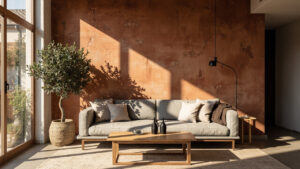
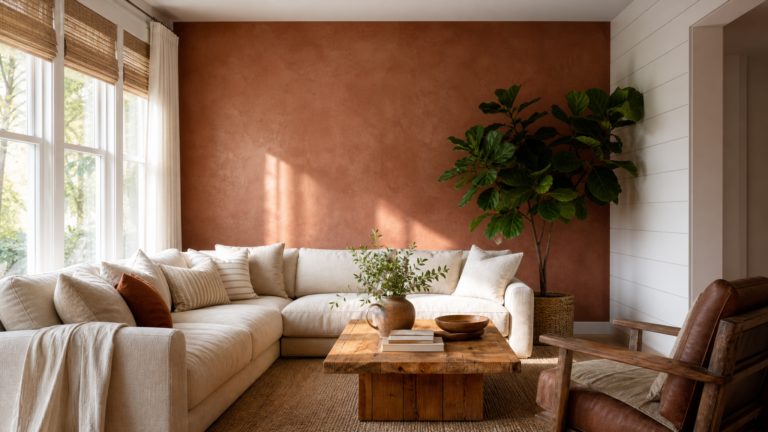
Deep accent wall: A single wall in a saturated color (deep sage, terracotta, dusty navy) anchors a room that is otherwise neutral. It reads as a deliberate focal point rather than an accident.
Color capping: A newer 2026 wall treatment where you paint a horizontal band of a deeper or contrasting color along the lower third of the wall, then continue with a lighter shade above. It creates an architectural detail without requiring moldings. See our guide to color capping walls for the full step-by-step.
Paint quality matters here
Flat or matte finishes hide wall imperfections and give a depth that eggshell struggles to match. For bedrooms and living rooms, a matte finish in a quality brand (Benjamin Moore, Sherwin-Williams) reads better than two coats of a budget paint in eggshell.
7. Style Your Shelves with Intention
Open shelves are an opportunity or a liability, depending on how they are arranged. Unstyled shelves (random books, a mix of objects at no particular height) make even expensive furniture look chaotic. Well-styled shelves make IKEA bookcases look considered.
The designer shelf formula
Work in zones of three. Within each zone, vary the height: one tall item, one medium, one low. Alternate between vertical and horizontal elements (a stack of books is a horizontal element; a tall vase is vertical). Leave some empty space. Empty space is not wasted space; it is breathing room that lets the eye rest.
Specific objects that elevate shelves affordably
- A small ceramic pot or sculptural object in a neutral tone.
- Books grouped by color or spine-in (spine facing the wall shows the pages and creates texture).
- A single trailing plant (pothos, string of pearls) that adds organic movement.
- A framed print leaned casually against the wall rather than hung straight.
8. Invest in Quality Textiles in Neutral Tones

Cushions, throws, and bedding carry a disproportionate amount of visual weight in photos and in person. The quality of your textiles tells a story about the room before any furniture does.
You do not need expensive textiles. You need textiles that photograph and feel substantial. Linen blends, cotton canvas, and chunky knit weaves all read as quality at entry price points. Thin polyester in saturated colors does the opposite.
Neutral-first rule
A neutral base (cream, warm white, stone, sand) with one or two textural accents is easier to refresh seasonally and reads as more considered than a maximalist mix. Add warmth with texture: a boucle cushion, a waffle-weave throw, a velvet accent pillow in a muted tone.
Bed styling shortcut
Layer in this order: fitted sheet, flat sheet, duvet folded at the foot of the bed, two large Euro pillows (26×26), two sleeping pillows in matching shams, one accent pillow in front. This setup takes 5 minutes and matches the bed presentation in most shelter-magazine editorial shoots.
9. Bring in Biophilic Elements
Plants and organic materials add life to a room in a way that manufactured objects rarely do. They are also among the cheapest per-square-foot visual improvements available.
A single large-leaf plant (fiddle leaf fig, monstera, or bird of paradise) placed in a corner creates a focal point that draws the eye and breaks up the hard geometry of furniture. Smaller trailing plants work on shelves and window sills.
Low-maintenance options for beginners
- Pothos: extremely low light tolerance, fast-growing, cheap to propagate.
- Snake plant (sansevieria): tolerates neglect and low light, architectural form.
- ZZ plant: near-indestructible, waxy dark leaves, looks more expensive than it is.
For branches and dried botanical arrangements, eucalyptus, pampas grass stems, and cotton branches all hold their shape for months and require no maintenance. A bundle of dried pampas in a plain ceramic vase is a classic neutral-room focal point.
For a deeper look at how to weave natural materials into your space, see our guide to biophilic design at home.
10. Mirror Placement to Amplify Space and Light
A well-placed mirror does two jobs: it doubles your light and doubles your perceived space. Designers use them consistently because the effect is immediate and requires no construction.
Placement rules
- Opposite a window: captures natural light and reflects it back into the room.
- At the end of a hallway: extends the visual length of the space.
- Leaned against a wall on the floor: adds a casual editorial quality, particularly in bedrooms or living rooms where an arch mirror or large rectangular mirror is leaned rather than hung.
What makes a mirror look expensive
Frame quality and frame consistency with the room’s other metals. An arch mirror in an unlacquered brass frame (available from Amazon, Wayfair, and Target across a wide price range) reads as a statement piece when placed in an otherwise simple room.
Grouping three mirrors of varying shapes and sizes on one wall creates an art-wall effect without requiring any artwork. It works particularly well in entryways and bathrooms.
Best Pick: Where to Shop for Budget Decor That Looks Polished
If you want one starting point for sourcing textiles, rugs, hardware, and decor objects without building separate wishlists on a dozen sites, Amazon’s home decor section covers most of what this guide recommends.
The advantage of Amazon for budget decorating is the combination of fast delivery, broad selection, and searchable reviews that often include real-room photos. Searching “linen curtains ceiling height,” “arch mirror unlacquered brass,” or “jute rug 8×10” on Amazon returns dozens of options with verified buyer photos that show you how the product actually looks in a lived-in room, not a studio.
Pros of shopping Amazon for home decor:
– Fast Prime delivery means you can test and return without a long wait cycle.
– Buyer photos show real rooms, not controlled studio shots.
– Wide price range: you can find a $35 boucle cushion cover alongside a $180 statement mirror.
– Easy return policy on most decor items.
Consider also: Wayfair for larger furniture pieces and rugs (their sale prices are competitive on 8×10+ rugs), and Target for textiles, candles, and small accent objects, particularly the Studio McGee x Target line which delivers a neutral, editorial aesthetic at mass-market prices.
For inspiration on turning a bedroom on a budget, see our budget bedroom makeover guide. And if you are interested in the japandi approach to edited, layered simplicity, see our japandi interior design guide.
Putting It All Together: a Priority Order
If you are working with a limited budget and cannot do all 10 tips at once, here is the sequence that delivers the most visible change per dollar spent:
| Priority | Tip | Estimated Cost |
|---|---|---|
| 1 | Replace lightbulbs to 2700K warm white | $10-$20 |
| 2 | Edit surfaces (remove clutter) | $0 |
| 3 | Rehang curtains at ceiling height | $0 (existing curtains) or $30-$60 |
| 4 | Swap cabinet hardware | $20-$60 |
| 5 | Add a floor lamp | $25-$80 |
| 6 | Layer textiles (cushion + throw) | $30-$80 |
| 7 | Add one large plant | $15-$40 |
| 8 | Style shelves | $0 (rearrange existing) |
| 9 | Paint one accent wall | $30-$50 |
| 10 | Add an area rug or layer rugs | $50-$200 |
Most of this list can be completed for under $200. That is less than a single piece of accent furniture and produces a more cohesive result.
FAQ: Making a Room Look Expensive on a Budget
What is the fastest way to make a room look expensive?
Change the lightbulbs to warm white (2700K) and remove half the objects from your surfaces. These two changes take under 30 minutes, cost under $20, and produce an immediately more considered-looking space.
Do curtains really make a room look more expensive?
Yes, placement is the key variable. Curtains hung at ceiling height in a floor-length drop make any room feel taller and more polished. The fabric does not need to be expensive. IKEA linen-look curtains hung correctly read better than high-end curtains hung at window height.
What colors make a room look more high-end?
Warm neutrals (cream, greige, warm white, soft sage) tend to read as polished because they are cohesive and do not compete with each other. Deep saturated tones (charcoal, navy, terracotta) work as accent walls. Avoid mixing warm and cool tones in the same room without a deliberate plan.
Can renters make their space look expensive without drilling?
Yes. Area rugs, floor lamps, freestanding mirrors, curtains on tension rods, and peel-and-stick removable wallpaper as a single accent panel all require zero drilling and zero landlord approval. Most of the tips in this guide are fully renter-compatible.
How much does it cost to make a room look high-end without replacing furniture?
Working through the priority order above, a room transformation focused on lighting, editing, textiles, hardware, and a rug can be achieved for $150 to $250 depending on what you already own. The most expensive items are typically the rug and curtains. Both can be sourced affordably through Amazon’s home decor section, Wayfair, or Target.
Written by Lisa Morgan, interior designer and home stylist at 4casahome.com.
Get the 4casahome digest
Honest reviews and no-hype guides — straight to your inbox. No spam, unsubscribe anytime.
Some links in our articles are affiliate links. See our full Affiliate Disclosure for details.
Written and tested by our editorial team
4CasaHome Editorial Team
Interior Design & Smart Home Experts
All product reviews are based on hands-on testing in real home environments. Smart home content is verified by our CEDIA-certified integrator. Meet our team.