
Table of Contents
Disclosure: This article contains affiliate links. If you purchase through these links, we may earn a commission at no extra cost to you.
Japandi interior design works best when you edit what you already own before buying new furniture. Start with a clear floor plan, a calm neutral palette, and natural materials you enjoy using every day.
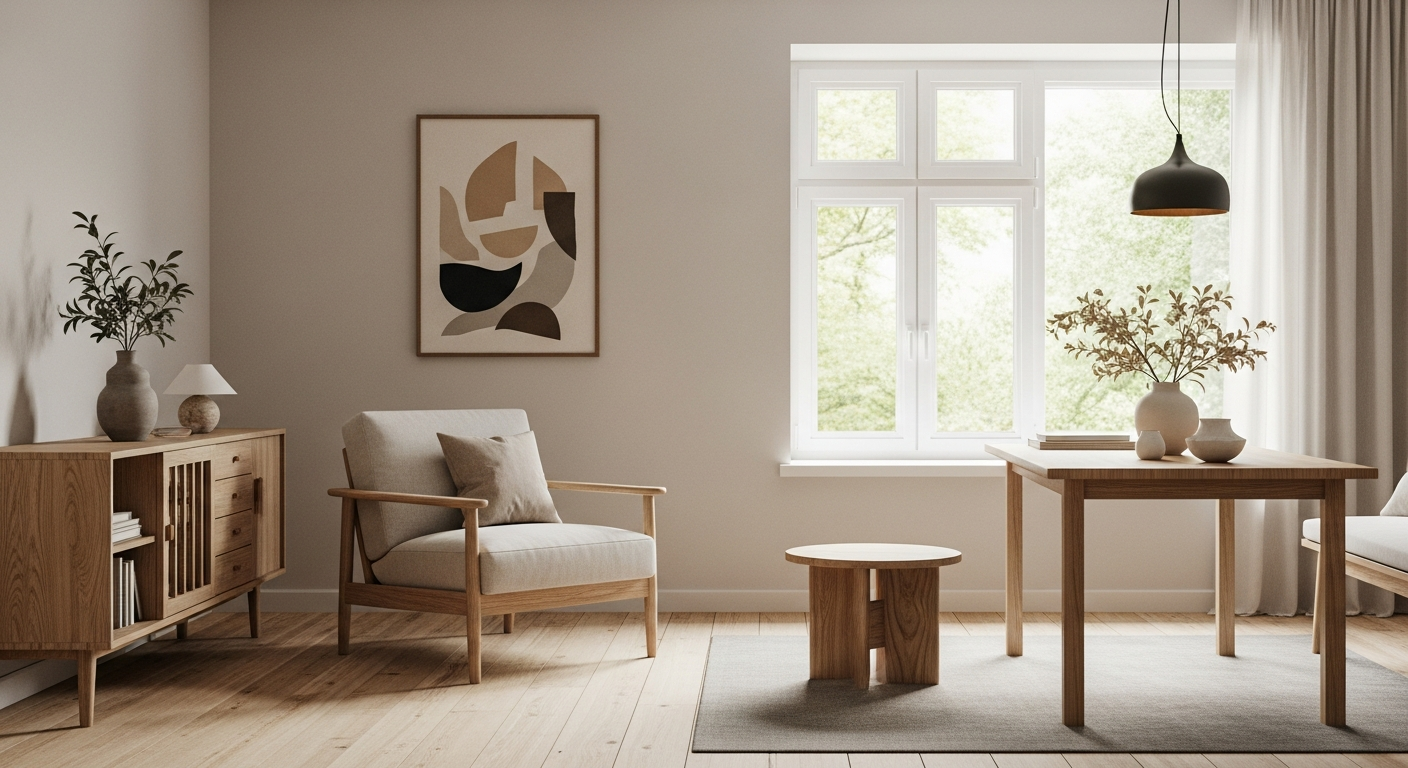
Which Japandi Interior Design Ideas Should Guide Your Choices?
Japandi style blends Japanese and Scandinavian design around simple function, natural wood, and calm space. IKEA Indonesia’s Japandi guide highlights how both traditions value practical furniture and honest craftsmanship over clutter.
Before changing a room, write down how your household uses it every day. A living room used for quiet reading needs a different layout than one that holds laptops, kids’ toys, and pets.
List what you want to keep in sight, what needs closed storage, and which furniture pieces already work well. A sturdy family table with a few wear marks often fits a Japandi home better than a brand-new set. For a room-by-room checklist, see our Japandi room planning guide.
How Do You Choose a Palette Around Existing Materials?
Build your color scheme around the floors, tiles, and wood finishes you plan to keep. Tape paint chips and fabric swatches right beside your flooring so you can check them in morning sun and evening lamp light.
If your room has dark wood floors, balance them with warm cream walls and an oatmeal or jute rug. If your walls and floors are very pale, bring in a mid-tone walnut table or charcoal cushion for contrast.
| What You Already Have | Option to Try | What to Check First |
|---|---|---|
| Dark wood floor. | Warm white walls and light linen drapes. | Does the fabric tone work beside the floor? |
| Pale walls and trim. | Oak or walnut side table and terracotta vase. | Does the piece serve a daily use? |
| Patterned vintage rug. | Solid neutral sofa and simple cushions. | Do the colors feel calm from the doorway? |
You can compare more wall shades in our room color guide.
What Should You Inspect Before Buying Wooden Furniture?
Check how a wood table, bench, or cabinet will hold up to daily use before judging its grain in a photo. Read the maker’s care notes and check the exact width, depth, and leg height with a tape measure.
For a dining or coffee table, think about daily life: hot mugs, laptops, and easy wiping. For storage, measure the items you want to hide before picking a cabinet. A low sideboard only helps if your board games, cords, and mail actually fit inside.
See our minimalist living-room furniture guide for layout tips. When shopping for a compact wood accent cabinet, bookcase, or bench, you can also compare pieces from Best Choice Products (check home furniture).
How Can You Add Texture Without Making the Room Busy?
Give every fabric a clear job: soft seating, window privacy, or warmth underfoot. Start with your largest piece of upholstery. If your sofa already has a nubby bouclé or slub-linen weave, keep the throw pillows smooth and simple.
Check the wash label before buying any everyday textile. In a Japandi bedroom, breathable cooling sheets and comforters from Breescape (view cooling bedding) keep the bed crisp and comfortable without heavy layering.
How Should Lighting Fit the Material Palette?
Plan your lamps around where you read, work, and relax in the evening. Use warm-white 2700K LED bulbs so wood and linen tones look warm rather than gray.
For a woven ceiling light, Rowabi (explore rattan pendant lights) offers handcrafted rattan shades; you can also check dimensions on the Rowabi official site. To add soft indirect light under floating shelves or behind a low media console, mount warm 2700K LED strips in aluminum channels from LightingWill (check LED strip kits).
How Do You Edit the Room Without Making It Cold?
Editing a room does not mean hiding every personal photo or book. Clear one shelf or coffee table completely, then put back only the items you use every day or enjoy looking at:
- Keep a small wooden or ceramic tray near the door for keys and mail.
- Store laptop chargers and remotes inside a closed drawer or woven basket.
- Display one meaningful ceramic bowl, plant, or framed print with open space around it.
- Leave at least half of every tabletop clear for tea mugs and daily life.
If your floor plan still feels tight, read our small living-room decorating guide.
FAQ: Japandi Interior Design
Do all wood tones in a Japandi room need to match?
No. Mixing two wood tones—such as pale oak floors with a mid-tone walnut coffee table—looks natural when you repeat each wood tone at least twice in the room.
Can I keep family photos and colorful books?
Yes. Frame personal photos in simple wood or black frames with wide white mats, and group books neatly on one shelf while leaving the next shelf open.
Should I replace furniture in a rental apartment?
No. Start by decluttering surfaces, hanging linen curtains, and adding warm 2700K lamps and washable cushion covers that you can take with you when you move.
As an Amazon Associate I earn from qualifying purchases.
Get the 4casahome digest
Honest reviews and no-hype guides — straight to your inbox. No spam, unsubscribe anytime.
Some links in our articles are affiliate links. See our full Affiliate Disclosure for details.


Join the conversation