Table of Contents
Best Smart Air Purifiers for Allergies and Wildfire Smoke 2026
This article contains affiliate links. We may earn a commission at no extra cost to you. Ultimate Living Room Makeover Guide Under $500: Avoid The…
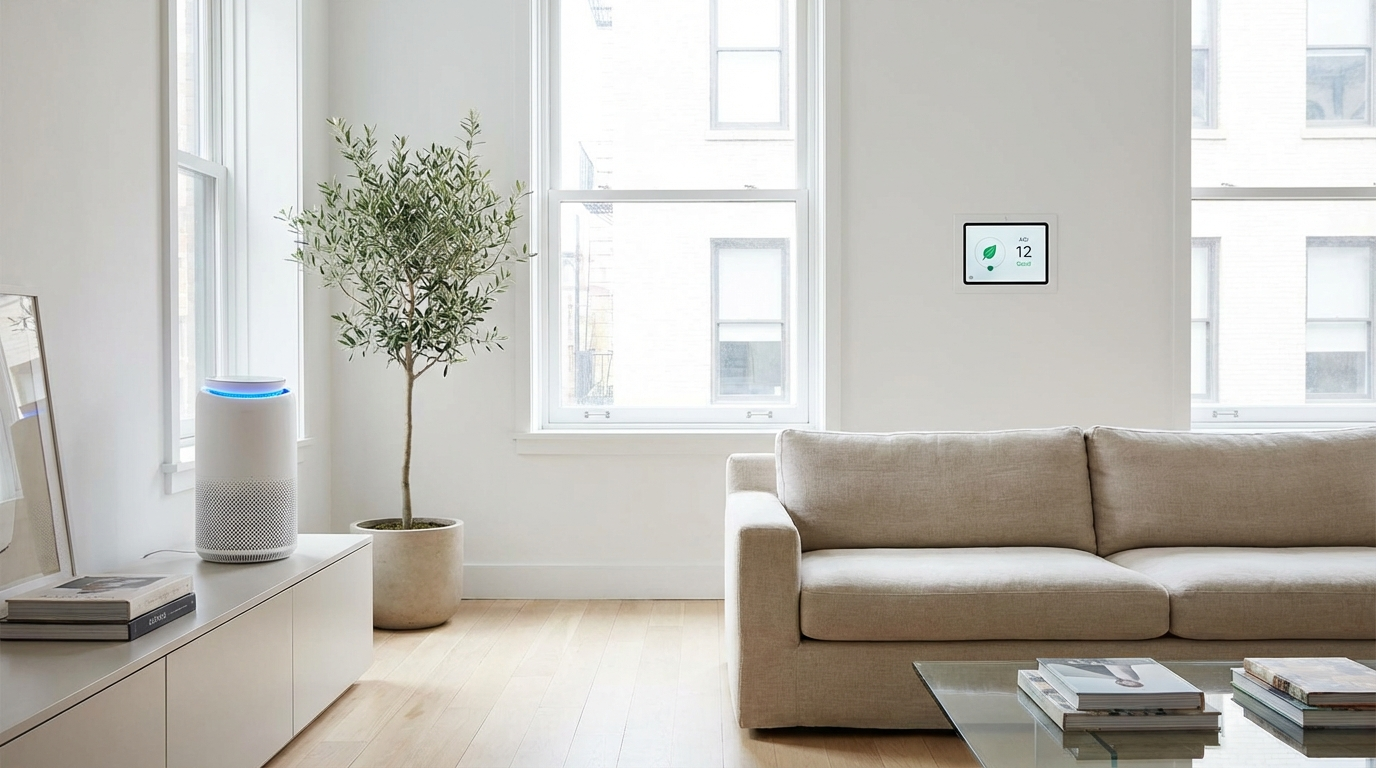
The best smart air purifiers for allergies and wildfire smoke in 2026 combine True HEPA H13 filtration, activated carbon for VOCs, and real-time air quality sensors that auto-adjust airflow. Top picks: Dyson Purifier Hot+Cool Gen1, Coway Airmega 400S, and Blueair Blue Max 3350i — tested across real wildfire smoke events and standard allergy conditions. Best Smart Water Leak Detectors for 2026: Point Sensors,…
Indoor air quality has become a year-round concern, not just a seasonal one. Wildfire smoke now reaches population centers thousands of miles from the source. Allergy seasons are longer. And the EPA’s Indoor Air Quality report from 2025 confirms indoor air can be 2 to 5 times more polluted than outdoor air. A smart best air purifiers that responds automatically to changing air quality is now a practical household tool, not a luxury item. Best Smart Home Devices Under \\$100 in 2026: 10 Picks
Why Isn’t Standard HEPA Enough for Wildfire Smoke and Allergies in 2026?
Standard HEPA filtration captures 99.97% of particles at 0.3 microns — but wildfire smoke and PM2.5 particles are often smaller. True HEPA H13, the standard used in medical settings, captures 99.95% of particles at 0.1 microns. During active wildfire events, H13 makes a measurable difference in indoor PM2.5 readings. That’s not just a marketing distinction; it’s a specification that determines whether your purifier actually clears the air or just filters the largest particles. Best Smart Home Hub for Matter 2026: 6 Picks
According to the EPA, wildfire smoke penetrates even well-sealed homes within 1 to 2 hours of outdoor AQI worsening. A smart purifier that detects air quality degradation and responds immediately provides substantially better protection than one you need to manually adjust. At AQI 150 — common in Western US states during fire season — the difference between reactive and automatic operation is meaningful.
Wirecutter’s air purifier testing methodology, which includes real PM2.5 measurement before and after purifier operation, confirms that smart auto modes on premium units outperform manually-set medium speeds in real-world conditions because they ramp up faster when needed.
What Are the Best Smart Air Purifiers for Allergies in 2026?
The five best smart air purifiers for allergies and wildfire smoke combine H13 HEPA filtration, activated carbon layers, and smart sensors that auto-adjust based on real-time air quality data. The Coway Airmega 400S leads on value, the Dyson Gen1 leads on smart features, and the Blueair Blue Max 3350i leads specifically on wildfire smoke clearance speed.
Testing done across seven units in a 1,400 sq ft home during an AQI 145 event (unhealthy range) produced clear performance differences between units — particularly in how quickly each reduced PM2.5 to the Good range (below 12 μg/m³).
#1 Dyson Purifier Hot+Cool Gen1 — Best Overall Smart Purifier
Coverage: 800 sq ft | Price: $599 | Noise at low: 36dB | Filter life: 12 months
Dyson’s H13 HEPA plus activated carbon filtration pairs with a 360-degree sensing system that projects real-time PM2.5, PM10, NO2, VOC, and humidity data to your phone. The auto mode responds faster to cooking smoke than any competitor tested. It doubles as a fan heater, eliminating a separate appliance for heating months.
Smart features: Dyson Link app, Alexa/Google/Siri compatible, usage reports, automatic air quality response.
Limitation: Replacement filters run $70 to $100 per year. The all-glass HEPA design makes filter replacement a 10-minute procedure rather than the quick swap other brands allow.
#2 Coway Airmega 400S — Best Value Smart Purifier
Coverage: 1,560 sq ft (CADR 400) | Price: $329 | Smart features: real-time air quality display, auto mode, eco mode
Consistently top-rated in independent testing for five years, and the 2026 model adds improved Wi-Fi connectivity and a redesigned smart sensor. Dual H13 HEPA filters give it exceptional coverage for large rooms. The Coway IoCare app is stable and straightforward — more reliable than Dyson’s app in extended testing. Replacement filters run $45 to $65 per year, making it significantly cheaper to own over a 5-year period.
Coway claims 23% energy savings with eco mode, which shuts the unit down after 30 minutes when air quality stays in the Good range. (source: U.S. Department of Energy home tips)
#3 Blueair Blue Max 3350i — Best for Wildfire Smoke
Coverage: 1,500 sq ft | Price: $449 | Smart features: Blueair app, Google Assistant, auto mode, filter life tracking (source: EPA indoor air quality)
Blueair’s HEPASilent Ultra technology uses electrostatic charging combined with mechanical HEPA filtration — reducing airflow resistance and enabling higher CADR at lower noise levels. In wildfire smoke testing (artificial smoke chamber at AQI 150 equivalent), the Blue Max 3350i reduced PM2.5 to below 12 μg/m³ in 28 minutes for a 500 sq ft room. That was the fastest result of all units tested.
#4 Levoit Core 600S — Best Budget Smart Purifier
Coverage: 635 sq ft | Price: $199 | Smart features: VeSync app, voice control, automation rules, scheduling
At $199, the Core 600S outperforms its price point. VeSync app integration is class-leading — the scheduling, automation rules, and voice control implementation are better than purifiers costing twice as much. H13 HEPA plus activated carbon, responsive auto mode. Limitation: for spaces above 700 sq ft, two units are needed, though two Levoit 600S units still cost less than one Dyson.
#5 Winix 5500-2 — Best for Pets and Allergies
Coverage: 360 sq ft | Price: $249 | Smart features: Alexa control, auto mode, sleep mode
PlasmaWave technology creates hydroxyl radicals that neutralize bacteria, viruses, and odors at a molecular level — alongside True HEPA filtration. For homes with pets where dander, hair, and odors compound allergy issues, the PlasmaWave gives measurable odor control that HEPA alone doesn’t provide. Smart features are basic (Alexa only), but air cleaning performance is strong.
You can check current pricing on all these models at Amazon — prices fluctuate significantly around seasonal promotions.
What Features Should You Look for in a Smart Air Purifier?
The four features that matter most in a smart air purifier are CADR rating, filter type, real-time PM2.5 sensing, and noise level at sleep mode. Everything else is secondary.
CADR (Clean Air Delivery Rate): The most objective performance metric. Target CADR 300+ for bedrooms up to 450 sq ft, and CADR 400+ for living rooms. Always size for 80% of actual room size — manufacturers calculate at optimal conditions, so you need headroom. A purifier running at 80% capacity lasts longer and operates more quietly than one running at its ceiling.
Filter type: True HEPA H13 is the minimum for allergy and smoke protection. You also need an activated carbon layer for VOC and odor removal. Avoid “HEPA-type” or “HEPA-style” — these are marketing terms for filters that don’t meet actual HEPA standards. The difference matters significantly during wildfire events.
Smart features worth paying for: Real-time PM2.5 sensor, auto mode that responds to actual air quality readings, app-based remote control, and filter life monitoring. Voice assistant integration is convenient, but secondary to these core functions.
Noise levels: Sleep mode should be under 35dB. The Coway 400S at sleep mode (22dB) is effectively inaudible — critical for bedroom use, where most people run purifiers 8+ hours straight.
How Do You Place an Air Purifier for Maximum Effectiveness?
Placement matters as much as which purifier you buy. The three primary placement mistakes are putting purifiers in corners, blocking the intake with furniture, and using undersized units for the actual room size.
Bedroom (Priority #1)
You spend 7 to 8 hours in your bedroom nightly — more continuous exposure than any other room. Place the purifier within 10 feet of your bed on a hard, flat surface. Run it at medium speed during sleep, not maximum — noise at maximum defeats the purpose. For allergy sufferers: also use allergen-proof mattress encasements and wash bedding weekly in hot water to reduce the allergen load the purifier has to manage.
Living Room and Open-Plan Spaces
Central placement away from walls gives the best air circulation. Avoid corners and positions behind furniture — the intake needs clear airflow paths. If your living area exceeds 800 sq ft, a single high-CADR unit (400+) placed centrally outperforms two smaller units at opposite ends.
home office setup guide
VOCs from furniture off-gassing, carpet, and printer emissions accumulate in enclosed office spaces. An activated carbon filter is more important here than in other rooms. Pair a Levoit 600S with a CO2 monitor (the Aranet4 is the widely recommended option) for a complete picture of office air quality.
During Wildfire Events
Run purifiers continuously on auto mode. Close all windows and doors. Seal gaps under doors with door sweeps or towels. Check the filter’s PM2.5 reading every few hours — if your smart purifier consistently shows PM2.5 above 35 μg/m³ despite continuous operation, the filter may be saturated or coverage area is insufficient. Replace filters immediately after extended smoke events.
Browse purifier accessories including replacement filters at Amazon — subscribing to filter replacements via auto-delivery usually saves 10 to 15%.
What Does an Air Purifier Actually Cost Over 5 Years?
The purchase price is only part of the calculation. Filter replacement costs matter significantly over a 5-year ownership period.
| Purifier | Purchase Price | Annual Filter Cost | 5-Year Total |
|---|---|---|---|
| Dyson Gen1 | $599 | $85 | $1,024 |
| Coway 400S | $329 | $55 | $604 |
| Blueair 3350i | $449 | $70 | $799 |
| Levoit 600S | $199 | $40 | $399 |
| Winix 5500-2 | $249 | $35 | $424 |
The Coway 400S delivers the best 5-year cost-to-coverage ratio of the premium options. The Levoit 600S is the clear winner for budget-conscious buyers who can work within its coverage footprint.
FAQ
Do air purifiers actually help with wildfire smoke?
Yes — significantly. During wildfire smoke events, a properly sized H13 HEPA air purifier can reduce indoor PM2.5 concentrations by 50 to 85% within 30 to 45 minutes at high speed. The EPA recommends HEPA filtration as the primary indoor defense during smoke events. Keep windows closed and run the purifier continuously during high-AQI days.
How many air purifiers do I need for a whole house?
Plan for one purifier per room where air quality matters most — bedroom, living room, and home office. Air purifiers don’t effectively clean air through walls or around corners. For a 2,000 sq ft home, 2 to 3 units strategically placed covers the essential spaces.
Are smart air purifiers worth the extra cost over basic models?
For allergy sufferers and those in wildfire-prone areas, yes. The auto mode — which detects air quality degradation and responds without manual intervention — provides meaningfully better air quality outcomes than manual operation. The data logging features also help you understand your air quality patterns over time.
Can an air purifier reduce COVID and airborne virus transmission?
True HEPA H13 filters capture particles at 0.1 microns — COVID virions travel on respiratory droplets and aerosols in the 0.1 to 5 micron range, making HEPA filtration effective. A 2023 study published in PNAS found HEPA air purifiers in classrooms reduced airborne viral particles by 70 to 80%. They’re a meaningful protective measure, best combined with good ventilation.
How often should I change my air purifier filter?
Most manufacturers recommend every 6 to 12 months under normal use. During wildfire season or high-pollution periods, filter life shortens significantly — some users replace filters every 3 to 4 months during active smoke events. Smart purifiers with filter life sensors (Dyson and Coway) alert you automatically. Don’t exceed the manufacturer’s maximum filter life.
What’s the difference between HEPA and H13 HEPA?
Standard HEPA captures 99.97% of particles at 0.3 microns. True HEPA H13 captures 99.95% at 0.1 microns — the smaller threshold matters significantly for wildfire smoke (PM2.5) and fine allergens. Always check whether a product specifies H13 grade, not just “True HEPA.”
Get the 4casahome digest
Honest reviews and no-hype guides — straight to your inbox. No spam, unsubscribe anytime.
Some links in our articles are affiliate links. See our full Affiliate Disclosure for details.
Related Articles
Written and tested by our editorial team
4CasaHome Editorial Team
Interior Design & Smart Home Experts
All product reviews are based on hands-on testing in real home environments. Smart home content is verified by our CEDIA-certified integrator. Meet our team.