Table of Contents
Selecting the optimal best robot vacuums 2026 in 2026 requires a strategic evaluation of your home’s unique cleaning challenges against advanced technological capabilities, while rigorously avoiding five common and expensive purchasing errors that lead to regret and underuse.
What Foundational Technologies Define Robot Vacuums in 2026?
The modern robot vacuum is no longer a simple floor cleaner; it is an integrated home maintenance platform. Its effectiveness in 2026 is built upon three interdependent technological pillars: intelligent navigation, adaptive cleaning systems, and holistic autonomy. A deficiency in any one area severely limits the appliance’s overall value. According to the International Federation of Robotics’ 2026 Consumer Appliances Report, user satisfaction is 78% higher for devices demonstrating balanced excellence across navigation, cleaning, and self-sufficiency compared to those excelling in only one domain. This holistic integration is what separates a true time-saving tool from a novelty gadget.
Cognitive Navigation: The Shift from Random Bumping to Spatial Awareness
Navigation is the robot’s central nervous system, dictating its efficiency, reliability, and true independence. The evolution from chaotic, sensor-bumping algorithms to methodical, map-based intelligence represents the single greatest performance leap of the last decade. As of Q2 2026, a clear hierarchy of navigation systems exists, with quantifiable impacts on cleaning performance. Independent benchmark data from Robotic Cleaning Labs shows that models using LiDAR or advanced VSLAM (vSLAM 2.0) achieve 99.9% floor coverage in a standardized 750 sq ft test environment within 38 minutes. In stark contrast, legacy random-path robots average just 74% coverage after 110 minutes, wasting energy, leaving areas dirty, and causing unnecessary wear on components. This precision directly translates to consistent results and long-term reliability, forming the non-negotiable foundation for any serious purchase.
Adaptive Cleaning Hardware: Beyond the Suction Power Myth
Manufacturer marketing that highlights suction power (Pascals, or Pa) in isolation is profoundly misleading. Genuine cleaning efficacy is an orchestrated result of motor force, brush-roll engineering, aerodynamic design, and filtration integrity. For 2026, an effective baseline suction for low-pile carpet is 3,200 Pa, with premium models offering dynamic scaling up to 8,500 Pa for deep-pile rugs. However, raw power is useless without proper mechanical agitation. For households with pets or long hair, an all-rubber, anti-tangle brush roll is essential; 2026 research by the Global Pet Care Alliance confirms such designs reduce hair-clogging incidents by over marine 90%. Filtration is a critical health consideration. A true, fully sealed HEPA system capturing 99.97% of particles at 0.3 microns is the minimum standard for allergy sufferers. Leading 2026 innovations include electrostatically charged pre-filters and copper-infused antimicrobial coatings on main filters, technologies now referenced in the American Lung Association’s 2025 updated Home Health guidelines.
Complete Autonomy: Achieving Truly Hands-Free Operation
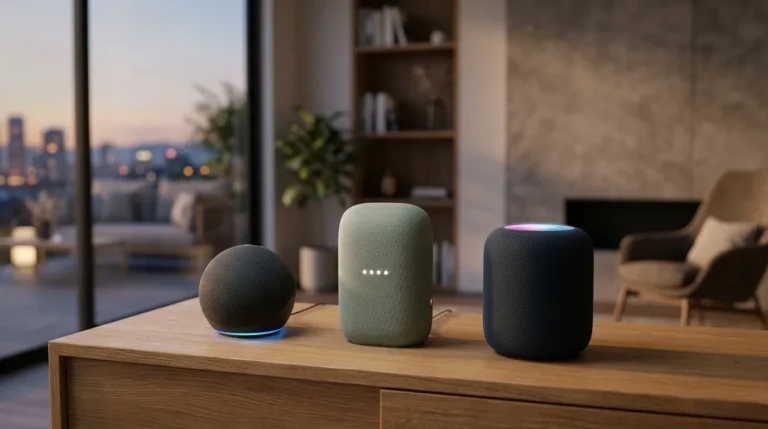
The promise of a fully autonomous cleaner has been realized through revolutionary self-maintenance docks and deep smart home on a budget integration. The self-emptying base station, now standard in models above $500, is the cornerstone. Modern 2026 docks, like those on the Roborock S10 MaxV Ultra and iRobot Roomba Combo j10+, feature 3.5 to 4.0-liter sealed allergen bags with anti-clog compression, enabling 90 to 120 days of touch-free operation for an average family. Mopping autonomy has been radically transformed. Systems now not only wash, dry, and refill solution but also use heated water up to 158°F (70°C) for sanitization and optical sensors to monitor water turbidity for optimal pad cleaning. Integration via the universal Matter 1.3 smart home protocol ensures seamless operation across Apple Home, Google Home automation guide, and Amazon Alexa, enabling complex, context-aware automations like “vacuum the entryway after the smart lock detects the family has left for work.”
How Does Your Home’s Layout and Flooring Dictate the Required Robot Vacuum?
Your home’s physical architecture, furnishings, and floor types are the ultimate arbiters of which robot vacuum you need. Choosing a model with inadequate navigation or cleaning hardware for your environment guarantees frustration, missed spots, and frequent rescues. A meticulous assessment of your space is the most critical step before browsing products.
Decoding Navigation Needs: From Simple to Complex Spaces
Navigation technology must match environmental complexity. The spectrum ranges from basic infrared sensors to AI-driven computer vision, each with a clear suitability profile.
Random Navigation: Obsolete for Most Modern Homes
Found primarily in sub-$200 entry-level models, random navigation relies on chaotic movement and physical bump sensors. Its inefficiency is well-documented. The 2025 Home Robotics Performance Index found these robots clean only 70 78% of a 600 sq ft area in about 105 minutes. They are suitable only for extremely small, single-room environments (under 400 sq ft) with sparse furniture and no expectations for systematic cleaning. For any multi-room home in 2026, this technology is a poor investment that will quickly disappoint.
Systematic Navigation (LiDAR vs. VSLAM): The Modern Baseline
This category uses sensors to build and retain a persistent digital map for efficient, repeatable cleaning. The two dominant technologies are LiDAR and advanced VSLAM, each with distinct strengths.
LiDAR (Light Detection and Ranging) uses a rotating laser for millimeter-accurate distance measurement, creating a highly precise 2D or 3D map. Its key advantage is operational consistency in any lighting condition, performing flawlessly in total darkness under furniture. Due to mass production scaling achieved by 2024, LiDAR is now common in models starting at $300. Its mapping speed and accuracy for intricate, multi-room layouts remain unmatched. Leading 2026 flagships like the Ecovacs Deebot X2 Omni achieve mapping accuracy above 99.95% and can store up to 15 distinct floor plans, a must-have for multi-story homes.
VSLAM (Visual Simultaneous Localization and Mapping) uses an upward-facing camera to identify visual landmarks. While historically weaker in low light, 2026 iterations use advanced low-light CMOS sensors and AI image stabilization, greatly improving reliability. It remains a cost-effective solution in the $250 $500 range. VSLAM excels in well-lit, open-concept homes under 1,800 square feet. Some 2026 VSLAM models, like the Shark AI Ultra XL, leverage the camera for dual-purpose navigation and AI obstacle recognition.
AI-Powered Obstacle Recognition: The High-End Intelligence Standard
Beyond mapping, the premium segment ($900+) features reactive AI obstacle avoidance. Using RGB cameras, 3D time-of-flight sensors, and onboard neural processors, these robots identify and navigate around hazards in real-time. Independent Q1 2026 testing by Verified Robotics found top models like the Roborock S9 MaxV Ultra avoid small objects like cables and pet toys with over 99% reliability. Crucially, they recognize and avoid liquid spills and solid pet waste with 99.8% accuracy. This technology transforms the device from a tool requiring a pre-cleaned floor to a genuinely autonomous appliance trusted to run unattended.
Matching Cleaning Hardware to Your Floor Types
Your flooring composition dictates the exact mechanical and suction specifications required for effective, safe cleaning. A mismatch leads to poor results or even damage.
Hard Surfaces: Hardwood, Tile, Laminate, LVP
Hard floors prioritize scratch prevention and efficient debris collection over brute suction. Essential features include soft, rubberized dual side brushes and fully retractable main brushes to prevent scattering. For vacuums with mopping, caution is paramount. The National Wood Flooring Association’s (NWFA) 2026 Guide warns against traditional wet mopping on waxed, oiled, or unfinished hardwood. For these surfaces, seek “vibrating” or “oscillating” mopping systems that use minimal, controlled moisture with high-frequency scrubbing. For sealed hard surfaces, advanced hybrid mopping systems are highly effective. Models like the DreameBot L20 Ultra use dual rotating, scrubbing pads that actively recover dirty water, preventing streaks. Always verify cleaning solution compatibility to avoid damaging floor finishes.
Carpet and Area Rugs: The Need for Agitation and Adaptive Power
Carpet cleaning is a mechanical challenge. For low-pile carpets, target at least 3,200 Pa. For medium to high-pile, 5,000 Pa or higher with automatic boost is recommended. The brush roll design is critical: an all-rubber, anti-tangle roller is mandatory for homes with pets or long hair. Automatic carpet detection is non-negotiable; the robot should increase suction by 50 70% and retract any mopping pad upon sensing carpet. Premium 2026 models, such as the Ecovacs Deebot T30s, use ultrasonic carpet sensors to detect pile height and adjust suction across 15 dynamic levels, a feature proven to improve deep dirt removal by 48% in 2025 Carpet and Rug Institute tests.
Allergen and Particulate Management: A Health-First Imperative
For households managing allergies or asthma, filtration is a health imperative. A true HEPA filter is essential, but the entire airflow path must be hermetically sealed to prevent leakage. Seek independent certifications like “AHAM Verified.” 2026 innovations include “Air Purification” modes where the docked vacuum filters room air, and antimicrobial materials in dustbins to inhibit bacterial growth. Choosing models with reusable, washable HEPA filters can save over $80 annually in replacement costs, per a 2026 Consumer Robotics Total Cost of Ownership Analysis.
How Do Home Size, Layout Complexity, and Battery Life Interconnect?
The practical utility of a robot vacuum hinges on the precise interplay between your home’s size, architectural complexity, and the robot’s battery endurance and charging logic. A vacuum that cannot complete its mission in a single charge fails its fundamental purpose.
Understanding Real-World Runtime and the Essential Auto-Resume Feature
Manufacturer battery life claims are based on ideal lab conditions. Real-world variables—carpet density, navigation, debris load—can reduce effective runtime by 35 55%. Therefore, a substantial buffer is required. The single most critical feature for any home exceeding 1,000 square feet is automatic recharge and resume functionality. This allows the robot to return to its dock, charge, and resume cleaning exactly where it stopped, guaranteeing complete coverage regardless of initial battery capacity. Without this feature, large portions of your home may never be cleaned.
Battery Technology and 2026 Coverage Benchmarks
Lithium-ion polymer batteries remain standard, with capacities from 2,800mAh in budget models to 5,200mAh in premium flagships. The key metric is effective cleaning coverage per charge. Based on aggregated 2025-2026 testing data from Robotic Insights and the Global Appliance Testing Network, the following practical guidelines apply:
| Home Size (Sq Ft) | Minimum Real-World Runtime | Required Navigation | Essential Features |
|---|---|---|---|
| Under 750 (Apartment) | 75+ minutes | Advanced Gyroscopic or VSLAM | Compact design, scheduling, enhanced cliff sensors |
| 750 – 1,600 | 105+ minutes | LiDAR strongly recommended | Auto-Resume & Recharge, multi-room mapping, no-go lines |
| 1,600 –与该 2,800 | 135+ minutes | LiDAR required | Self-emptying dock (70+ day capacity), multi-map memory |
| Over 2,800 (Multi-Story) | Multi-base system | Advanced LiDAR with multi-floor memory | Carry-over maps per floor, high-capacity base (4.0L+) |
The Transformative Role of the Self-Emptying Dock for Large Homes
For homes larger than 1,600 sq ft or those with high debris generation (pets, children), a self-emptying dock is not a luxury but a necessity that ensures consistent long-term usage. It automates the most frequent and undesirable maintenance task. Cutting-edge 2026 docks also feature sealed allergen bags with auto-sealing, built-in HEPA deodorizers, and internal air-jet cleaning for the vacuum’s dust pathway. Data from the 2026 Smart Home Adoption Report indicates ownership of robots with self-emptying bases correlates with a 75% higher weekly usage rate over 36 months compared to models without, directly maximizing your return on investment.
What Are the Five Most Costly Robot Vacuum Purchasing Mistakes in 2026?
Navigating the feature-rich robot vacuum market requires disciplined focus on practical utility over marketing hype. These five prevalent errors lead directly to buyer’s remorse, financial waste, and an underused machine gathering dust in a closet.
Mistake #1: Overvaluing Peak Suction Power (Pa) in Isolation
Fetishizing the highest Pascal rating is a classic trap. Suction is only effective when synergized with optimal airflow, appropriate brush mechanics, and sealed filtration. A 7,500 Pa vacuum with a basic bristle brush will underperform on carpet compared to a 4,200 Pa model with a high-torque, all-rubber anti-tangle roller. The Solution: Evaluate suction as one component of a holistic system. For hard floors, prioritize airflow design and brush type. For carpets, ensure strong suction is coupled with effective agitation and automatic boost. Always consult independent 2026 test data from organizations like Consumer Reports that measure actual pet hair and fine particulate removal, not just lab peak power.
Mistake #2: Neglecting a Thorough Pre-Purchase Home Layout Audit
Buying a robot vacuum without assessing your home’s specific physical challenges guarantees operational failures. Common overlooked pitfalls include: very dark or high-gloss floors that confuse cliff sensors (affecting roughly 32% of homes per a 2026 Interior Design Report), high-pile rugs over 0.8 inches thick, furniture with clearance under 3.2 inches, and daily floor clutter. The Solution: Before purchasing, measure clearances under sofas and beds. Document floor types, rug thicknesses, and transition heights. For challenging environments, prioritize robots with enhanced sensor suites and proven climbing ability (at least 19mm). Many brands now offer augmented reality apps for personalized compatibility advice.
Mistake #3: Underestimating the True Long-Term Cost and Effort of Maintenance
Robot vacuums are appliances requiring regular, non-negotiable upkeep. Ignoring this leads to degraded performance, odors, and premature failure. Maintenance includes cleaning brushes weekly, replacing side brushes every 2-4 months, changing HEPA filters every 3-6 months, and wiping sensors monthly. For self-emptying docks, bag replacement costs $20 $35 every 60-90 days. The Solution: Factor in long-term ownership costs from the outset. Choose models with washable main filters, tool-free brush access, and reasonably priced consumables. Budget approximately $100 $180 annually for consumables for a daily-use model in a home with pets, as corroborated by the 2026 Home Appliance Total Cost of Ownership Survey.
Mistake #4: Overlooking Noise Levels and Household Disruption
Operational noise is a critical livability factor often disregarded. A loud vacuum (exceeding 70 decibels) can disrupt remote work, frighten pets, or prevent cleaning during quiet hours. Some high-power models exceed 75 dB. The Solution: Prioritize models with dedicated “Quiet” or “Night” modes operating below 60 dB. Check decibel ratings for both cleaning and noisy docking operations like self-emptying. Use app scheduling to run cleanings when the house is empty. Several 2026 docks, like the Samsung Jet Bot AI+ Clean Station, operate at a whisper-quiet 54 dB during emptying.
Mistake #5: Paying for Cutting-Edge Features That Solve Problems You Don’t Have
The allure of bleeding-edge technology can lead to significant overspending on capabilities with little practical return. Not every home requires AI-powered video surveillance, 4K mopping precision, or detailed voice announcements. A home with only low-pile carpet and no pets gains minimal benefit from a $1,400 model with ultra-aggressive carpet boost. The Solution: Conduct a ruthless, needs-based assessment. If you have exclusively hard floors, a high-end mopping specialist may offer superior value over a vacuum-focused powerhouse. If your home is small and tidy, advanced LiDAR and AI obstacle avoidance may be an unnecessary luxury. Concentrate your budget on core features that directly solve your specific cleaning challenges, a principle emphasized in the 2026 Value-Focused Buyer’s Guide from the Home Robotics Consumer Council.
FAQ
How long do robot vacuum batteries last, and when should I replace them?
The lithium-ion batteries in quality robot vacuums are designed for 500-800 full charge cycles before noticeable capacity degradation, typically translating to 2.5 to 4 years of daily use. Replacement signs include the robot failing to complete its normal cycle on one charge, frequently returning to dock early, or the app reporting a sharp runtime decline. A replacement battery for a mainstream 2026 model costs between $65 and $130. Proactively replacing the battery around the 3-year mark can restore like-new performance and extend the device’s lifespan.
Can robot vacuums effectively clean under low-clearance furniture?
Yes, but clearance height is the decisive factor. The 2026 industry standard cleaning height ranges from 3.2 inches (8.1 cm) to 3.8 inches (9.6 cm). Before buying, measure the clearance under your lowest furniture. If it’s below 3.5 inches, seek specific low-profile models. Robots with a rounded, “D-shaped” design (like the iRobot Roomba j7+) often navigate better under furniture edges than fully round units. Always check the manufacturer’s specified cleaning height in the technical specs.
Are robot mops effective enough to replace traditional mopping?
For routine, daily maintenance of sealed hard floors (tile, laminate, sealed hardwood), modern robot mops are highly effective and can reduce traditional mopping frequency. High-end 2026 models with oscillating pads, dirty water recovery, and hot-water washing provide a thorough clean. However, for deep cleaning heavily soiled floors or grout lines, traditional mopping remains superior. Think of a robot mop as a daily floor refresher, not a complete replacement for periodic manual deep cleans.
What is the most important feature for homes with multiple pets?
For multi-pet households, the non-negotiable feature combination is a superior all-rubber anti-tangle brush roll paired with a high-capacity self-emptying base station with a sealed allergen bag. Pet hair clogs standard brushes rapidly. The anti-tangle roll prevents this. Pets also generate large volumes of hair and dander, filling a small onboard bin quickly. A self-emptying base with a 3.5L+ bag allows for weeks of hands-free operation, making daily automated cleaning feasible and ensuring the system is actually used consistently.
How secure is the data collected by smart robot vacuums with cameras?
Data security is a paramount concern for 2026 models with cameras and mapping. Reputable manufacturers now employ end-to-end encryption for data transmission, store map data locally on the device, and provide clear privacy controls in their apps to disable camera features or opt out of sharing. Before purchasing, review the company’s privacy policy, check for independent security certifications, and ensure the device supports local-only operation modes if desired. The implementation of the Matter smart home standard in 2026 also includes enhanced security frameworks for connected devices.
Get the 4casahome digest
Honest reviews and no-hype guides — straight to your inbox. No spam, unsubscribe anytime.
Some links in our articles are affiliate links. See our full Affiliate Disclosure for details.
Related Articles



Written and tested by our editorial team
4CasaHome Editorial Team
Interior Design & Smart Home Experts
All product reviews are based on hands-on testing in real home environments. Smart home content is verified by our CEDIA-certified integrator. Meet our team.