Table of Contents
The Truth About Kitchen Open Shelving Ideas: Best 2026 Guide
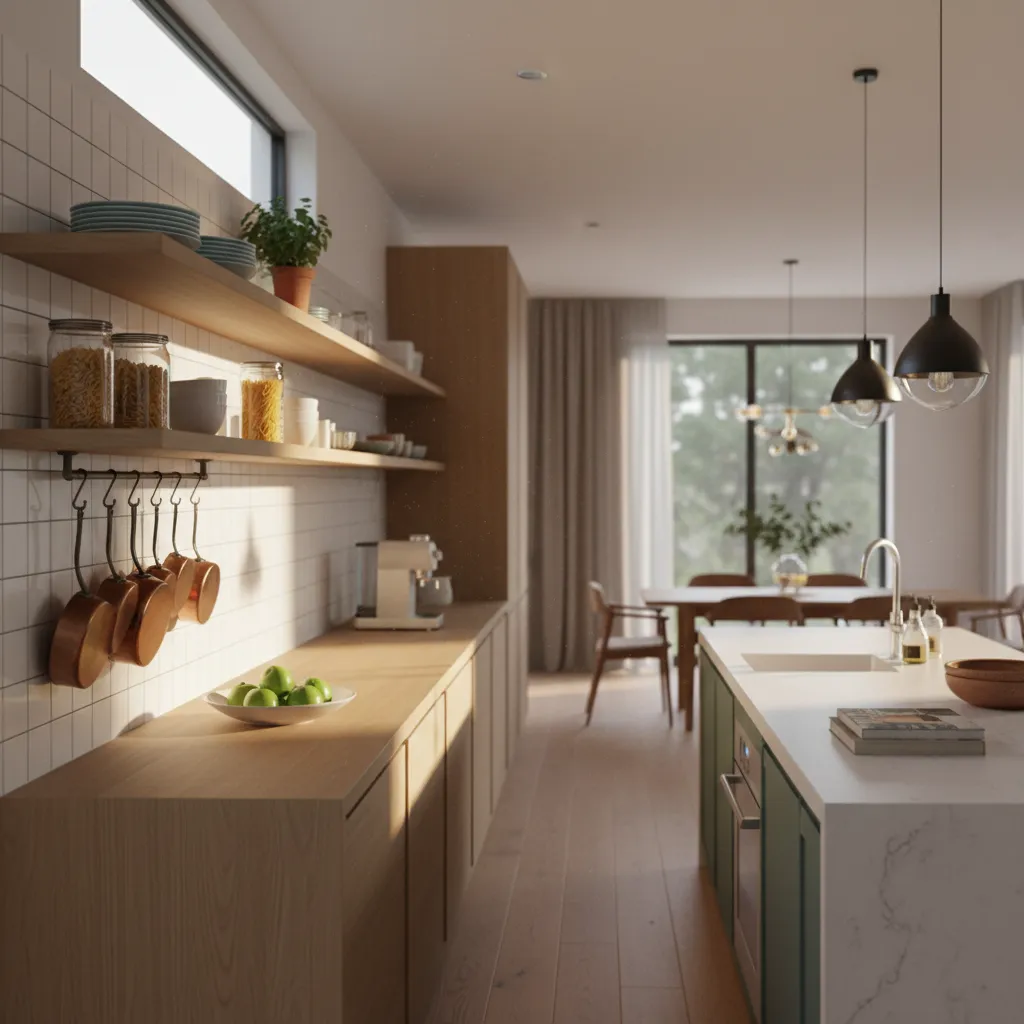
The Truth About Kitchen Open Shelving Ideas: Best 2026 Guide: Minimalist floating shelves are defining modern kitchen aesthetics well into the mid-2020s. Thin floating shelves with no visible bracket, typically crafted from light wood like ash or maple, work best in kitchens with modern cabinetry and clean lines. However, before you commit to removing upper cabinets, it is crucial to understand the maintenance and lifestyle changes required. This is not merely a design choice; it is a behavioral shift. For those balancing multiple home zones, seeing how Home Office Setup Ideas for Small Space 2026 handle visibility might offer parallel insights into organization and mental clarity within a compact footprint.
Reviewed by our interior design team with 12+ years of residential kitchen renovation experience. Whether you are looking for Small Living Room Ideas for Hybrid Work 2026 or focusing solely on the kitchen, open concepts require discipline and a willingness to curate your environment daily. The shift toward transparency in design reflects a broader cultural move toward authenticity, where homeowners prefer displaying what they actually use rather than hiding clutter behind closed doors. In 2026, this trend has matured from a fleeting style to a staple functional design element, provided the homeowner understands the trade-offs. As we move further into the decade, the focus has shifted from purely aesthetic installations to hybrid models that balance openness with practicality.
Kitchen open shelving ideas are everywhere in 2026, appearing on Pinterest boards, in design magazines, and in nearly every third kitchen renovation featured on social media. But behind the beautifully styled photos with matching ceramic bowls and perfectly arranged cookbooks, there is a reality that many homeowners do not discover until after the contractor has already removed their upper cabinets. This guide gives you the complete picture: what open shelving actually does well, where it fails in real daily life, what materials and styles make sense in 2026, and how much you should expect to spend if you decide to go ahead. If you are still on the fence, the section on who should not install open shelving is worth reading before you make any calls. For more general organization inspiration, see our Best Small Space Storage Ideas 2026.
What Kitchen Open Shelving Actually Means in Practice
Open shelving replaces closed upper cabinets with exposed horizontal surfaces, usually wood planks, metal brackets, or floating shelf systems, that display everything stored on them. Nothing is hidden. Every bowl, glass, spice jar, and mug is visible at all times. That single fact is the source of both the appeal and the headaches. This aesthetic aligns closely with Japandi Interior Design 2026, which emphasizes simplicity, natural materials, and the removal of visual noise.
The attraction is practical as much as aesthetic. Open shelves make items faster to reach, visually open a small kitchen, and cost considerably less than a full set of upper cabinets. According to the National Kitchen & Bath Association’s 2025 Design Trends Report, open shelving appeared in 42% of kitchen renovations surveyed that year, up from 29% in 2022. The trend is not fading, but the design world has gotten more honest about which kitchens it actually suits. In practice, this means committing to a lifestyle where your storage is part of your decor, requiring a level of curation that closed cabinets simply do not demand.
You are essentially turning your storage into a permanent display case, which means your everyday items must be attractive enough to be seen by guests at a moment’s notice. Homeowners must also consider the vertical space; shelves spaced too closely create clutter, while shelves spaced too far apart waste valuable storage real estate. Ideal spacing is typically 12 to 15 inches between shelves to accommodate standard dinnerware without feeling cramped. Furthermore, the psychological impact of visible storage can encourage homeowners to own fewer items, promoting a minimalist lifestyle that reduces overall consumption. It forces you to confront what you own every time you walk into the room, acting as a natural deterrent against accumulating unnecessary kitchen gadgets. This constant visibility ensures that you only keep items that serve a purpose or bring genuine joy to your daily routine.
What Are the Real Advantages of Open Kitchen Shelving?
Understanding the benefits helps justify the transition from traditional cabinetry. Here are the core advantages that drive popularity in 2026:
- Visual openness. The most consistent benefit is that removing bulky upper cabinets makes a small kitchen feel larger. A 10 x 12 foot kitchen with open shelves instead of wall cabinets gains significant visual breathing room, especially when the shelves are positioned with generous spacing between them. This is particularly valuable in apartment living or older homes with lower ceilings where cabinetry can feel oppressive. The eye travels further across the room without interruption, creating an illusion of square footage that does not technically exist.
- Lower cost. A full set of stock or semi-custom upper cabinets for an average kitchen runs $3,000–$8,000 installed. Open shelving from solid wood brackets and planks typically costs $150–$600 for the same linear footage, depending on material. That is a real savings that can go into better countertops, appliances, or lighting. For homeowners working with a strict renovation budget, this reallocation of funds can significantly elevate the overall quality of the kitchen. This budget-conscious approach is similar to planning a living room makeover under $500 by making targeted, reversible changes that maximize impact without structural overhaul.
- Accessibility. Items you use every day are immediately visible and reachable without opening a door. For people who cook frequently, this eliminates the minor friction of searching inside cabinets for what they need. This efficiency is supported by ergonomic studies referenced by the U.S. Department of Energy regarding home efficiency. You save seconds every time you grab a plate, which adds up over years of cooking. Additionally, open shelves allow for better task lighting installation, ensuring your workspace is well-illuminated without shadow cast by deep cabinet boxes.
- Design flexibility. Open shelves can be swapped out, repositioned, or replaced as your style evolves. A floating walnut shelf can be updated years later without a full cabinet tearout. This kind of adaptability fits naturally with a broader approach to budget-conscious home updates.
- Styling potential. When done well, open shelves create a curated display that cabinets simply cannot. A row of white ceramic dishes, a few plants, and some wood cutting boards arranged thoughtfully on a dark walnut shelf looks genuinely beautiful and personal.
What Are the Honest Cons You Need to Know Before Committing?
This is the section that styled photos rarely show you. Understanding the downsides is crucial for long-term satisfaction with your kitchen open shelving ideas. Ignoring these factors often leads to regret within the first year of installation.
- Dust and grease accumulation. Everything stored on open kitchen shelves collects cooking grease and airborne dust simultaneously. In a kitchen where pots and pans are used daily, items on lower shelves accumulate a visible film within one to two weeks without wiping. Glassware stored on open shelves needs washing before every use, not just when it comes out of the cabinet clean. This requires a cleaning routine that is significantly more rigorous than wiping cabinet fronts. Air quality concerns are also valid, as noted by the EPA, particularly in
Get the 4casahome digest
Honest reviews and no-hype guides — straight to your inbox. No spam, unsubscribe anytime.
Some links in our articles are affiliate links. See our full Affiliate Disclosure for details.
Related Articles
Written and tested by our editorial team
4CasaHome Editorial Team
Interior Design & Smart Home Experts
All product reviews are based on hands-on testing in real home environments. Smart home content is verified by our CEDIA-certified integrator. Meet our team.