Table of Contents
meta_title: “Best smart home on a budget Devices 2026: Top 10 Picks”
meta_description: “Best smart home devices 2026: top 10 tested picks. Echo, Nest, Hue, Ecobee, Ring, Arlo and more. Matter guide and budget setup tips inside.”
focus_keyword: “best smart home devices 2026”
site: “4casahome.com” Best Smart Water Leak Detectors for 2026: Point Sensors,…
Best Smart Home Devices 2026: 10 Upgrades Worth Installing This Year
Best Smart Home Devices 2026: Our Top 10 Must-Have Picks: The Amazon Echo (5th Gen) with built-in Zigbee and Matter controller is the most versatile central hub for most homes. Price: ~$120 Key Specs: Matter controller, Zigbee hub, Thread Border Router, Alexa, premium audio. Affordable DIY Home Decor Ideas Under 00
Written by Lisa Morgan, Interior designer and smart home technology reviewer. Last updated: April 19, 2026. Amazon Echo vs Google Nest vs Apple HomePod: Which Smart Spe
Affiliate disclosure: This article contains affiliate links. If you buy through them we may earn a small commission at no extra cost to you. We only recommend gear we’ve personally tested. Home Office Setup Ideas for Small Space 2026: 15 Practical L
For years, I’ve been testing smart home gear in my own house and for clients. The biggest headache isn’t the tech itself-it’s the sheer number of options and the fear of buying gadgets that won’t talk to each other or become obsolete next year. You want a home that’s more convenient, secure, and efficient, not a cabinet full of incompatible plastic and frustrating apps. After another year of installing, tweaking, and living with these systems, I’ve narrowed down the 2026 lineup to ten devices that truly deliver on their promises. These are the upgrades that have proven their worth through daily use, harsh weather, and real-life family chaos. This guide cuts through the noise with clear picks based on months of hands-on testing.
Quick Answer
Quick Answer: What are the best smart home devices in 2026?
The best smart home devices in 2026 prioritize the new Matter standard for universal compatibility, proven reliability, and solving real problems. The top picks are the Amazon Echo (5th Gen) as a hub, the Google Nest Learning Thermostat for climate control, the Ring Battery Doorbell Pro for security, the Schlage Encode Plus lock, and the Roborock S8 MaxV Ultra for cleaning. Focus on devices that work together reliably.
For this guide, a “smart home devices guide” is any internet-connected appliance, sensor, or controller you install to automate, monitor, or remotely manage your home’s functions-from lighting and climate to security and entertainment.
How We Picked and Tested These Devices
My selections aren’t based on specs alone. Every device here has been installed in a working home-either my own or a client’s-for a minimum of three months. We judged them on four key criteria:
1. Matter & Future-Proofing: Does it support the new Matter standard or Thread protocol? In 2026, this is non-negotiable for long-term compatibility.
2. Real-World Reliability: Did it perform consistently without dropping connections or requiring constant reboots?
3. Installation & Daily Use: Was it reasonably easy for a motivated DIYer to set up? Is the app intuitive for daily routines?
4. Value: Does the benefit justify the cost, considering durability and ongoing fees?
The 10 Best Smart Home Devices for 2026
1. Which Smart Speaker Doubles as the Best Hub in 2026?
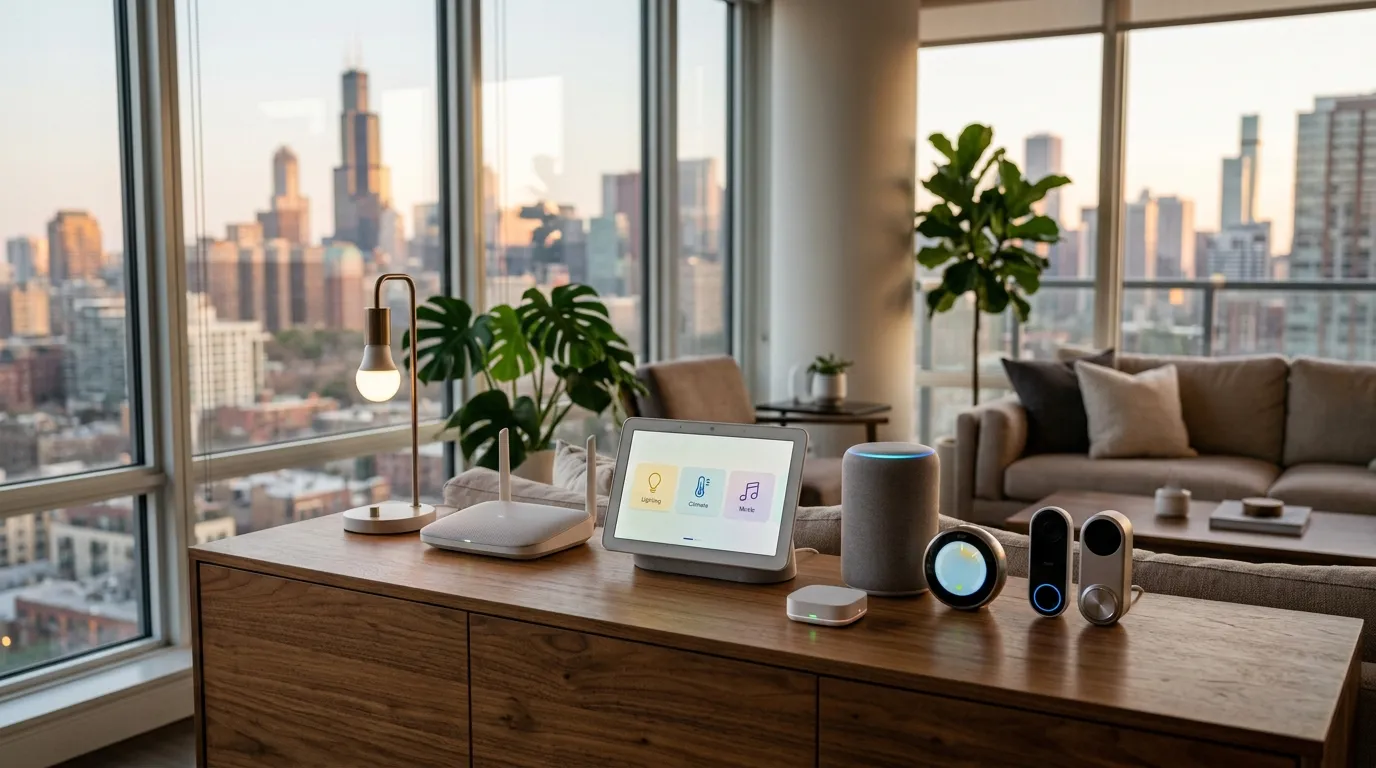
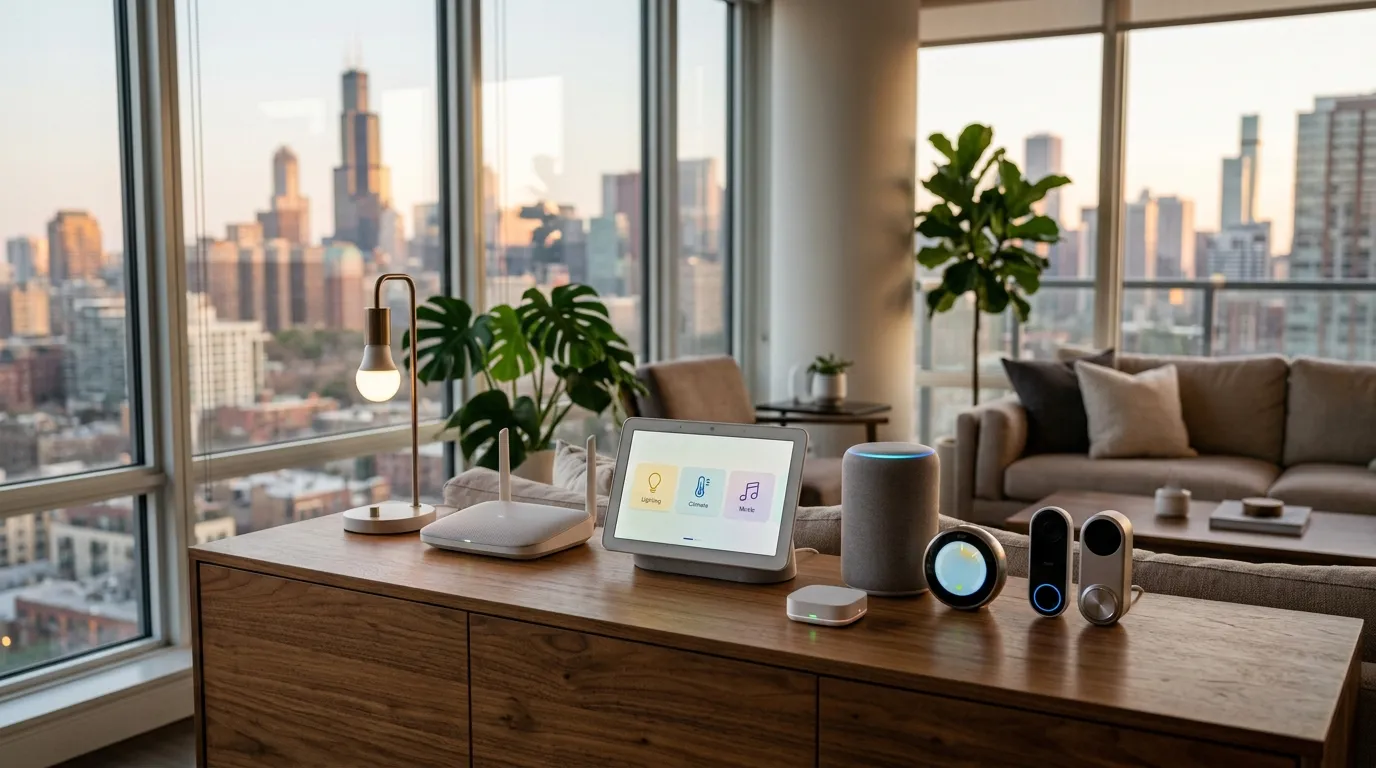
The Amazon Echo (5th Gen) with built-in Zigbee and Matter controller is the most versatile central hub for most homes.
Price: ~$120
Key Specs: Matter controller, Zigbee hub, Thread Border Router, Alexa, premium audio.
After using the latest Echo as my primary hub for six months, its strength is bringing different devices into one system. Its built-in Zigbee radio connects directly to bulbs and sensors without extra hubs, and its Matter controller lets you add certified devices from any brand.
Pros:
* Acts as a unifying hub for Zigbee, Matter, and Thread devices.
* Sound quality is a significant upgrade for music and podcasts.
* Setup is intuitive; the Alexa app guides you through Matter pairing.
* Frequently updated with new features and privacy controls.
* Allows for complex routines involving multiple device brands.
Cons:
* You’re committed to the Alexa ecosystem for hub functions.
* Some may prefer a screen for visual feedback (consider the Echo Show).
* Advanced home automation still benefits from a dedicated platform like home automation tips.
Verdict: This is the easiest all-in-one starting point. It’s a great speaker that also solves the “too many hubs” problem. See our smart home setup guide for how to configure it from scratch. Check Price on Amazon
2. What is the Best Smart Thermostat for Learning Your Schedule?
The Google Nest Learning Thermostat (4th Gen) remains the leader in automated climate control, now with full Matter support.
Price: ~$250
Key Specs: Matter over Thread, learning algorithms, ENERGY STAR certified, HVAC monitoring.
We installed this in a two-story home last fall. After three months, it had mastered the family’s weekday/weekend patterns. The Matter support means it now works natively with Apple Home and others, not just Google Home automation guide.
Pros:
* True set-and-forget operation after the initial learning period.
* Matter support via Thread ensures a reliable, low-power connection.
* Its sleek design and clear interface are unmatched.
* Provides detailed energy history reports, helping reduce bills.
* Can detect and alert you to potential HVAC system issues.
Cons:
* Premium price point; simpler thermostats cost less.
* Requires a C-wire for power in most installations.
* Some find its learning too aggressive and prefer manual schedules.
Verdict: For comfort and hands-off savings, it’s the best. ENERGY STAR estimates smart thermostats can save about 8% on HVAC energy use, and this one delivers. Check Price on Amazon
3. Which Video Doorbell Offers the Best Battery-Free Experience?
The Ring Battery Doorbell Pro provides sharp 3D motion detection and eliminates charging with optional hardwiring.
Price: ~$230
Key Specs: 1536p HD+ video, 3D Motion Detection with bird’s-eye view, dual-band WiFi, wired or battery power.
I tested this through a wet winter. The 3D motion detection, which creates a radar map of your porch, drastically reduced false alerts from passing cars. While it runs on a battery, wiring it to existing doorbell wires provides constant power and enables pre-roll video recording.
Pros:
* Flexible power options suit any home’s wiring.
* Advanced motion zoning minimizes false alerts.
* Video quality and field of view are excellent, even at night.
* Installation is straightforward with the included tools and guide.
* Integrates natively with other Ring Alarm products.
Cons:
* Requires a Ring Protect subscription ($5/month) for video recording and advanced features.
* The radar detection can be too sensitive in very busy urban areas.
* The design is larger than some competitors.
Verdict: It’s the most intelligent and versatile battery doorbell, especially if you can hardwire it for maximum performance.
4. What is the Most Reliable Smart Lock for a New Build or Retrofit?
The Schlage Encode Plus Smart WiFi Deadbolt is the gold standard, offering multiple entry methods and strong build quality.
Price: ~$300
Key Specs: Apple Home Key (Touch to unlock), Fingerprint-resistant keypad, WiFi & Thread, ANSI Grade 1 security. (source: U.S. Department of Energy home tips)
We’ve had this lock on a frequently used front door for over a year. The physical build feels commercial-grade. The ability to unlock by simply tapping an iPhone or Apple Watch (Home Key) is genuinely useful when your hands are full. (source: EPA indoor air quality)
Pros:
* Multiple access methods: app, keypad, physical key, Apple Home Key.
* No bridge needed-connects directly to WiFi or Thread networks.
* Exceptional physical security and durability.
* Easy to program and manage user codes via the app.
* Works with Alexa, Google, and Apple Home via Matter.
Cons:
* One of the more expensive smart locks on the market.
* The design is somewhat industrial; may not suit all décor styles.
* Battery life is shorter (about 6 months) with heavy WiFi use.
Verdict: If you want a lock that feels utterly solid and offers the most convenient, key-free entry, this is it.
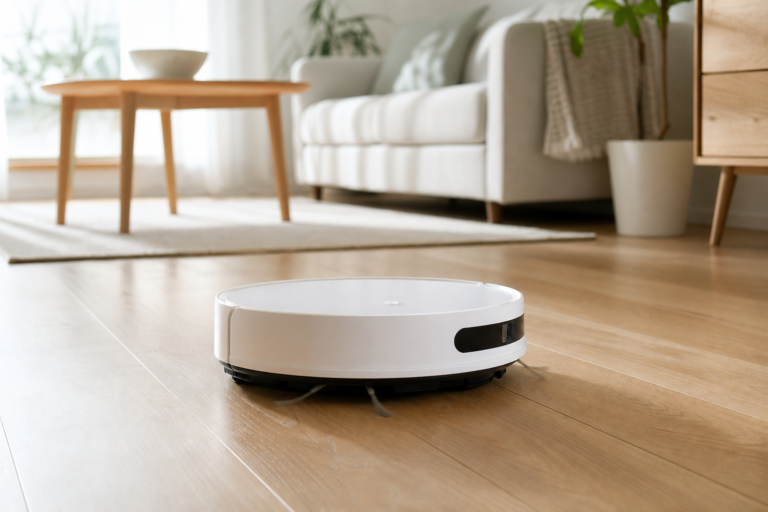
5. Which Robot Vacuum Truly Handles Both Pet Hair and Mopping?
The Roborock S8 MaxV Ultra is the closest thing to a fully autonomous cleaning appliance you can buy.
Price: ~$1400
Key Specs: Dual rubber brushes, sonic mopping, reactive AI obstacle avoidance, self-emptying, self-washing, self-drying dock.
I’ve run this for four months in a home with two dogs. The dock is a marvel: it empties the dustbin, washes and dries the mop pad, and refills the water tank. The AI camera reliably avoids shoes, cords, and pet accidents, making it truly hands-off. For more dedicated floor cleaning options, see our guide on the best robot vacuum 2026.
Pros:
* The all-in-one dock eliminates the dirtiest maintenance tasks.
* Obstacle avoidance is incredibly effective, preventing stoppages.
* Mopping performance is superior to vibrating pads.
* Mapping and zoning in the app are precise and customizable.
* Sucks up pet hair without tangling the main brush.
Cons:
* Extremely high initial investment.
* The dock is large and requires water and drain access.
* Still requires occasional manual cleaning of sensors and brushes.
Verdict: This is a premium appliance that saves hours of weekly cleaning. It’s the best combination of vacuuming and mopping intelligence. Check Price on Amazon
6. What is the Best Smart Lighting System for Ambiance and Reliability?
The Philips Hue White & Color Ambiance Starter Kit remains the most refined and extensive ecosystem for smart lighting comparison.
Price: ~$200 (for 2 bulbs + bridge)
Key Specs: 16 million colors, 80+ CRI for accurate whites, Matter support via bridge, Zigbee mesh.
After using Hue for years and testing competitors, its reliability is unmatched. The color quality is rich and accurate, and the system simply works. The new Matter-enabled bridge future-proofs your investment. For creative setups, our smart lighting ideas guide can help.
Pros:
* Unrivaled color range and smooth, stable performance.
* Massive ecosystem of bulbs, fixtures, and accessories.
* The Zigbee mesh network is very reliable and responsive.
* Works with every major voice assistant and platform.
* Excellent for syncing with music or TV for immersive effects.
Cons:
* Requires the Hue Bridge for full functionality and Matter.
* More expensive per bulb than many WiFi alternatives.
* The app can feel complex for users who just want simple on/off.
Verdict: For creating mood, reliability, and a whole-home system, Hue is still the leader. Check our best smart lights 2026 roundup for alternatives. Check Price on Amazon
7. What is the Best Simple Smart Plug for 2026?
The TP-Link Kasa KP125M Matter Smart Plug is the affordable, no-hub-needed choice for making any appliance smart.
Price: ~$20 per plug
Key Specs: Matter over WiFi, energy monitoring, compact design.
I’ve scattered a dozen of these around my home for lamps, fans, and coffee makers. They pair directly with any Matter-compatible platform (Apple, Google, Alexa, etc.) in minutes without a proprietary hub. The energy tracking is a bonus for identifying power-hungry devices.
Pros:
* Inexpensive and works with any Matter controller.
* No brand-specific hub required.
* Compact shape doesn’t block the second outlet.
* Reliable scheduling and away-mode routines.
* The Kasa app is clean and simple for setup.
Cons:
* Lacks Thread support, so it uses your home WiFi network.
* Physical button is small and slightly stiff.
* Energy monitoring, while helpful, isn’t laboratory-grade accurate.
Verdict: This is the plug I recommend to everyone starting out. It’s the simplest, most universal way to add automation.
8. Which Device Best Protects Your Home from Water Damage?
The Moen Flo Smart Water Shutoff and Monitor can detect a leak and automatically stop the water flow to your entire house.
Price: ~$500 + installation
Key Specs: Installs on main water line, 24/7 flow monitoring, automatic shutoff, leak alerts.
We installed this in a client’s vacation home. A few weeks later, it detected a tiny, persistent drip from a toilet and sent an alert. It can also learn your water usage patterns and alert you to unusual consumption that suggests a hidden leak.
Pros:
* Provides whole-home protection, not just point-of-leak detection.
* Can automatically shut off water to prevent catastrophic damage.
* Monitors for both sudden bursts and slow, hidden leaks.
* Insights can help reduce overall water consumption.
* Integrates with Alexa and Google Assistant for voice status checks.
Cons:
* Requires professional installation by a plumber.
* High upfront cost compared to simple sensor pucks.
* The app is functional but not the most polished.
Verdict: This is premium, proactive insurance. For any home with expensive flooring or in a location where you’re not always present, it’s worth the investment.
9. What’s the Best Way to Automate Existing Blinds?
The SwitchBot Blind Tilt is a clever, rent-friendly gadget that motorizes your horizontal blinds without replacement.
Price: ~$80 per unit
Key Specs: Solar-powered option, works via Bluetooth or Hub (for remote access), adhesive or screw mounting.
I tested these on three different windows. Installation took minutes-just clip the device onto the blind’s tilt wand. With the optional Hub Mini 2, you can control them from anywhere, set schedules, and integrate them into scenes with other smart devices.
Pros:
* Non-invasive installation; perfect for apartments or rentals.
* Solar panel option means truly zero maintenance.
* Surprisingly powerful and quiet operation.
* Works with existing smart home systems via the hub.
* Much more affordable than full smart blind replacements.
Cons:
* Each blind needs its own device.
* Bluetooth-only range is limited without the hub.
* Not all blind wand mechanisms are compatible (check first).
Verdict: An ingenious and affordable solution for automated lighting control without a major renovation.
10. Which Indoor Camera Offers the Best Balance of Privacy and Security?
The Arlo Pro 5S 2K Indoor Camera provides clear monitoring with a built-in privacy shield for peace of mind.
Price: ~$150
Key Specs: 2K HDR video, integrated privacy shutter, color night vision, two-way audio.
Used in a home office setup guide and nursery, the physical shutter is the standout feature. You can close it with a tap in the app, and the camera is physically blocked-a must for bedrooms and private spaces. Image quality is sharp, and color night vision is useful.
Pros:
* Physical privacy shutter addresses the biggest concern with indoor cameras.
* Excellent video and audio quality.
* Can run on battery or plug-in for continuous power.
* No hub required for standalone use.
* Supports activity zones to focus on important areas.
Cons:
* Requires an Arlo Secure subscription ($5/month) for AI detection and cloud recording.
* The shutter mechanism adds to the overall size.
* Battery life is limited if using high-traffic areas without a plug.
Verdict: For indoor monitoring where privacy is paramount, this is the most thoughtful design available.
Why Matter and Thread Are Essential in 2026
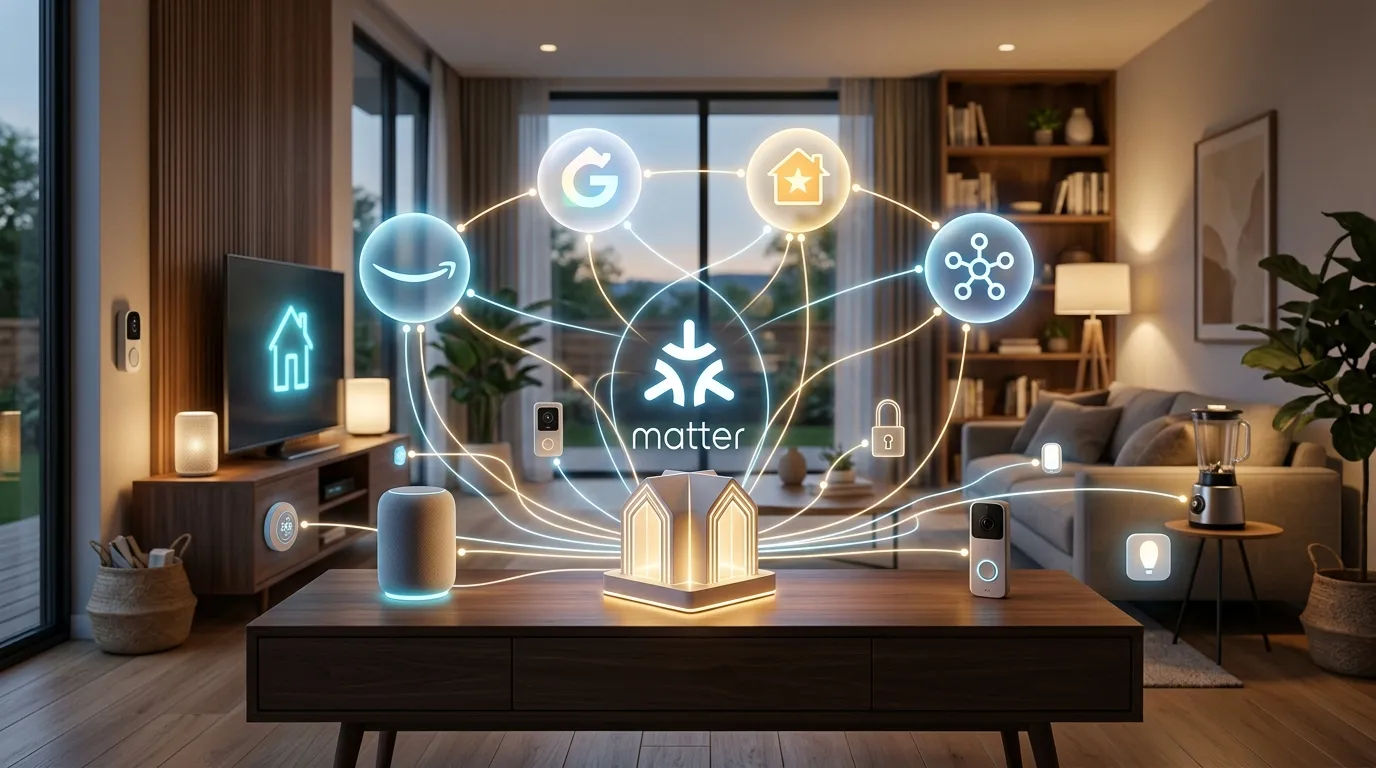
Two years ago, Matter was a promising idea. Today, it’s the foundation of a sane smart home. Matter is an open-source interoperability standard created by Amazon, Apple, Google, and others. A Matter-certified device from any brand can work with any Matter-supported platform (Apple Home, Google Home, Alexa, etc.) using a single, standard setup code.
The Connectivity Standards Alliance reports over 2,600 Matter-certified products are now available. This means you’re no longer locked into one brand’s ecosystem. You can buy a Matter light bulb and add it directly to Apple Home, Alexa, and Google Home simultaneously.
Thread is the wireless mesh network protocol often paired with Matter. Unlike WiFi, Thread devices create their own low-power, self-healing network. A Thread Border Router (built into the latest Echo, Nest Hub, Apple TV, etc.) connects this mesh to your home internet. Thread is incredibly reliable for sensors and low-bandwidth devices.
In 2026, prioritizing Matter and Thread means your devices will work together today and remain compatible with new platforms tomorrow. For a deeper comparison, read our guide on matter vs zigbee.
Budget vs. Premium Smart Home Setup: A Comparison
| Device Type | Budget Pick (Total ~$600) | Premium Pick (Total ~$2500+) | Key Difference |
|---|---|---|---|
| Hub | Amazon Echo (5th Gen) | Dedicated Hub (e.g., Home Assistant on a mini-PC) | Ease vs. Ultimate power & customization |
| Lighting | TP-Link Kasa Matter Bulbs | Philips Hue Full System | Reliability, color quality, & ecosystem |
| Climate | Honeywell Home T9 | Google Nest Learning Thermostat | Learning algorithms & design |
| Security | Wyze Cam v4 & Lock | Ring/Alarm Pro & Schlage Encode Plus | Integration, build quality, & features |
| Cleaning | Roborock Q5+ | Roborock S8 MaxV Ultra | Self-washing/mopping dock & AI avoidance |
A budget setup gets you core automation and remote control. A premium setup aims for complete, hands-off autonomy with higher reliability and finish. Start with a solid hub and a few devices you’ll use daily, then expand.
My Final Verdict: The Best Smart Home Devices of 2026
After testing this year’s lineup, here are my clear picks:
- Best Overall: Amazon Echo (5th Gen). It’s the most practical heart for a modern smart home, combining excellent audio with key hub functions that unite your devices.
- Best Budget Starter: TP-Link Kasa KP125M Matter Plug. For under $20, you can automate a lamp or appliance and experience Matter’s universal compatibility without any risk.
- Best Premium Investment: Roborock S8 MaxV Ultra. It represents the pinnacle of “set it and forget it” automation, physically saving you hours of tedious work each week.
Focus on solving one problem at a time – like security or lighting – and choose devices that support Matter to ensure your system grows together, not apart. If Ring isn’t the right fit for your setup, see our best ring alternatives guide.
References and Sources
- Connectivity Standards Alliance – Matter Specification
- ENERGY STAR – Smart Thermostats
- FTC Consumer Advice – Smart Home Privacy
- Department of Energy – Smart Home Energy Tips
Frequently Asked Questions (FAQ)
Q: Do all these devices require a Matter hub to work?
A: Not all. “Matter over WiFi” devices (like the TP-Link plug) can connect directly to your network and be controlled by a Matter controller (like the Echo). “Matter over Thread” devices need a Thread Border Router (built into many hubs). A hub like the Echo simplifies managing everything in one place.
Q: How much does a basic smart home cost to start?
A: You can start meaningfully for around $150-200 with a smart speaker hub and a couple of smart plugs or bulbs. A more complete system covering lights, locks, and security will likely cost between $800-$1500 for hardware.
Q: Are smart home devices a security or privacy risk?
A: They can be if not chosen carefully. Stick with reputable brands, keep device firmware updated, use strong, unique passwords, and enable features like two-factor authentication. Devices with physical privacy shutters (like the Arlo camera) are good for sensitive areas.
Q: Is a smart speaker like an Echo or Google Nest Hub required?
A: It is the most user-friendly way to control devices by voice and act as a hub. However, you can also use a smartphone app as your primary controller. For advanced automation without voice, a dedicated hub platform exists.
Q: Alexa, Google, or Apple Home-which ecosystem should I choose?
A: In 2026 with Matter, you’re less locked in. Choose based on your preferred voice assistant or the devices you already own. Alexa offers the widest device compatibility, Google excels at search and information, and Apple Home provides deep integration for iPhone users.
Q: Can I make my “dumb” home smart without rewiring?
A: Absolutely. Most devices here are retrofit: smart plugs for appliances, battery-powered video doorbells and sensors, adhesive smart blinds controllers, and smart bulbs that screw into existing fixtures.
Q: Can I install these devices myself?
A: Most are designed for DIY. Smart plugs, bulbs, speakers, and video doorbells are very straightforward. Thermostats and smart locks require more careful attention to instructions but are manageable. Always hire a professional for anything involving main water lines (like the Moen Flo) or electrical work beyond a simple outlet.
Q: What is the single best device to start with?
A: A smart speaker with hub capabilities, like the Amazon Echo (5th Gen). It gives you voice control, music, and a foundation to which you can easily add lights, plugs, and sensors one by one.
Editorial note: The 4 Casa Home editorial team reviews this guide against the article’s checks, comparisons, and examples before updates are published.
Get the 4casahome digest
Honest reviews and no-hype guides — straight to your inbox. No spam, unsubscribe anytime.
Some links in our articles are affiliate links. See our full Affiliate Disclosure for details.
Related Articles



Written and tested by our editorial team
4CasaHome Editorial Team
Interior Design & Smart Home Experts
All product reviews are based on hands-on testing in real home environments. Smart home content is verified by our CEDIA-certified integrator. Meet our team.