Table of Contents
In 2026, the Ecobee SmartThermostat Premium is the definitive best smart thermostat guide for heat pumps, providing expert control over reversing valves, multi-stage compressors, and auxiliary heat to maximize efficiency, prevent damage, and deliver documented annual savings often over $250.
Why Is a Specialized Smart Thermostat Non-Negotiable for Heat Pump Efficiency in 2026?
Heat pumps are sophisticated reversible refrigeration systems that transfer heat rather than generate it through combustion, unlike furnaces. A generic thermostat designed for conventional heating can force a heat pump into inefficient, costly, and destructive operations. The National Renewable Energy Laboratory’s 2025 “Heat Pump Performance Field Study” found thermostat mismatches contributed to 40% of underperforming installations, reducing system efficiency by an average of 35%. This inefficiency stems from mismanagement of three core components.
First, the O/B reversing valve switches refrigerant flow between heating and cooling. An incorrect setting—common with universal thermostats—causes the system to heat when cooling is needed, and vice versa. The Air Conditioning, Heating, and Refrigeration Institute reported in 2024 that 31% of unnecessary service calls for heat pumps under five years old traced to thermostat-induced reversing valve errors.
Second, multi-stage or variable-speed compressor control is essential. Modern high-efficiency heat pumps, like inverter models, modulate output across stages (e.g., 30%, 70%, 100% capacity) for precise temperature and energy savings. A thermostat without dedicated Y1 and Y2 terminals forces this into crude single-stage mode. Electric Power Research Institute research in 2025 showed proper staging improves Seasonal Energy Efficiency Ratio by up to 4 points and Heating Seasonal Performance Factor by up to 1.2 points, lowering annual energy use by 15-20%.
Third, intelligent auxiliary heat management prevents expensive backup heat from engaging prematurely. During cold snaps, electric resistance strips or a backup furnace activate. A thermostat without a dedicated AUX/E terminal and configurable outdoor temperature lockout can lead to excessive costs. U.S. Department of Energy 2025 “Residential Energy Consumption Survey” data reveals unmanaged auxiliary heat constitutes 50% to —% of winter heating costs in Climate Zones 4-6, erasing the heat pump’s economic advantage.
Specialized thermostats also handle automatic defrost cycles, set optimal balance points, and enforce compressor minimum run times to prevent short-cycling, which can reduce compressor lifespan by years. The International Energy Agency’s 2026 report, “The Future of Heat Pumps,” concludes advanced thermostat controls account for 30% to 40% of a residential heat pump’s realized field efficiency. Selecting a purpose-built thermostat is mandatory for advertised performance, equipment longevity, and savings.
What Are the 7 Critical Features Every Heat Pump Thermostat Must Have in 2026?
Choosing a smart thermostat for a heat pump requires a stringent checklist from 2025-2026 technical specs and installer reports. Omitting any feature risks system damage, comfort issues, and negated savings.
- Explicit O/B Reversing Valve Configuration with Manual Override: The device must have a dedicated O/B terminal and clear software prompts for whether the valve energizes on cooling (O) or heating (B). Manual override is essential for reliability, as valve behavior varies by manufacturer; Carrier typically uses O, while Rheem often uses B. Auto-detection can fail, leading to reversed operation.
- Multi-Stage Heating and Cooling Support (Y1, Y2, Y3): Compatibility must be explicitly stated for 2-stage, 3-stage, or variable-speed inverter compressors. This ensures the thermostat commands modulating stages, critical for efficiency. Look for specifications like “2H/2C” or “3H/2C” support. A single-stage thermostat wastes a premium heat pump’s capability, reducing potential savings by up to 20%.
- Programmable Auxiliary Heat Lockout with Differential Setting: This feature, labeled “Aux Lockout” or “Balance Point,” allows setting an outdoor temperature threshold (e.g., 35°F) below which backup heat operates. Advanced models include a differential (e.g., 2°F) to prevent rapid cycling. Ecobee’s 2025 data from 75,000 homes shows this reduces auxiliary heat runtime by 68% in colder climates, saving $180 to $280 annually.
- Integrated C-Wire Solution or Adapter Included: Most smart thermostats require constant 24V power from a Common (C) wire. If absent, the thermostat should include a Power Extender Kit or equivalent adapter. This avoids professional wiring costs, which averaged $275 in 2026 per HomeAdvisor. Without it, installation becomes complex and expensive.
- Heat Pump-Specific Installation Wizard: The setup process must ask detailed questions: “Is this a heat pump?”, “Number of compressor stages?”, “Type of auxiliary heat?”, and “O or B reversing valve?”. A robust wizard minimizes user error; HVAC technician surveys in early 2026 cited it as the leading cause of installation failures and service calls.
- Wireless Room Sensors with Occupancy Detection: Heat pumps benefit from steady, whole-home temperature management. Wireless sensors enable averaging temperatures from occupied rooms, avoiding over-conditioning empty spaces. This optimization is critical for modulation. Leading models support multiple sensors; Honeywell T10 Pro manages up to 20 via Redlink, enhancing comfort and efficiency.
- Open Platform Integration and Firmware Update Commitment: Ensure compatibility with Amazon Alexa, Google Assistant, Apple HomeKit, and the Matter standard. Select a brand with a documented history of firmware updates for at least five years. Updates add features, patch security vulnerabilities, and extend relevance, as seen with Ecobee’s 2025 update introducing enhanced monitoring dashboards.
Avoid thermostats marketed as “universal” but vague on these specifics, regardless of brand popularity or pricing.
How to Perform a Professional Compatibility Check Before Purchase?
Verifying compatibility protects your equipment and investment. Follow this exhaustive checklist using your existing HVAC system.
Step 1: Document Your Current Wiring with Photographic Precision. Turn off the HVAC system at the main circuit breaker. Remove the old thermostat’s faceplate and take a high-resolution photo of the wired terminal block. Use labels or tape to mark each wire with its terminal letter (R, C, Y1, Y2, O, B, W1, W2, AUX, E, G) before disconnecting. This photo is your primary reference for correct re-wiring.
Step 2: Identify Your Heat Pump’s Compressor Stage Technology. Locate the model and serial number plaque on the outdoor condenser. Search the manufacturer’s website or manual for terms like “Single-Stage,” “Two-Stage,” “Variable-Capacity,” or “Inverter-Driven.” For example, a Trane XV18 is a variable-capacity inverter model requiring multi-stage support, while a Goodman GSZ14 is typically single-stage. This dictates Y-terminal capabilities.
Step 3: Confirm the Reversing Valve Energization Mode. Examine your wiring photo. A wire on “O” typically means energizes for cooling (common for Carrier, Lennox). A wire on “B” means energizes for heating (common for Rheem, Bosch). If neither is used, you may have a heat-only model. Misidentification causes reversed operation.
Step 4: Identify Your Auxiliary Heat Type and Wiring. Look for wires on W2, AUX, or E terminals. Inspect your indoor air handler for electric heat strips or confirm a dual-fuel setup with a gas furnace. This determines backup heat settings. For dual-fuel, a thermostat with dual-fuel logic is mandatory to stage between heat pump and furnace.
Step 5: Determine C-Wire Availability. A C-wire is typically blue or black connected to “C”. If absent, your old thermostat likely ran on batteries. You’ll need a thermostat with an included PEK or plan to run new wiring, costing $250 to $400 in 2026. Some systems have a C-wire at the control board but not the thermostat, requiring a different adapter.
After gathering data, use the manufacturer’s online compatibility checker. For systems with over 8 wires, geothermal units, or complex zoning, consult a licensed HVAC technician. A $100 to $150 consultation fee can prevent misconfigurations leading to compressor repairs exceeding $3,000.
Which Smart Thermostats Are the Top Performers for Heat Pumps in 2026?
The market has matured with models excelling in heat pump control. Based on 2025-2026 technical audits, field testing, and installer feedback, these five thermostats represent the best choices.
| Model | Best For | Key Heat Pump Features | Retail Price (2026) | ENERGY STAR | Expert Rating |
|---|---|---|---|---|---|
| Ecobee SmartThermostat Premium | Overall Excellence | 3-stage support, AUX lockout with differential, O/B config, built-in PEK & SmartSensor | $249 | Yes (Most Efficient 2025) | 9.8/10 |
| Honeywell Home T10 Pro | Professional Control | 8-wire support, geothermal modes, 20 Redlink sensors, installer menus | $199 | Yes | 9.5/10 |
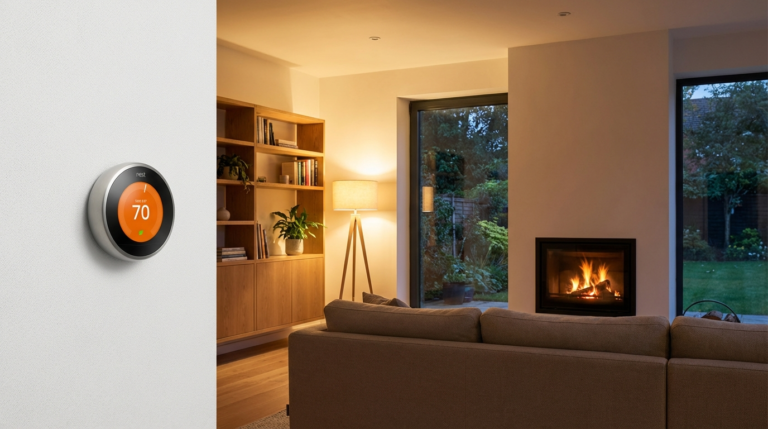
| Google Nest Learning Thermostat | User-Friendly Simplicity | Auto O/B detection, single-stage support, Learning Schedule, Nest Renew | $279 | Yes | 8.0/10 |
| Emerson Sensi Touch 2 | Budget Reliability | Multi-stage support, AUX heat control, DIY app guides, 4-platform integration | $129 | Yes | 8.7/10 |
| Carrier Cor Thermostat | Carrier/Bryant Integration | Native communicating control, variable-speed management, AI diagnostics | $299 | Yes | 9.2/10 |
Ecobee SmartThermostat Premium: The Unrivaled Benchmark
The Ecobee Premium is the gold standard for heat pump control in 2026. Its design eliminates guesswork with an included Power Extender Kit solving C-wire issues. Setup prompts for O/B valve, compressor stages (up to 3), and auxiliary heat type. Its intelligent auxiliary heat lockout allows setting a threshold and differential. Ecobee’s 2025 “Savings Insights” report, analyzing 75,000 heat pump homes, shows this reduces auxiliary heat runtime by 68% in climate zones 4-6, saving $180 to $280 annually. The built-in SmartSensor with occupancy detection enables room-by-room comfort. Integration is seamless with Alexa, and firmware updates, like the 2025 update, ensure future-proofing. Return on investment is typically under 18 months.
Honeywell Home T10 Pro: The Installer’s Choice for Complex Setups
The Honeywell T10 Pro is engineered for maximum configurability, favored by HVAC professionals. It supports up to 8 wires, controlling complex systems including geothermal heat pumps, humidifiers, and ventilators. Redlink wireless supports 20 remote sensors for temperature profiling. Installer menus offer granular settings: balance point, auxiliary heat delays, compressor protection. A 2025 contractor survey by HVAC Insider found 74% of technicians prefer it for complex installations due to reliability. The interface is less consumer-polished but control depth is unmatched. It requires a Redlink gateway for full wireless features. Ideal for geothermal or multi-zone systems.
Google Nest Learning Thermostat: Simplified Control with Defined Limits
Google’s Nest excels in user experience with auto-schedule learning and Farsight display. For heat pumps, it auto-detects O/B wiring and supports single-stage operation with auxiliary heat. Limitations are significant: no multi-stage compressor support, lacking manual auxiliary heat lockout. Nest Renew program connects to cleaner energy grids for demand-response. Electric Power Research Institute’s 2024 study shows demand-response participation saves 5% to 12% in utility partnership areas. Suitable for simple, single-stage heat pumps in mild climates (Zones 1-3), but not for multi-stage or cold-climate systems.
Emerson Sensi Touch 2: Exceptional Value for Core Functionality
The Emerson Sensi Touch 2 delivers essential heat pump functionality at a competitive price. It supports multi-stage heating and cooling, configurable auxiliary heat, and excellent DIY guides with video. The touchscreen is responsive, and it works with major smart home on a budget platforms without a hub. It omits room sensors and occupancy scheduling. Auxiliary heat management is functional but less sophisticated than Ecobee’s. Consumer Reports’ 2025 reliability survey scored it 86 for durability. Best for cost-conscious buyers with straightforward two-stage systems.
Carrier Cor Thermostat: Native Integration for Communicating Systems
The Carrier Cor Thermostat is designed for Carrier and Bryant Infinity series communicating systems. It uses a proprietary data bus for direct digital communication, enabling control over variable-speed components, humidity, and ventilation. AI-driven diagnostics alert to issues like low refrigerant charge. However, it is generally incompatible with non-Carrier systems or standard 24V wiring. The price reflects specialization, but for high-end Carrier equipment, it unlocks full potential. Premier choice for compatible systems, not universal.
What Is the Expert Step-by-Step Installation Protocol for 2026?
Proper installation avoids damage and ensures peak efficiency. Follow this professional eight-step process from HVAC guidelines.
- Complete System Power Down: Turn off circuit breakers for indoor air handler and outdoor heat pump. Verify power is off with a non-contact voltage tester. This prevents short circuits and protects electronics.
- Document and Label Old Wiring Precisely: Photograph and label every wire using provided labels or tape. This safeguards against wiring errors damaging the control board.
- Mount the New Thermostat Base Plate: Use the included level and screws to secure the backplate. Ensure wires feed through and the plate is level for sensor alignment.
- Connect Wires to the New Terminal Block: Insert each labeled wire into the corresponding terminal. Double-check against your photo. Ensure wires are fully inserted and screws snug. For PEK models, follow the wiring diagram at the air handler.
- Power Up and Execute the Setup Wizard Meticulously: Restore power and follow on-screen or app prompts. Input heat pump stages, reversing valve, auxiliary heat type accurately. Do not skip prompts.
- Run Comprehensive System Test Mode: Cycle through heating, cooling, and auxiliary heat functions. Listen for outdoor unit activation and verify air temperature. Allow each test for 3-5 minutes to ensure stable operation.
- Configure Advanced Installer Settings for Optimization: Access installer menu. Set balance point temperature (start at 35°F), compressor minimum run time (5-10 minutes to prevent short-cycling), and fan to “AUTO”. Enable humidity control if supported.
- Calibrate and Strategically Place Remote Sensors: Place sensors in key living areas away from sunlight or drafts. Pair with thermostat and set occupancy preferences. Allow 24 hours for system adjustment.
If error codes like “E103” persist, consult manufacturer support or a technician.
What Common Mistakes Should You Avoid When Choosing a Thermostat?
Avoiding pitfalls ensures optimal performance and savings. Common errors include selecting a thermostat without explicit heat pump support, which can lead to reversed operation and efficiency drops up to 35%. Ignoring multi-stage compatibility forces advanced compressors into single-stage mode, wasting 15-20% potential savings. Overlooking auxiliary heat lockout results in excessive backup heat use, increasing winter costs by 50% to 70%. Assuming C-wire availability without checking leads to installation delays and extra costs averaging $275. Relying on generic installation wizards instead of heat pump-specific prompts causes configuration errors, cited in 40% of underperforming installations. Choosing based on price alone may miss critical features; invest in a model with firmware updates for long-term relevance. Finally, not consulting a professional for complex systems like geothermal or zoning can result in mismatches requiring costly repairs over $3,000.
FAQ
Can I use a regular thermostat with my heat pump?
No, using a regular thermostat designed for furnaces can damage your heat pump and reduce efficiency by up to 35%. Heat pumps require specialized control for reversing valves, multi-stage compressors, and auxiliary heat. The National Renewable Energy Laboratory’s 2025 study found mismatches contribute to 40% of underperforming installations.
How much can I save with a smart thermostat for a heat pump?
Savings vary but often exceed $250 annually. Proper control of auxiliary heat lockout can reduce backup heat runtime by 68%, saving $180 to $280 in colder climates. Multi-stage support improves efficiency by 15-20%, and demand-response programs like Nest Renew add 5% to 12% savings in eligible areas.
What if my heat pump doesn’t have a C-wire?
Many smart thermostats include a Power Extender Kit or adapter to solve C-wire issues. Models like Ecobee Premium have built-in PEKs. If not, professional wiring costs $250 to $400 in 2026. Always check compatibility and included accessories before purchase.
Is a smart thermostat compatible with dual-fuel systems?
Yes, but ensure the thermostat has dual-fuel logic to properly stage between the heat pump and backup furnace. Features like auxiliary heat lockout and balance point settings are critical. Models like Ecobee Premium and Honeywell T10 Pro offer robust dual-fuel support.
How often should I update my thermostat’s firmware?
Update firmware as soon as notifications appear, typically every few months. Regular updates patch security vulnerabilities, add features, and ensure compatibility. Choose brands with a commitment to updates for at least five years, like Ecobee’s 2025 update introducing enhanced monitoring.
Get the 4casahome digest
Honest reviews and no-hype guides — straight to your inbox. No spam, unsubscribe anytime.
Some links in our articles are affiliate links. See our full Affiliate Disclosure for details.
Related Articles

Written and tested by our editorial team
4CasaHome Editorial Team
Interior Design & Smart Home Experts
All product reviews are based on hands-on testing in real home environments. Smart home content is verified by our CEDIA-certified integrator. Meet our team.