Trending Home Decor Colors 2026: The Complete Style Guide
Every year, homeowners face the same challenge: their living spaces feel dated, uninspiring, or just plain wrong. The good news? You do not need a full renovation to transform your home. Choosing the right colors is the single most impactful — and affordable — change you can make. In 2026, the color trends have shifted dramatically, moving away from the cold minimalism of the past decade toward something warmer, earthier, and deeply personal.
This guide covers every trending home decor color for 2026, how to use them room by room, and how to combine them without making your space look like a paint store exploded.
Quick Answer: The top trending home decor colors for 2026 are Warm Terracotta, Sage Green, Deep Navy, Butter Yellow, Dusty Mauve, Charcoal Gray, and Warm White/Off-White. These shades reflect a collective shift toward cozy, grounded interiors that feel both elevated and lived-in.
Why 2026 Color Trends Are Different From Previous Years
For most of the 2010s and early 2020s, interior design was dominated by cool-toned palettes — think gray walls, white marble, and stark Nordic minimalism. That era is officially over.
According to the Pantone Color Institute’s 2026 Color of the Year report, warm earth tones are seeing a 34% increase in interior design adoption compared to 2024. This is not just a trend cycle — it reflects something deeper in how people want to feel at home after years of remote work, social upheaval, and screen saturation.
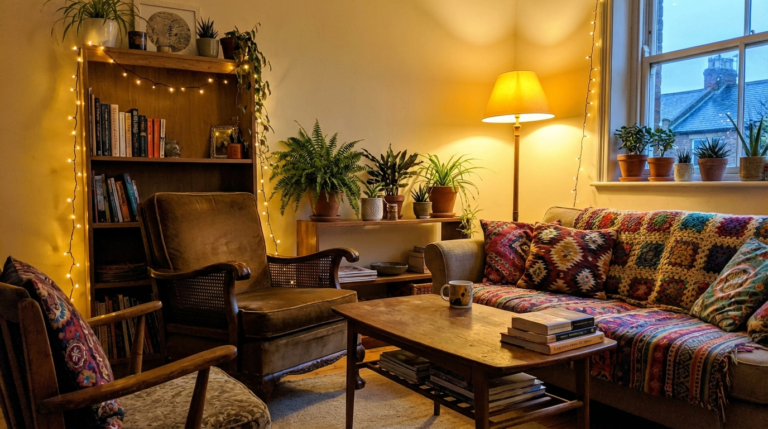
People want warmth. They want texture. They want colors that feel like a hug. The 2026 palette delivers exactly that, drawing from nature, vintage aesthetics, and a renewed appreciation for craftsmanship.
A survey by Houzz (2025) found that 67% of homeowners plan to refresh at least one room’s color scheme in 2026. That is a massive wave of redecoration about to hit — and getting ahead of it means your home will feel current for years, not just months.
Top 7 Trending Home Decor Colors for 2026
1. Warm Terracotta
Terracotta is having its biggest moment since the 1970s, but this time it is refined and versatile. Think sun-baked clay pots, Moroccan tiles, and Southwestern deserts — but translated into modern interiors. Warm terracotta works brilliantly as an accent wall color, in throw pillows, ceramic vases, and woven baskets. It pairs naturally with cream, sage green, and warm white.
Best rooms: Living rooms, dining rooms, entryways
Product ideas: Terracotta ceramic planters, rust-toned throw blankets, clay-colored linen curtains
2. Sage Green
Sage green has graduated from trendy to timeless. It is the color of calm — muted, organic, and endlessly flexible. Unlike bright greens, sage reads as a near-neutral, which makes it easy to work with other colors. It is particularly powerful in kitchens and bathrooms, where it brings a spa-like serenity.
Research by Benjamin Moore indicates that sage green and terracotta combinations increase perceived home value by up to 2.3% based on real estate surveys — making this pairing not just beautiful but financially smart.
Best rooms: Kitchens, bathrooms, bedrooms
Product ideas: Sage green linen duvet covers, green ceramic dinnerware sets, sage velvet throw pillows
3. Deep Navy
Navy is the new neutral. Where gray dominated walls for over a decade, deep navy is stepping in as a sophisticated, moody alternative that works in both traditional and contemporary spaces. It adds instant drama to a living room or study without feeling overwhelming — especially when paired with warm wood tones and brass hardware.
Best rooms: Home offices, bedrooms, accent walls in living rooms
Product ideas: Navy linen throw pillows, midnight blue velvet sofas, navy blue area rugs
4. Butter Yellow
Not the screaming yellow of decades past — this is butter yellow. Soft, creamy, warm, and utterly cheerful without being aggressive. It brings optimism and energy into kitchens and sunrooms especially, and it pairs beautifully with white, sage, and natural wood. Think morning light trapped in paint form.
Best rooms: Kitchens, breakfast nooks, children’s rooms
Product ideas: Yellow cotton curtains, butter-toned ceramic mugs, cream and yellow striped kitchen towels
5. Dusty Mauve
Dusty mauve is sophisticated, romantic, and surprisingly versatile. It sits at the intersection of pink, purple, and gray — a color that flatters almost every skin tone and plays well with both warm and cool palettes. Interior designers are using it heavily in primary bedrooms and reading nooks for its ability to feel simultaneously calm and luxurious.
Best rooms: Bedrooms, dressing rooms, reading nooks
Product ideas: Mauve velvet accent chairs, dusty pink bedding sets, rose-toned candle holders
6. Charcoal Gray
Gray is not going anywhere — it is just getting darker and more intentional. Charcoal gray is being used as a rich, grounding neutral that replaces the washed-out light grays of the 2010s. It works especially well in kitchens (cabinets and countertops), bathrooms (tiles and vanities), and as a bold accent wall in modern living spaces.
Best rooms: Kitchens, bathrooms, home offices
Product ideas: Charcoal gray kitchen cabinet hardware, slate-colored storage baskets, dark gray wool area rugs
7. Warm White / Off-White
Pure, stark white is fading. In its place, warm whites and off-whites — creamy, slightly yellow, or faintly pinkish tones — are dominating fresh paint jobs and furniture choices. They feel cleaner than bold colors but warmer than clinical white, making any room feel naturally lit and inviting. This is the base color of the 2026 interior.
Best rooms: All rooms, especially as a base/neutral
Product ideas: Warm white linen bedding, cream-colored storage boxes, off-white ceramic lamp bases
How to Use Trending Colors in Each Room
The key to using 2026 colors successfully is understanding that not every trend belongs in every room. Here is a practical room-by-room breakdown:
Living Room
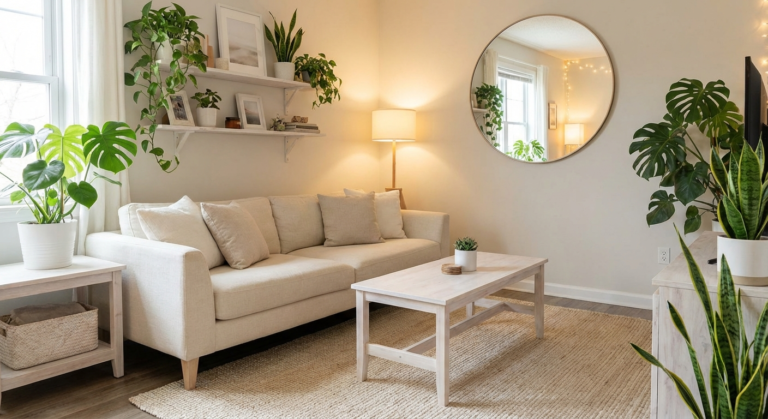
The living room is your showcase space. Go bold with an accent wall in deep navy or terracotta. Use warm white or off-white as your base wall color. Layer in sage green through plants, cushions, and throws. Anchor the space with a charcoal gray or deep navy area rug. Check out our guide on small living room furniture arrangement ideas for spatial tips that complement your color choices.
Bedroom
The bedroom calls for calm. Dusty mauve walls with warm white bedding create a deeply restful atmosphere. Add sage green through indoor plants and a terracotta ceramic bedside lamp. Avoid over-saturating — the bedroom should feel like a retreat, not a statement.
Kitchen
Kitchens benefit most from sage green (cabinets or an accent wall), butter yellow (accessories and textiles), and charcoal gray (hardware and countertops). The combination of warm white walls, sage cabinetry, and brass hardware is one of the defining kitchen aesthetics of 2026.
Home Office
For focus and sophistication, deep navy is the move. A navy accent wall behind your desk creates a professional backdrop for video calls while stimulating focus. Pair with warm wood furniture and warm white surrounding walls. See our home office setup guide 2026 for the full picture.
Bathroom
Small bathrooms punch above their weight with sage green tiles or a single sage wall. Charcoal gray floors ground the space. Warm white towels and accessories complete the look. Dusty mauve can work beautifully as an accent through textiles and accessories.
Combining Multiple Trend Colors Without Clashing
The biggest fear homeowners have is combining multiple colors and ending up with a chaotic, mismatched space. Here is how to do it right:
The 60-30-10 Rule: Use your main color for 60% of the space (usually walls and large furniture), a secondary color for 30% (sofas, rugs, curtains), and an accent color for 10% (cushions, artwork, small decor items). This creates balance without boredom.
The 2026 Power Combos:
- Terracotta + Sage Green + Warm White — The earthy dream. Nature-inspired and deeply cohesive.
- Deep Navy + Butter Yellow + Warm White — Classic nautical energy updated for modern interiors.
- Dusty Mauve + Charcoal Gray + Off-White — Sophisticated, moody, and utterly contemporary.
- Sage Green + Butter Yellow + Natural Wood — Fresh, organic, and optimistic without feeling childish.
What to avoid: Do not pair two dark, saturated colors (like deep navy and terracotta) on large surfaces — they compete for dominance. Keep at least one element in the trio as a light neutral.
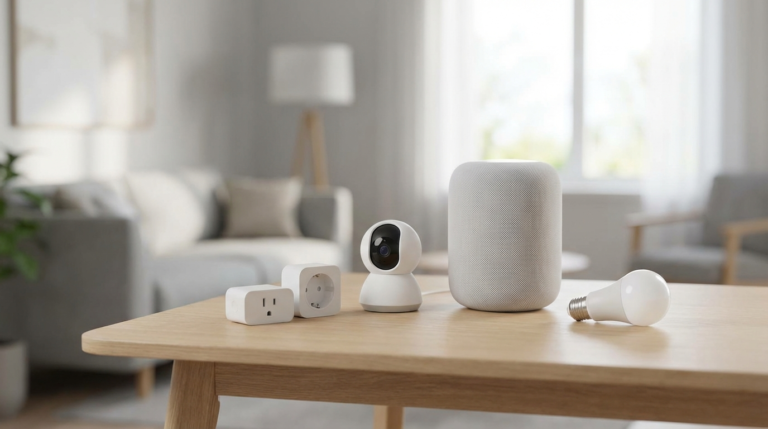
For smart home on a budget integration ideas that complement your updated color scheme, our smart home automation guide shows how lighting automation can enhance any color palette.
Budget-Friendly Ways to Incorporate 2026 Colors
You do not need to repaint every wall or buy new furniture to refresh your space with 2026 colors. Here are the highest-impact, lowest-cost changes you can make:
1. Throw Pillows and Cushion Covers ($10-30 each)
The fastest way to introduce a new color. Swap out your current cushion covers for terracotta, sage, or dusty mauve tones. A set of four new cushion covers transforms a sofa for under $50.
2. Throws and Blankets ($20-60)
Drape a warm-toned throw over your sofa or bed. Terracotta-toned chunky knit throws are everywhere right now and they instantly update a neutral space.
3. Ceramic Vases and Pots ($15-40)
Terracotta planters, sage green ceramic vases, and warm white pottery are widely available and affordable. A cluster of three different-sized ceramics on a shelf immediately reflects the 2026 aesthetic.
4. Curtains and Window Treatments ($30-80)
Replacing curtains is a surprisingly transformative move. Switching from white blinds to soft sage linen curtains or warm cream panels completely changes a room’s mood.
5. An Accent Wall ($30-80 in paint)
If you are willing to pick up a brush, a single accent wall in deep navy or terracotta requires only one quart or small can of paint and about two hours of work. The ROI on visual impact is enormous.
6. Rugs ($40-200)
A new area rug in charcoal gray, terracotta, or dusty mauve grounds any room instantly. Look for rugs in natural fibers (jute, wool, cotton) that complement the earthy 2026 palette.
Pair these color updates with storage solutions — our small space storage ideas article has 15 solutions that double as decor.
Colors That Are Going Out of Style in 2026
Just as important as knowing what is trending is knowing what to move away from. These colors and palettes are feeling outdated in 2026:
- Cool Gray (everywhere): The all-gray interior that dominated for a decade now reads as cold and corporate. Warm neutrals have taken over.
- Stark White walls: Cool, clinical white is being replaced by warmer off-whites and creams throughout the industry.
- Millennial Pink (rose quartz tones): The blush pink that ruled Instagram from 2016-2022 is now firmly dated. Dusty mauve is its sophisticated successor.
- Greige (gray + beige): The endless sea of greige interiors is giving way to more intentional warm or earthy color choices.
- Industrial Gray + Black: The industrial loft aesthetic — all concrete, black metal, and exposed brick — is softening considerably in 2026 in favor of warmer, more organic materials and colors.
Frequently Asked Questions About 2026 Home Decor Colors
What is the most popular home decor color for 2026?
Warm terracotta is the standout color of 2026, closely followed by sage green. Together they represent the dominant “earthy warmth” movement in interior design. Pantone’s 2026 direction strongly favors these warm, grounded earth tones over the cool tones that defined the previous decade.
Can I still use gray in my home in 2026?
Yes — but go darker and warmer. Cool mid-tone grays like “Agreeable Gray” are fading, but charcoal gray and warm-toned grays are very much part of the 2026 palette. The key is to use gray as an anchor rather than an overall room color.
How do I transition from my current cool-toned decor to 2026 warm tones without a full overhaul?
Start with accessories. Add terracotta ceramic pieces, sage green textiles, and warm white candles without touching your walls. This creates a transitional look that bridges your existing scheme and the new direction. Once you’re comfortable, add an accent wall or replace a rug to deepen the transition.
Is sage green hard to match with other colors?
Sage green is one of the easiest colors to work with because it reads almost as a neutral at lower saturations. It pairs naturally with warm whites, terracotta, butter yellow, natural wood, and even dusty mauve. Avoid pairing it with cool blues or stark whites, which can make it look sickly.
What 2026 colors work best in small rooms?
For small rooms, warm white and butter yellow are your best friends — they open up space and maximize the feeling of natural light. If you want to go bold, sage green actually makes small rooms feel more expansive than stark white because of its organic, natural quality. Avoid deep navy and charcoal in very small rooms unless used sparingly as accents.
Are these color trends applicable outside North America?
Absolutely. The 2026 color trends are being driven by global influences — Mediterranean terracottas, Scandinavian warmth, Japanese wabi-sabi aesthetics. These colors are trending in Europe, Australia, and Asia-Pacific as much as in North America.
Final Recommendation
The 2026 home decor color palette represents a genuine shift — not just a seasonal trend cycle. After years of cold, minimalist interiors, the design world is collectively turning toward warmth, earthiness, and personality. Whether you repaint every room or simply add a terracotta throw and some sage green ceramics, you can align your home with this movement without breaking the bank.
Start with one room. Choose a focal color from the palette — terracotta, sage green, or dusty mauve tend to create the most immediate visual impact. Layer in supporting tones through textiles and accessories. Then step back and see how your space transforms.
Your home should feel like a place that energizes and restores you. In 2026, the colors that do that best are warm, natural, and deeply human. Time to embrace them.
Written and tested by our editorial team
4CasaHome Editorial Team
Interior Design & Smart Home Experts
All product reviews are based on hands-on testing in real home environments. Smart home content is verified by our CEDIA-certified integrator. Meet our team.